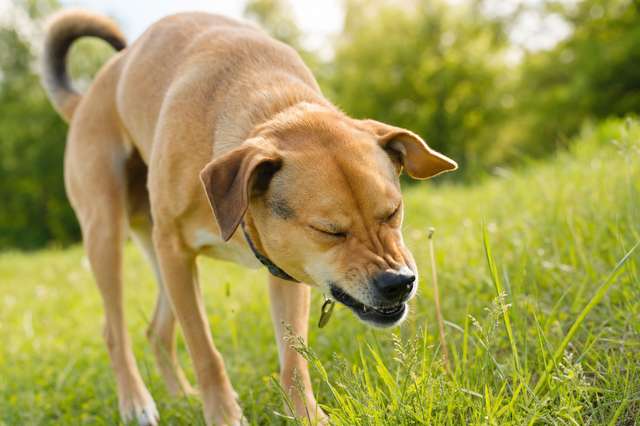
An occasional sneeze is common in dogs, especially after sniffing dust, pollen, grass, or a strong household scent. Repeated or violent sneezing, one-sided nasal discharge, blood, facial swelling, or a dog who seems sick is different. Those signs can point to irritation, infection, a foreign object, dental disease, or a deeper nasal problem and should be assessed.

Go to an emergency veterinary hospital now for open-mouth breathing at rest, obvious breathing effort, blue/pale gums, collapse, severe facial swelling, or nose bleeding that is heavy or will not stop.
Why is my dog sneezing?
Dogs sneeze to clear the nasal passages. A brief episode after sniffing or exposure to dust may settle quickly. Allergies or irritants can cause repeated sneezing, but dogs with allergies often have other signs such as itchy skin, paw licking, or watery eyes. A contagious respiratory illness may cause sneezing with coughing, nasal or eye discharge, fever, tiredness, or reduced appetite.
A grass awn, seed, or other foreign material lodged in the nose can trigger sudden, intense sneezing and pawing at the face. One-sided discharge, a nosebleed, or a problem that keeps returning is especially worth a veterinary examination. Tooth-root disease, fungal disease, and nasal growths are less common possibilities that cannot be ruled out at home.
Is it reverse sneezing or regular sneezing?
During a reverse sneeze, a dog rapidly pulls air inward through the nose, often making a snorting or honking sound while standing still with the neck extended. Episodes are usually brief, and the dog returns to normal afterward. Regular sneezing pushes air outward and may be accompanied by nasal discharge or pawing at the nose.
A short, occasional reverse-sneezing episode in an otherwise normal dog may not be an emergency. Frequent episodes, episodes that last longer, or any event accompanied by coughing, discharge, weakness, distress, or difficulty breathing deserves a veterinary call. If you are not sure what you are seeing, record a video for your veterinarian.

| Pattern | Possible explanation | Recommended response |
|---|---|---|
| Occasional sneeze; clear nose; normal energy and appetite | Brief irritation or normal nasal clearing | Monitor for 24–48 hours and reduce dust, smoke, aerosols, and strong scents |
| Repeated sneezing or reverse sneezing that keeps returning | Irritation, allergy, infection, or another nasal problem | Call your veterinarian and record frequency and triggers |
| One-sided discharge, blood, facial swelling, or pawing at the nose | Foreign body, infection, dental disease, or other nasal disorder | Arrange a prompt veterinary examination |
| Sneezing with breathing difficulty, collapse, or pale/blue gums | Airway or systemic emergency | Emergency veterinary care now |
When should a sneezing dog see a veterinarian?
Call for a same-day or prompt appointment when sneezing is persistent, worsening, or interfering with sleep, eating, or normal activity. Also call when there is thick yellow, green, or foul-smelling discharge; any recurring blood; facial pain or swelling; coughing; fever; lethargy; loss of appetite; or discharge from only one nostril. Puppies, older dogs, and dogs with other medical conditions deserve a lower threshold for evaluation.
Go urgently if your dog cannot breathe comfortably, is breathing with the mouth open at rest, has blue, gray, white, or very pale gums, collapses, seems confused, or has significant bleeding. Do not try to pull a suspected foreign body from deep inside the nose. Do not use human decongestants, nasal sprays, or antihistamines unless a veterinarian has specifically directed you.
What can I do at home while monitoring?
- Move your dog away from smoke, candles, aerosol cleaners, dusty litter, and strong fragrances.
- Keep a simple log: number of sneezing bouts, which nostril has discharge, color and amount of discharge, appetite, energy, and breathing comfort.
- Keep your dog away from other dogs if respiratory infection is possible, and tell the clinic about the exposure before arriving.
- Offer normal access to water and rest. Do not force food or put liquids or products into the nose.
- Take a video of the episode if it is safe; it can help distinguish reverse sneezing from coughing or respiratory distress.
Sneezing decision path
Dog sneezes → Is breathing difficult, are gums pale/blue, or is there collapse or uncontrolled bleeding?
- Yes: emergency care now.
- No, but sneezing is persistent, discharge is colored or one-sided, blood appears, or your dog is unwell: same-day or prompt veterinary appointment.
- No, and the episode is brief with clear discharge and normal behavior: reduce irritants, monitor 24–48 hours, and call if it continues or worsens.
How will a veterinarian investigate sneezing?
The visit starts with the history and a physical examination, including the nose, mouth, eyes, lungs, and teeth. Depending on the pattern, testing may include blood work, imaging, nasal sampling, dental evaluation, or a more detailed examination of the nasal passages. The goal is to identify the cause rather than simply suppress the sneeze.
Bring a written or video record of when the sneezing happens, how long it lasts, and whether one or both nostrils are affected. This history often narrows down the likely cause faster than the exam alone, especially for intermittent problems that are not happening at the moment of the visit.
What commonly triggers sneezing at home?
Household dust, scented candles, aerosol cleaning sprays, incense, cigarette smoke, and strong perfumes are common irritants that can set off a sneezing bout in an otherwise healthy dog. Dry indoor air from heating or air conditioning can also make the nasal lining more sensitive to irritation. Reducing exposure to these triggers is a reasonable first step for occasional, mild sneezing, but it is not a substitute for veterinary evaluation when sneezing is frequent, one-sided, or accompanied by other symptoms.
Frequently Asked Questions
Is it normal for dogs to sneeze sometimes?
Yes. An occasional sneeze after sniffing an irritant can be normal when the dog is otherwise comfortable. Persistent, violent, or worsening sneezing is different.
How long can I watch a sneezing dog at home?
If the sneezing is mild, brief, and the dog is eating, drinking, breathing normally, and acting well, a short 24–48-hour observation period may be reasonable. Call sooner if any warning sign appears.
Can allergies make a dog sneeze?
They can, but dogs with allergies often also have itchy skin, paw licking, watery eyes, or recurrent ear problems. A veterinarian should help distinguish allergy from infection, a foreign body, or another nasal condition.
Is reverse sneezing dangerous?
Brief episodes that end and leave the dog normal are often not emergencies. Frequent, prolonged, or distressing episodes—or any episode with breathing difficulty or other illness signs—needs veterinary advice.
Can I give my dog an over-the-counter allergy medicine?
Do not give human medicines without veterinary direction. Products may contain ingredients that are unsafe for dogs, and the right treatment depends on the cause of the sneezing.
Related reading: respiratory illness in dogs, heavy breathing in dogs, itching in dogs, and emergency pet care.
Is nasal congestion the same as sneezing?
No. Sneezing is a quick, forceful expulsion of air, while congestion is a stuffy or blocked feeling from swelling or discharge inside the nasal passages. A dog can have one without the other, and persistent congestion with noisy or open-mouth breathing deserves the same veterinary attention as concerning sneezing.
Veterinary Sources & References
- Cornell University College of Veterinary Medicine, Reverse Sneezing.
- PetMD, Why Is My Dog Sneezing a Lot?.
- PDSA, Sneezing in dogs.
- Maddie’s Fund, Sneezing and Nasal Discharge in Dogs.
- Merck Veterinary Manual, Nasal Discharge in Dogs and Cats.
Comments
One response
[…] still be discussed promptly with a veterinarian, especially with lethargy or reduced appetite. The sneezing and reverse-sneezing guide can help describe what you are observing, but it does not replace an […]