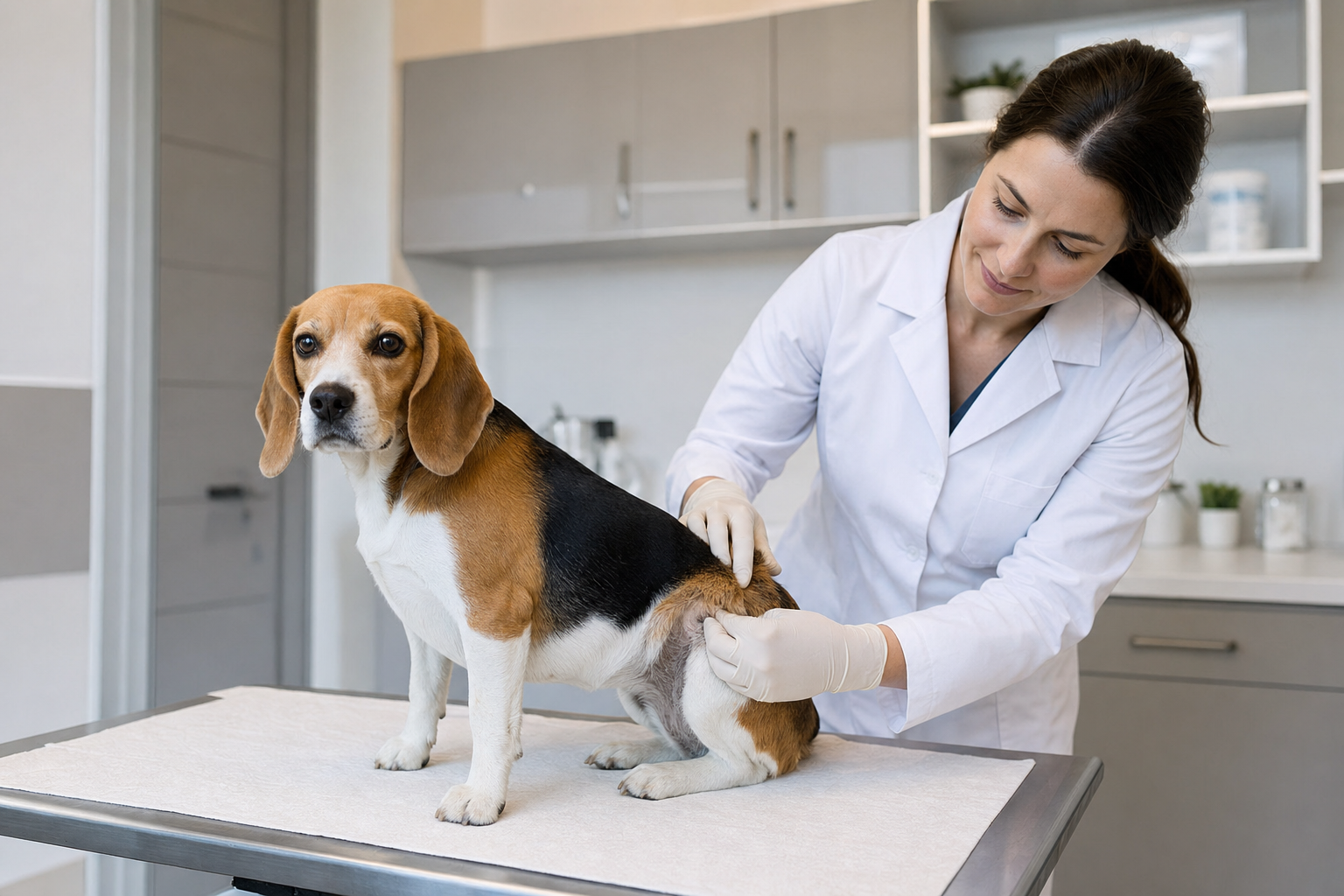
Scooting across the carpet, licking at the rear end, chasing at the tail — these are almost always signs that a dog’s anal glands are full, uncomfortable, or infected, not a behavior problem or “something gross dogs just do.” Most cases are simple to fix, but a subset can progress to a painful infection or abscess if ignored.
I see this constantly in exam rooms, usually from owners a little embarrassed to bring it up. There’s nothing to be embarrassed about — it’s one of the most common reasons dogs are scooting, and it’s very treatable once you know what you’re looking at.
What Anal Glands Are and Why They Matter
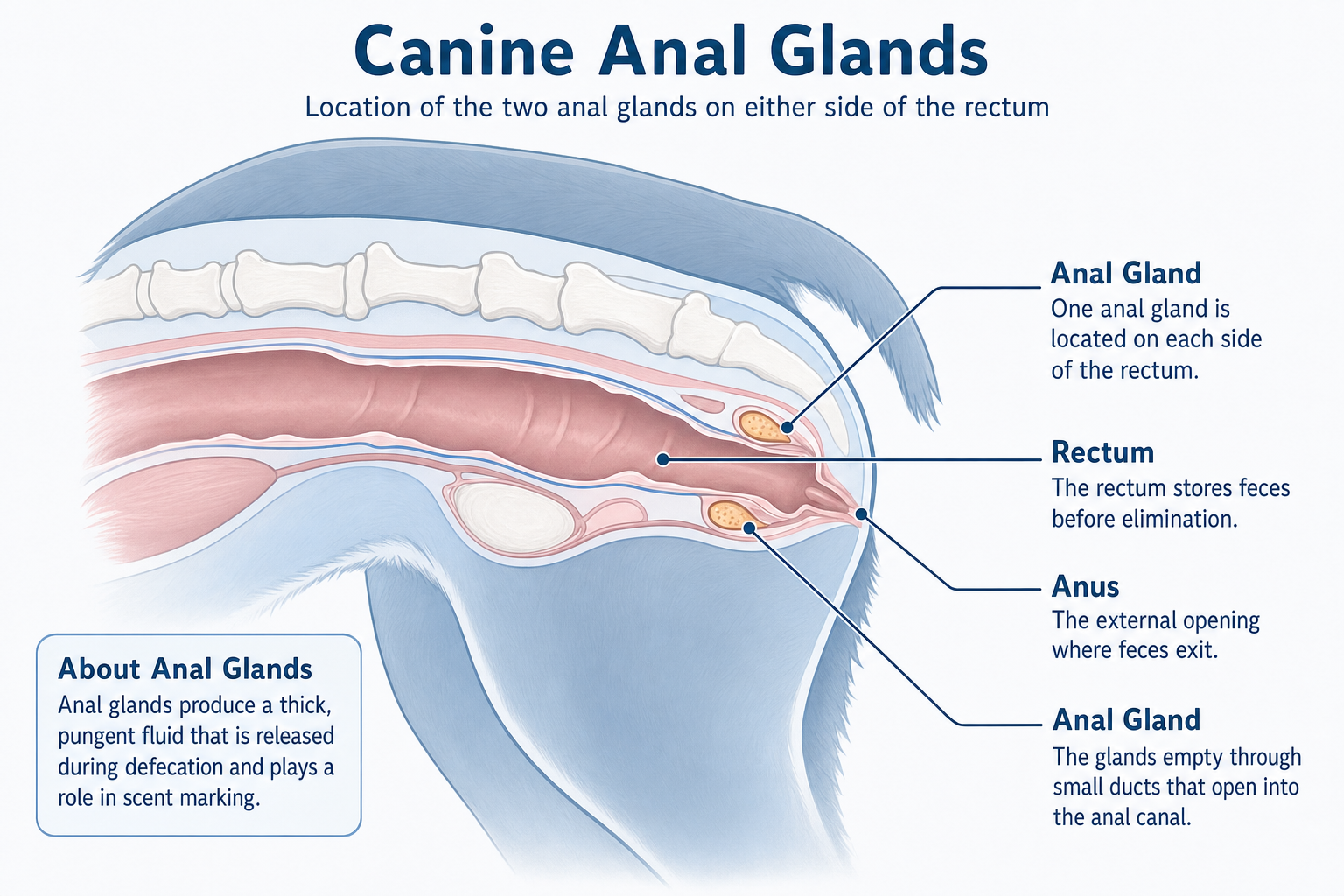
Dogs have two small scent glands, one on each side, located just inside the rectum. They fill gradually with a strong-smelling fluid dogs use to mark territory and identify each other — it’s what dogs are sniffing when they greet nose-to-tail. Normally, the glands empty a little on their own every time a dog has a firm, well-formed bowel movement, since the passing stool puts enough pressure on the glands to express them naturally.
Problems start when that natural emptying doesn’t happen consistently. Soft stool or diarrhea doesn’t create enough pressure to empty the glands, and over time they fill up, thicken, and become uncomfortable or inflamed.
Why Your Dog Is Scooting or Licking
Full or impacted anal glands are the single most common cause of scooting, but they’re not the only one. Here’s how to sort out what you’re likely dealing with.
- Full or impacted anal glands — the classic cause. Fluid builds up, thickens, and creates pressure and itching. Dogs scoot, lick, or bite at the area for relief.
- Infected or abscessed glands — when impacted glands go unaddressed, bacteria that would normally leave with the fluid can multiply inside the gland instead, leading to swelling, redness, and sometimes a visible lump near the anus that looks like a boil.
- Intestinal parasites, particularly tapeworm segments, which can cause an itchy rear end unrelated to the anal glands.
- Skin allergies or irritation around the anus, sometimes from food sensitivities or environmental allergies.
- Anal gland masses, which are less common but worth ruling out in older dogs with persistent, one-sided symptoms.
A dog scooting once, briefly, isn’t necessarily an emergency. A dog scooting repeatedly, or combined with licking, straining, or a foul odor, is telling you something needs attention.
Which Dogs Are More Prone to This
Any dog, of any breed or size, can develop anal gland problems, but a few patterns come up often:
- Small-breed dogs — including Chihuahuas, Miniature Poodles, and Shih Tzus — tend to have narrower gland ducts, which makes them more prone to impaction
- Overweight dogs, since extra body fat can make it harder for the glands to empty normally
- Dogs with chronic soft stool, diarrhea, or food and skin allergies
- Dogs that get anal glands expressed routinely and unnecessarily (for example, at every grooming visit) — paradoxically, over-expression can create scar tissue that makes the glands empty less effectively on their own over time
Routine Discomfort vs. an Emergency
Most anal gland issues are uncomfortable but not urgent — they’re fixed with a same-week vet visit. A smaller number cross into true emergency territory. Use this to sort out which one you’re facing.
| Situation | What it usually means | What to do |
|---|---|---|
| Occasional scooting, dog otherwise normal | Mildly full glands | Schedule a routine vet visit within the week |
| Frequent scooting, licking, foul odor | Impacted or irritated glands | Vet visit within a day or two |
| Visible swelling, redness, or a lump near the anus | Infected or forming abscess | Vet visit promptly, don’t wait for it to “pop” |
| Bleeding, pus, sudden swelling that ruptures | Ruptured abscess | Same-day or emergency vet care |
| Straining, pain, or crying during bowel movements | Possible severe impaction or mass | Vet visit promptly |
A ruptured anal gland abscess is genuinely an emergency — it’s painful, messy, and needs veterinary cleaning and often antibiotics right away. Don’t wait to see if it heals on its own.
What Happens at the Vet Visit
For straightforward impaction, treatment is usually quick: the vet or technician manually expresses the glands, which relieves the pressure almost immediately. If the fluid looks abnormal — thick, discolored, bloody, or pus-like — that points toward infection, and your dog may need a short course of antibiotics along with the expression.
An abscess needs more involved care: it may need to be lanced and flushed, and your dog will likely go home with antibiotics and pain medication. Recurrent or severe cases — where a dog is dealing with impactions over and over — sometimes lead to a conversation about surgical removal of the glands, though this is reserved for dogs where conservative management hasn’t worked.
One important note: if your dog keeps scooting for more than a day or two after the glands have already been expressed, go back — that usually means something more is going on and the glands need to be re-evaluated rather than expressed again and again.
Can You Express Anal Glands at Home?
It’s possible, but I generally don’t recommend it as a routine habit. Done incorrectly, it can cause pain, bruising, or gland trauma, and done too often — even correctly — it can create scar tissue that makes the underlying problem worse over time. If your dog has recurring issues, ask your vet or a groomer experienced with the technique to show you the correct method, and reserve it for glands that are genuinely uncomfortable rather than doing it “just in case” on a schedule.
Reducing Future Anal Gland Problems
- Keep stools firm and well-formed — a consistent, appropriate diet and adequate fiber help stools provide the pressure needed to empty the glands naturally
- Address chronic diarrhea or soft stool promptly rather than letting it become a long-term pattern
- Keep your dog at a healthy weight
- Treat underlying allergies or skin conditions that contribute to inflammation near the anus
- Avoid unnecessary routine expression “just because” at every grooming appointment
Frequently Asked Questions
Is scooting always about anal glands?
No. Anal glands are the most common cause, but intestinal parasites like tapeworms, skin allergies, and general irritation can all cause scooting too. If expressing the glands doesn’t resolve it, or your dog keeps scooting afterward, ask your vet to check for these other causes.
How do I know if my dog’s anal glands are full?
Scooting more than once or twice, frequent licking at the area, a foul or fishy odor, and small spots left on the carpet after scooting are the usual signs. A full gland can sometimes be felt as a small, puffy lump about the size of a grape on either side of the anus, though this is best checked by your vet rather than at home.
Should I have my dog’s glands expressed every time we go to the groomer?
Not automatically. Routine expression on a schedule isn’t necessary for every dog, and doing it too often can create scar tissue that actually makes natural emptying harder over time. It’s more useful for dogs with a documented pattern of recurring impaction.
What does an anal gland abscess look like?
Usually a red, swollen area near the anus that can look like a pimple coming to a head. It’s often painful to the touch, and if it ruptures you may see blood or pus on the skin or bedding. This needs veterinary attention promptly.
Can diet change help prevent anal gland problems?
Often, yes. Firmer, well-formed stools do a better job of naturally expressing the glands during a bowel movement. If your dog has chronically soft stool, talk to your vet about diet adjustments or added fiber, since resolving the stool consistency can reduce how often the glands need manual attention.
My dog was just seen and expressed, but is still scooting two days later. What now?
Go back to your vet. Continued scooting after expression usually means there’s more going on — infection, incomplete emptying, or another cause of irritation — and it’s worth a second look rather than assuming it will resolve on its own.
Veterinary Sources & References:
Hill’s Pet Nutrition — Dog Scooting and Anal Gland Problems
PetMD — Why Is My Dog Scooting?
GoodRx Pet Health — Do Dogs Need Their Anal Glands Expressed?
Leave a Reply