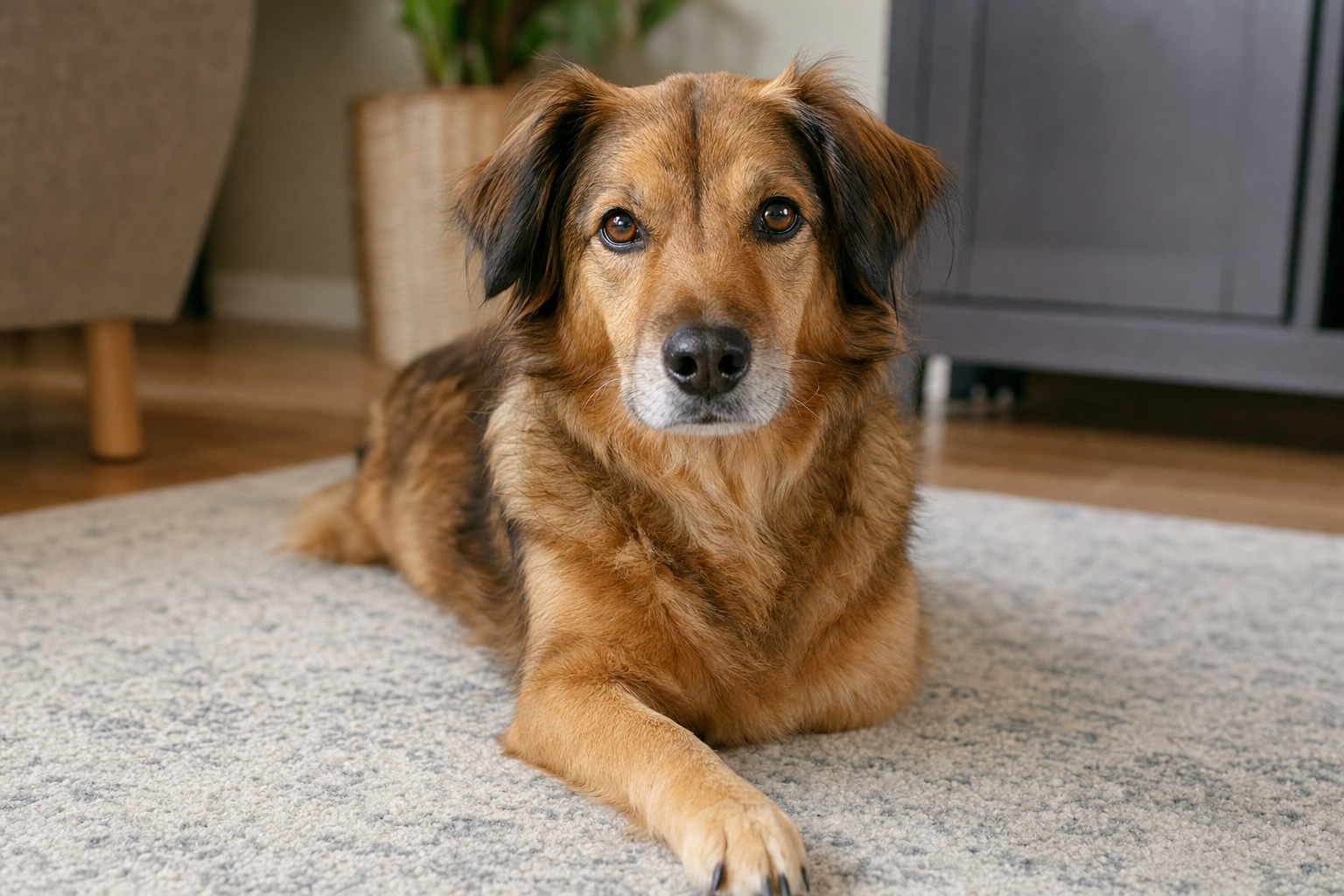
Short answer: A dog licking one paw raw may have a splinter, torn nail, burn, sting, wound, or localized infection. Repeatedly licking several paws is more often linked with itch, allergy, parasites, irritation, or a deeper skin problem. Stop the licking safely and arrange veterinary care when the skin is open, swollen, painful, smelly, or not improving.
“My dog keeps licking his paws” is common owner wording, but the important clues are where the licking occurs, how suddenly it began, and what the skin looks like. Licking can worsen inflammation and create a cycle of moisture, self-trauma, and infection. This article focuses on triage and useful observations, not on diagnosing a paw problem from a photograph.
| Pattern | Possible direction | Next step |
|---|---|---|
| One paw, sudden onset | Foreign material, injury, nail or pad problem | Inspect gently; same-day care if painful or open |
| Several paws, seasonal or recurrent | Allergy, environmental irritation, parasites | Book an exam and discuss itch control |
| Red, swollen lump between toes | Pododermatitis, cyst-like lesion, infection, foreign body | Veterinary examination rather than squeezing it |
| Bad odor, discharge, bleeding, or limping | Secondary infection or significant pain | Prompt veterinary care |
Check the paw without making it worse
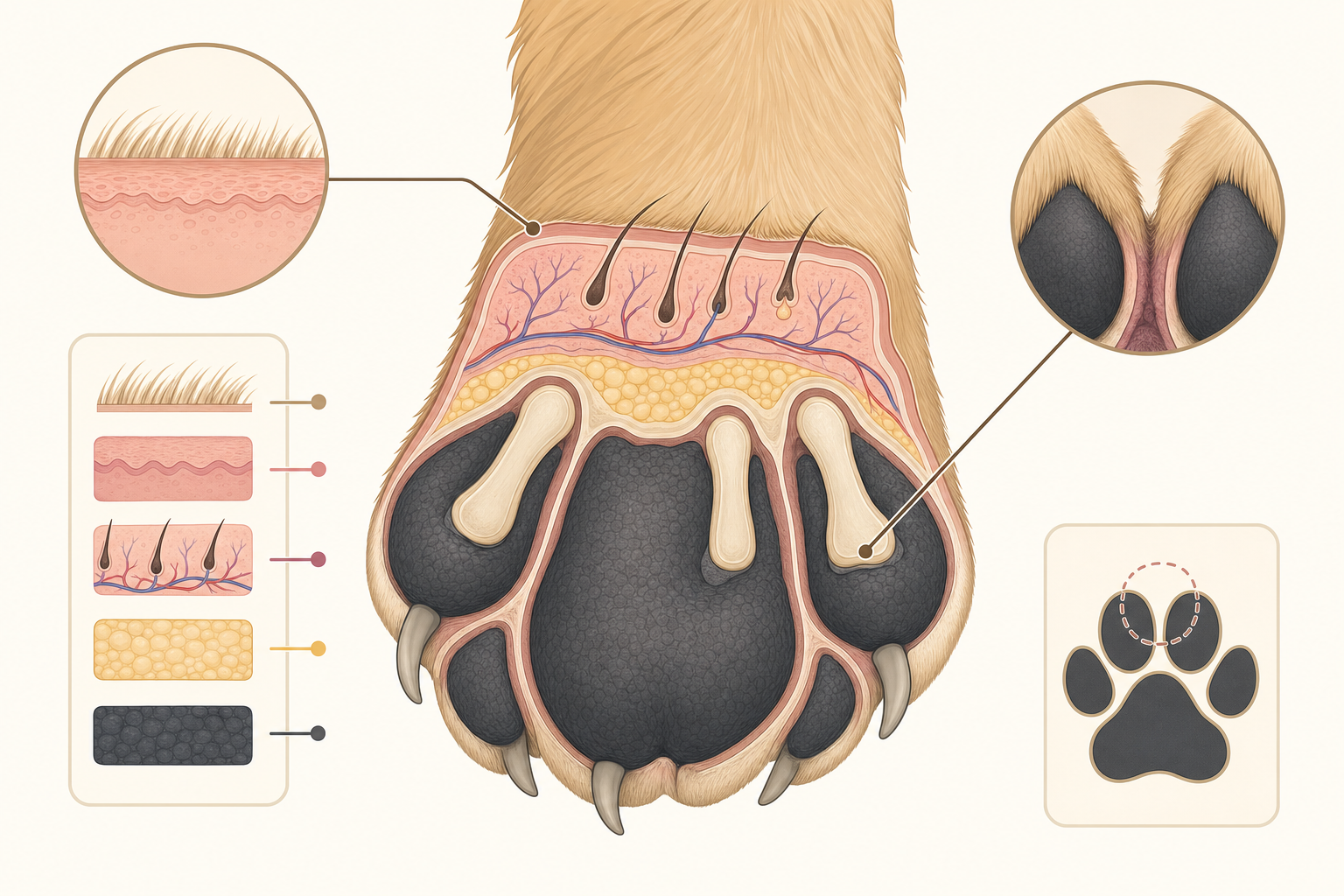
In good light, compare the affected paw with the other side. Look at the pads, nails, spaces between the toes, and the top of the foot. Stop if your dog becomes frightened, growls, or tries to bite; pain can change behavior, and forcing an examination can cause an injury to both of you.
- Look for a torn nail, cut pad, thorn, grass awn, burr, or small area of heat-related damage.
- Notice redness, hair loss, moisture, crusts, swelling, discharge, odor, or a firm nodule between toes.
- Watch your dog walk. Limping, reluctance to bear weight, or repeated stopping suggests pain rather than simple grooming.
- Take a clear photograph and note whether one or multiple feet are affected. This helps your veterinarian track change.
Do not dig for a deeply embedded object, pop a lump, or apply leftover antibiotics, steroid cream, essential oils, or human pain medication. These can worsen tissue damage, delay diagnosis, or be toxic if licked.
Why dogs lick paws until they are raw
Injury or foreign material
A sudden focus on one foot can follow a splinter, burr, grass awn, insect sting, torn nail, puncture, or pad injury. A dog may lick before swelling is obvious. If you can see a loose surface object that lifts away easily, remove it gently and rinse the paw with clean water; do not probe a wound. Persistent pain needs an examination.
Allergy and itch
Environmental or food-related allergy can cause itchy feet, face rubbing, ear trouble, and recurrent skin inflammation. Dogs often lick more than one paw, and the problem may flare during particular seasons or after time outdoors. Fleas and other parasites can also cause intense itch, even when you do not see a flea.
Infection and self-trauma
Constant moisture and licking damage the skin barrier. Bacteria or yeast may then contribute to odor, redness, greasy debris, crusting, or discharge. A secondary infection is a reason to stop guessing and have the paw examined; treatment depends on what is actually present.
Deeper inflammation or a mass
Recurring swelling between the toes, a draining tract, or a firm lump can have several causes, including inflammation, foreign material, or a growth. A veterinarian may need to examine the lesion, sample cells, or take imaging. Do not squeeze or lance it at home.
What can I do tonight?
- Move your dog away from the suspected irritant and keep activity calm.
- Rinse visible dirt or salt from the paw with lukewarm water, then pat dry.
- Use a properly fitted cone if your dog can tolerate it and can still breathe, drink, and rest normally. A loose sock is not a substitute for supervision and can become wet or restrictive.
- Check the paw again later. If licking resumes immediately, the skin opens, or your dog seems painful, call a veterinary practice.
Do not tightly wrap a swollen paw or leave a damp covering in place. Do not use a human anti-itch product unless a veterinarian has confirmed it is safe for your dog and explained how to prevent ingestion.
When is paw licking urgent?
Seek prompt or emergency care for uncontrolled bleeding, a deep puncture, rapidly increasing swelling, severe pain, inability to walk, a suspected burn or chemical exposure, facial swelling or breathing trouble, or a foreign object embedded in the paw. Same-day advice is appropriate for pus, strong odor, an open sore, a red streak, feverish behavior, or a painful lump between the toes.
How a veterinarian investigates the problem
The visit may include a full skin and ear examination, careful paw inspection, parasite review, nail and pad evaluation, and discussion of diet, seasonality, flooring, grooming products, and outdoor exposures. Depending on findings, the veterinarian may recommend cytology, skin testing, culture, radiographs, or a biopsy. The goal is to identify the trigger and treat infection or inflammation without relying on an endless cycle of trial-and-error products.
Frequently asked questions
Why is my dog licking only one paw?
One-paw licking that began suddenly makes an injury, nail problem, sting, or foreign material more likely, although other causes are possible. Inspect gently and call if pain or swelling is present.
Can I put a sock on my dog’s raw paw?
A loose, clean covering may protect a superficial area briefly only when supervised, but moisture and tightness can worsen a paw problem. A cone and veterinary advice are usually safer.
Will an over-the-counter cream fix the problem?
Not necessarily. The wrong product can irritate skin or be harmful when swallowed. Ask a veterinarian before applying medication.
Is paw licking always caused by allergies?
No. Injury, foreign material, parasites, infection, pain, irritation, and deeper lesions can all cause licking. The distribution and skin findings matter.
How quickly should a raw paw heal?
Minor irritation should improve once the trigger and licking are controlled. Continued licking, worsening redness, swelling, odor, or pain means the paw needs an examination.
Related guides
See dog itchy feet, dog skin allergies, and common causes of dog itching for related owner education.
Comments
One response
[…] Scooting across the carpet, licking at the rear end, chasing at the tail — these are almost always signs that a dog’s anal glands are full, uncomfortable, or infected, not a behavior problem or “something gross dogs just do.” Most cases are simple to fix, but a subset can progress to a painful infection or abscess if ignored. […]