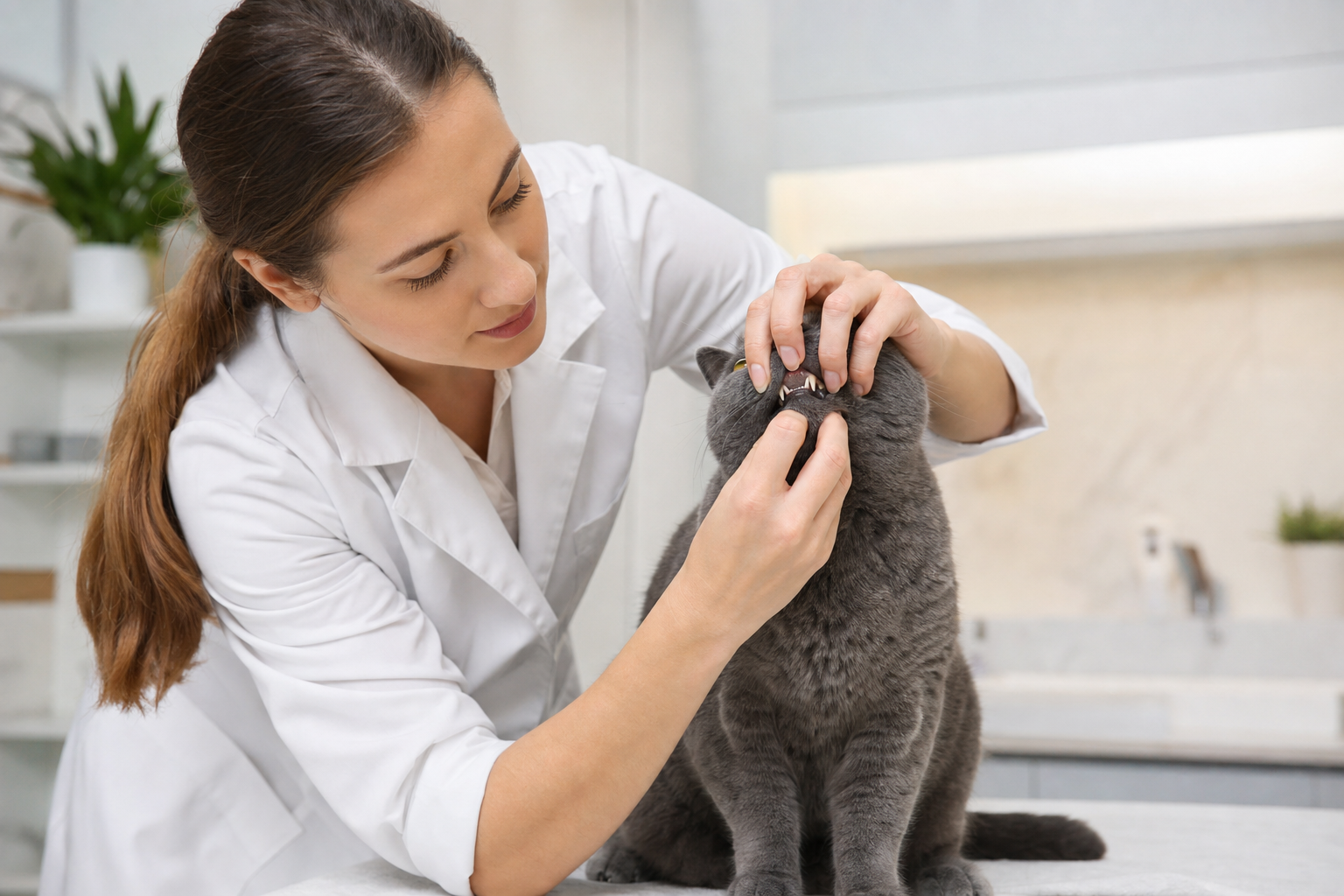
A cat drooling, dropping food from the mouth, or crying out while eating usually has a painful mouth — and one of the most frustrating causes is a condition called feline stomatitis. It’s not the same thing as routine dental tartar, it doesn’t respond well to at-home dental care alone, and it needs a veterinarian’s attention to manage properly.
Stomatitis is one of the more painful conditions I see in cats, and one of the more misunderstood. Owners often assume a cat that’s still eating “must be fine,” but cats in significant oral pain frequently keep eating anyway, just more slowly, more reluctantly, or with obvious discomfort. Knowing the signs early makes a real difference in how much suffering your cat goes through before treatment starts.
What Feline Stomatitis Is
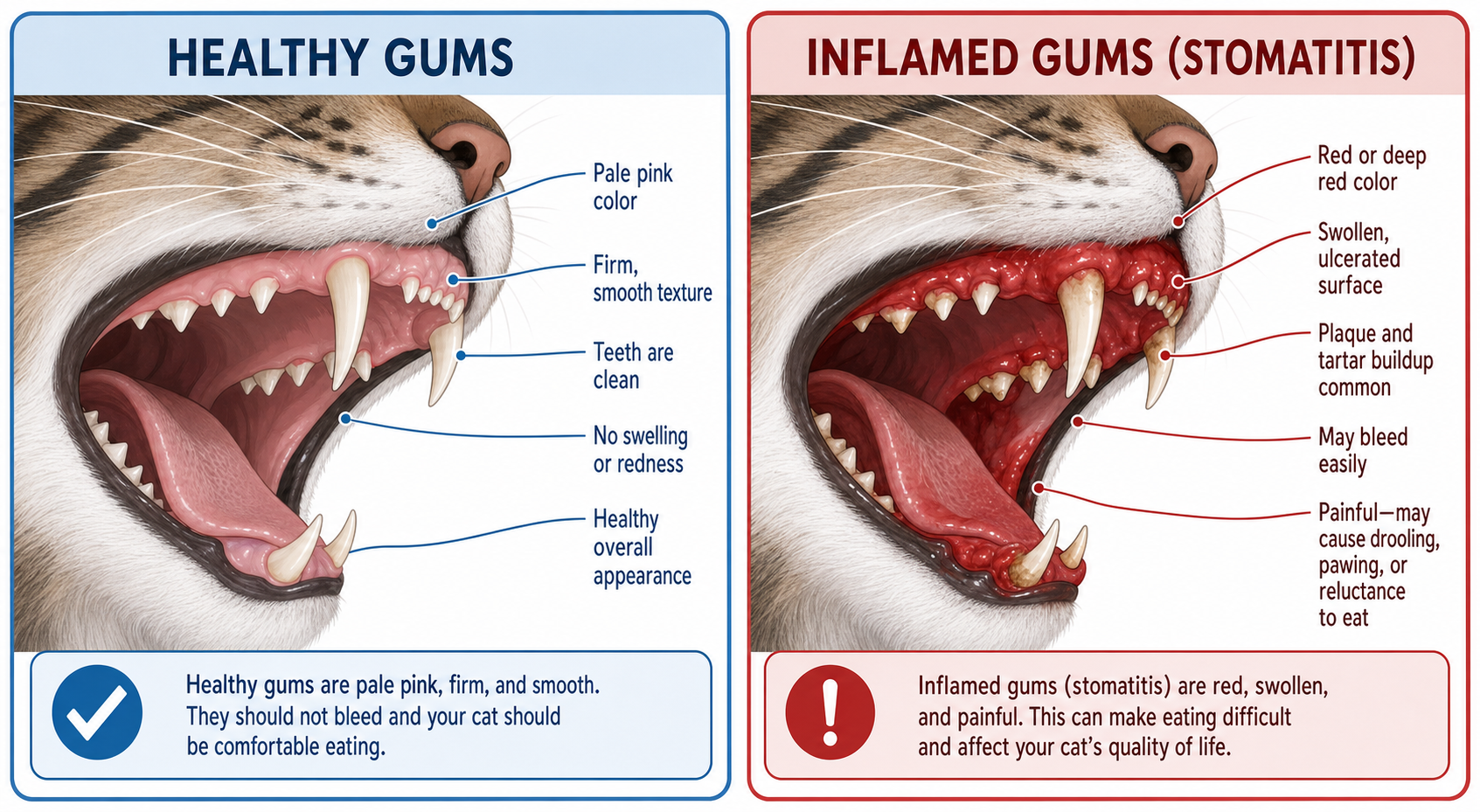
Veterinary dentists call this condition feline chronic gingivostomatitis, or FCGS. Unlike ordinary gingivitis, which is limited to the gumline and usually well tolerated, stomatitis is a much more severe, widespread inflammation that can affect the gums, the inside of the cheeks, the tongue, and the back of the throat. It’s estimated to affect up to roughly 1 in 10 cats, and it is genuinely painful and debilitating rather than a cosmetic dental issue.
The exact cause isn’t fully understood, but the leading explanation is that it’s an exaggerated immune response — the cat’s own immune system overreacting to dental plaque, certain viruses, or both. Feline calicivirus has been linked to the condition, along with feline immunodeficiency virus (FIV) and feline leukemia virus (FeLV), which is why your vet may recommend testing for these viruses as part of the workup. Cats living in multi-cat households without outdoor access also appear to be at higher risk. Because a triggering virus can potentially spread between cats even though the resulting stomatitis itself is not contagious, this is also a good reason to have other cats in the household checked.
Signs Your Cat May Have Stomatitis
Often the very first thing owners notice is bad breath — worse than typical “cat breath.” From there, watch for:
- Drooling or excessive salivation
- Dropping food out of the mouth while eating
- Crying out or hesitating before eating, especially with hard kibble
- Reduced appetite or avoiding food altogether
- Weight loss over time
- Reduced grooming, sometimes leading to a matted or unkempt coat
- Visible redness or inflammation of the gums, inside the cheeks, or at the back of the mouth
A cat that’s still eating isn’t necessarily fine — many cats with stomatitis keep eating out of hunger despite real pain, just more cautiously or in smaller amounts. Don’t wait for a cat to stop eating entirely before getting the mouth checked.
Stomatitis vs. Ordinary Gum Disease
| Gingivitis (routine) | Stomatitis | |
|---|---|---|
| Area affected | Gumline only, where tooth meets gum | Gums, cheeks, tongue, back and floor of the mouth |
| Pain level | Usually mild, well tolerated | Often severe and debilitating |
| Response to a dental cleaning alone | Typically improves well | May improve only temporarily or not resolve at all |
| Underlying driver | Plaque and tartar buildup | Exaggerated immune response, often plaque- and virus-related |
This is the key reason stomatitis catches owners off guard: a cat can have a professional dental cleaning, look better for a while, and then relapse — because the problem isn’t really the plaque itself, it’s the immune system’s response to it.
How It’s Diagnosed and Treated
Diagnosis starts with an oral exam under sedation, since a fully awake, painful cat rarely tolerates a thorough look. Dental X-rays are important too — they can reveal retained tooth roots, resorptive lesions, or bone changes below the gumline that aren’t visible otherwise. Blood work and viral testing (FIV/FeLV) are often recommended as part of the workup.
Medical management alone — antibiotics, anti-inflammatories, or steroids without addressing the teeth — tends to give only temporary relief. The treatment most consistently associated with long-term improvement is tooth extraction: removing all the premolars and molars (partial-mouth extraction), or in more severe cases all of the teeth (full-mouth extraction). It sounds drastic, but it removes the surfaces the plaque-driven immune response is reacting to, and most cats do remarkably well afterward — eating comfortably, sometimes better than they had in months, once healing is complete.
Recovery isn’t instant. Full resolution of the inflammation is often not seen until several weeks after surgery, once the surgical sutures have dissolved, with a recheck typically scheduled around 4 to 6 weeks out. Some cats need a short course of pain medication or anti-inflammatories during that healing window, and a smaller number need longer-term medications — such as an immunosuppressant, corticosteroids, or other pain-modifying drugs — if inflammation persists even after extraction.
The encouraging news: full-mouth extraction has been associated with resolving the need for long-term medication entirely in a large majority of cats, making it genuinely worth discussing with your vet rather than avoiding out of concern for how “extreme” it sounds.
When Mouth Pain Becomes an Emergency
Stomatitis itself usually develops gradually rather than overnight, but a few situations warrant urgent rather than routine care:
- Your cat has stopped eating or drinking entirely for more than a day
- There is visible bleeding from the mouth
- Your cat appears lethargic, is hiding, or seems to be losing weight quickly
- You notice a swelling on the face or jaw along with the mouth pain
A cat that isn’t eating at all is at risk of a separate, serious complication called hepatic lipidosis, so a cat refusing food for more than 24 hours — for any reason, mouth pain included — should be seen promptly rather than waiting it out.
Frequently Asked Questions
Is feline stomatitis contagious to other cats?
The inflammatory condition itself is not contagious — it’s an individual cat’s immune response. However, some of the viruses associated with triggering it, such as feline calicivirus, can spread between cats. If you have multiple cats and one is diagnosed with stomatitis, it’s worth having the others checked.
Will removing all my cat’s teeth mean they can’t eat normally?
No. Cats adapt very well to eating without teeth, including dry kibble in many cases, and most owners report their cat eating more comfortably and enthusiastically after recovery than they had in months prior to surgery, since the constant source of pain has been removed.
My cat just had a dental cleaning and still has bad breath and drooling. Why?
If the underlying issue is stomatitis rather than routine tartar, a standard cleaning alone often isn’t enough — the inflammation can persist or return because the immune response, not just the plaque, is driving it. This is worth discussing with your vet, since it may point toward needing X-rays and a stomatitis-specific treatment plan rather than another routine cleaning.
Can stomatitis be managed without extractions?
In some cats, yes, with ongoing medication such as anti-inflammatories or immunosuppressants, especially if surgery isn’t an option. However, this approach is generally less effective long-term than extraction and often requires continued medication for life. Extraction remains the treatment most likely to give lasting relief.
How do I know if my cat’s mouth is painful if they’re still eating?
Watch for subtler signs: eating more slowly, favoring one side of the mouth, dropping food, hesitating before taking a bite, or preferring soft food over kibble. Bad breath and drooling are also strong clues even when appetite looks normal on the surface.
Should I test my cat for FIV and FeLV if they have mouth inflammation?
Yes, most veterinarians recommend it as part of the stomatitis workup, since both viruses have been linked to the condition and knowing your cat’s status affects both treatment planning and household management if you have other cats.
Veterinary Sources & References:
PetMD — Stomatitis in Cats: Symptoms, Causes and Treatment
Michigan Veterinary Dental Services — Feline Stomatitis
Preston Veterinary Dental Services — Treating Feline Stomatitis
Leave a Reply