Introduction
Dog dry heaving—also known as non-productive retching—is the act of forceful gagging and abdominal contractions that mimic vomiting but produce little to no stomach contents. When your dog keeps dry heaving, it can signal anything from mild throat irritation to a life-threatening veterinary emergency like bloat (gastric dilatation-volvulus). As a veterinarian, I’ve seen cases where recognizing dry heaving early saved a dog’s life, and cases where delays of even an hour led to devastating outcomes.
If your dog is dry heaving, it’s important to monitor the situation closely and understand the potential underlying causes. Whether it’s a minor issue or something more serious, recognizing when your dog is dry heaving can save lives.
It’s essential to respond promptly to repeated retching, as this could indicate a serious condition like bloat. The sooner you act, the better the outcome for your furry friend.
This article covers how to identify dry heaving, the most common and dangerous causes of dry heaving in dogs, emergency signs that require immediate action, treatment protocols, and practical prevention strategies. It is written for pet owners who need clear guidance on when dry heaving requires emergency veterinary care versus a routine consultation.
The direct answer: If your dog is dry heaving, especially with an enlarged abdomen, pale gums, restlessness, or difficulty breathing, treat it as a veterinary emergency and transport your dog to the nearest emergency vet immediately. Bloat can become fatal rapidly without treatment.
After reading this article, you will be able to:
- Recognize emergency signs that distinguish life-threatening dry heaving from minor episodes
- Understand the most common causes including bloat, foreign objects, kennel cough, and throat conditions
- Know exactly when to seek immediate care based on clinical red flags
- Implement prevention strategies to reduce your dog’s risk of conditions that cause dry heaving
Understanding Dry Heaving in Dogs
Dry heaving in dogs is known as non-productive retching-your dog goes through the full physical motion of vomiting, with visible abdominal contractions and diaphragm effort, but nothing (or only foamy saliva) comes out. This involves activation of the same nausea and emetic pathways that produce vomiting, but the stomach either cannot expel its contents or has nothing to expel. Dry heaving can be caused by temporary throat irritation or severe medical emergencies, and distinguishing between the two is critical.
Unlike normal digestive sounds or occasional stomach gurgling, dry heaving represents a disruption that signals underlying problems-from a foreign object lodged in the dog’s throat to a complex medical condition like GDV where the dog’s stomach fills with gas and twists on itself.
Dry Heaving vs. Vomiting
The key difference is output: dry heaving produces no material, while vomiting expels stomach contents including partially digested food, bile, blood, or foreign material. Both involve strong abdominal contractions, but vomiting completes the emetic sequence while dry heaving stalls at the retching phase.
What pet owners can observe:
- Visual cues: During vomiting, you’ll see expelled material on the ground. During dry heaving, your dog strains repeatedly with nothing or only thin saliva emerging.
- Auditory cues: Vomiting includes the characteristic splashing sound of material being expelled. Dry heaving produces harsh retching sounds without that follow-through.
- Body positioning: Both involve hunched posture and abdominal heaving, but a dog that dry heaves repeatedly without producing anything is demonstrating a more concerning pattern than a dog that vomits once and resumes normal behavior.
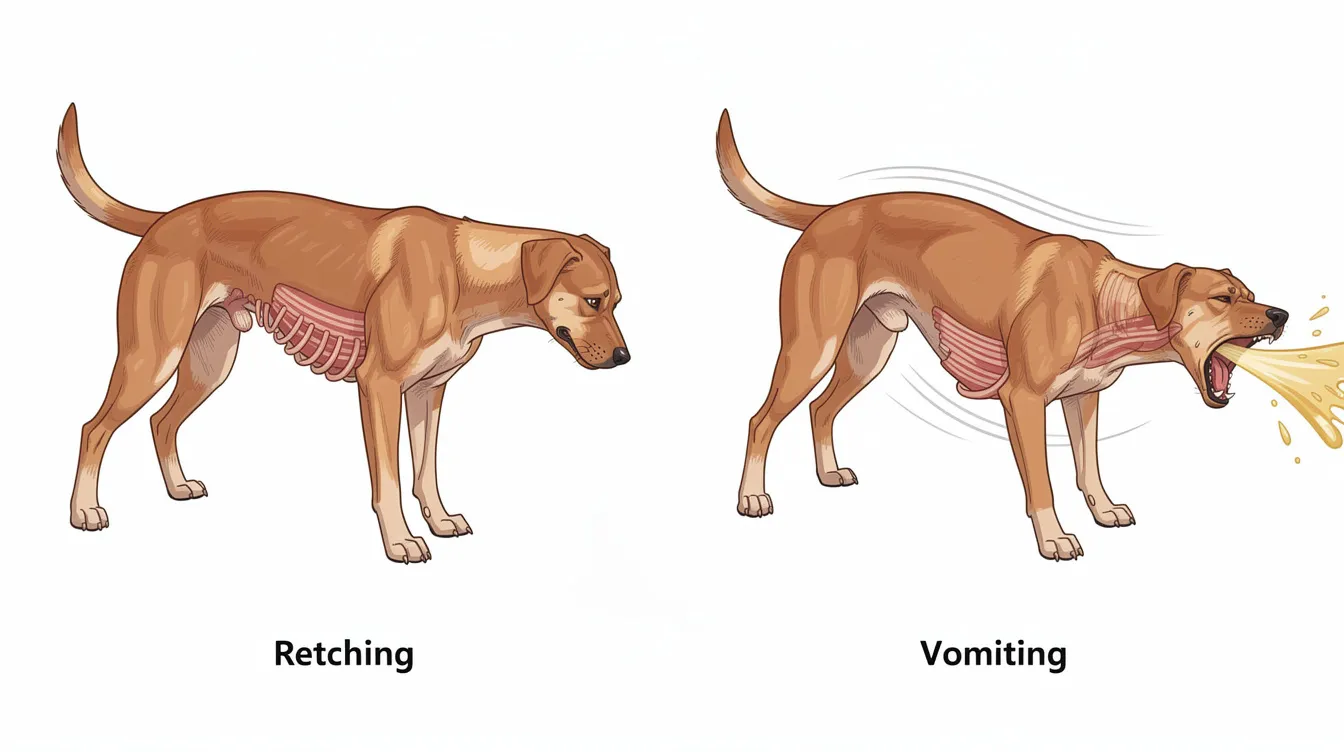
According to the Merck Veterinary Manual, the normal vomiting sequence progresses through nausea, excessive drooling, retching, and then active expulsion. When this sequence repeatedly stalls at the retching phase, clinicians consider it non-productive retching-a hallmark sign of conditions like GDV that require veterinary intervention.
Dry Heaving vs. Gagging and Coughing
Accurate diagnosis begins with correctly identifying what your dog is actually doing. Gagging or dry heaving may look similar to an untrained eye, but they originate from different anatomical locations and suggest different problems.
Gagging is primarily a throat reflex. It involves more motion in the dog’s throat and pharyngeal area, with less pronounced abdominal effort. Gagging often results from irritation to the dog’s airway or throat-such as when a dog has swollen tonsils, a sore throat, or something stuck near the back of the mouth. The gag reflex is triggered by pharyngeal or laryngeal stimulation.
Coughing is a respiratory reflex that expels air from the lungs and trachea. It produces harsh, hacking sounds and sometimes a loud honking cough characteristic of conditions like kennel cough. Coughing involves chest compression rather than the deep abdominal effort seen in dry heaving. In some dogs, particularly those with kennel cough, a dry heaving cough sequence occurs where coughing triggers gagging or retching-this is commonly misidentified as pure dry heaving.
The clinical significance of this distinction cannot be overstated: mistaking GDV-related dry heaving for simple gagging or coughing can cost critical time. When a dog shows signs of repeated gagging or persistent retching with other concerning symptoms, the safest approach is to treat it as potentially serious until proven otherwise.
Common Causes of Dry Heaving in Dogs
The causes of dry heaving span a wide spectrum-from a minor throat infection that resolves with basic treatment to a very serious condition that constitutes a surgical emergency. Understanding these causes helps pet owners assess urgency and communicate effectively with their veterinarian.
In my clinical experience, the first priority is always ruling out the most dangerous possibilities before considering benign explanations.
Gastric Dilatation-Volvulus (Bloat)
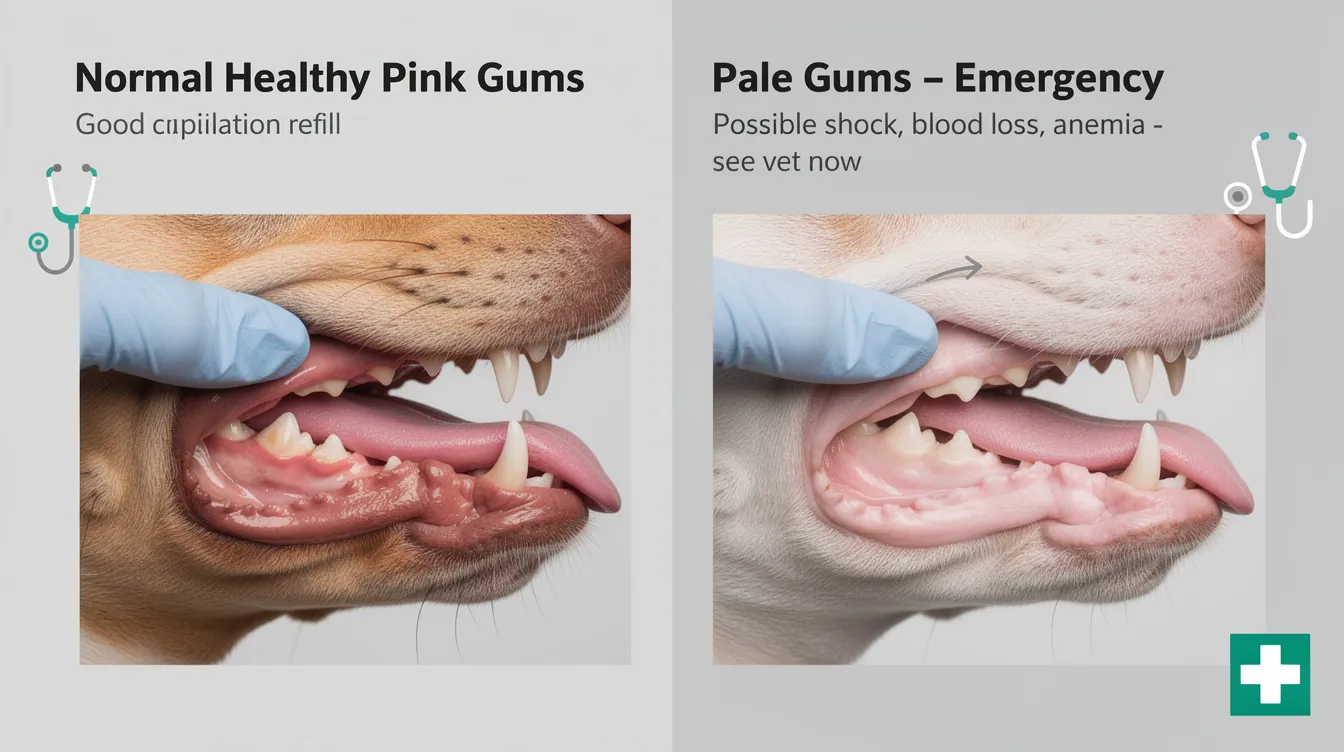
Gastric dilatation-volvulus (GDV) occurs when the stomach becomes distended and twists. Blood flow can be compromised and shock can develop. Repeated attempts to vomit with little or nothing coming up, especially with restlessness, drooling, a swollen abdomen, weakness, or pale gums, require immediate emergency assessment. Do not wait for every sign to appear.
Large, deep-chested dogs are at higher risk, but breed or body size cannot rule it out. The following are examples of higher-risk breeds listed by Cornell’s canine health center, not a diagnostic checklist.
| Risk pattern | Examples or relevant history | What owners should do |
|---|---|---|
| Large or deep-chested breeds | Great Dane, Saint Bernard, Weimaraner, Irish Setter, Standard Poodle, Doberman Pinscher, and Basset Hound | Discuss individual risk and preventive gastropexy with a veterinarian. |
| Family history or increasing age | A parent or sibling with GDV; older age | Mention this history during preventive-care visits. |
| Feeding-related risk factors | Large or single daily meals, rapid eating, raised bowls, and exercise after meals | Ask about feeding changes; no routine eliminates risk. |
GDV cannot be confirmed or excluded at home. Emergency care may involve stabilization, stomach decompression, and surgery. There is no safe waiting period based on how long your dog has been retching.
Foreign Object Obstruction
A foreign object lodged in a dog’s throat or esophagus is another serious cause of dry heaving that can require veterinary intervention. Dogs are notorious for swallowing foreign objects-bones, rawhide, toy fragments, sticks, and household items-that can become stuck at critical narrowing points in the esophagus: the thoracic inlet, near the heart base, or the lower esophagus. Dry heaving can indicate a foreign object in the throat or a gastrointestinal blockage in dogs.
Signs accompanying dry heaving from obstruction include pawing at the mouth, excessive drooling, visible distress, difficulty swallowing, and sometimes a partial obstruction that allows some air and fluid to pass but creates persistent irritation as the dog works to dislodge the object while retching. A foreign object partially obstructing your dog’s esophagus may cause intermittent retching that worsens over time.
If the object is sharp-such as bone fragments or wood splinters-the risk of esophageal perforation increases dramatically, potentially leading to mediastinitis or aspiration pneumonia. The Merck Veterinary Manual identifies bones, dental chews, wood, and rawhide as the most common esophageal foreign bodies. Removal is typically performed via endoscopy, though surgery is required when endoscopic removal fails or when significant damage has occurred. In some cases, the object must be surgically removed to prevent further complications.
Infectious and Inflammatory Conditions
Keep track of the timing and frequency of these episodes, as this might indicate the urgency of the situation.
Several infectious and inflammatory conditions can cause dry heaving or gagging that mimics it.
Kennel cough is a highly contagious respiratory illness in dogs caused by agents including Bordetella bronchiseptica, canine parainfluenza virus, and canine adenovirus type 2. Symptoms of kennel cough include a dry, hacking cough-often described as a loud honking cough-that frequently triggers gagging or retching at the end of coughing episodes. Dry heaving can be a symptom of kennel cough, and the retching component is commonly mistaken for a primary gastrointestinal problem. Kennel cough is a contagious disease, and dogs with kennel cough should be isolated from other dogs to prevent spread. Some dogs may also develop a runny nose or nasal discharge alongside the cough. While usually mild, kennel cough can progress to pneumonia in puppies or immunocompromised dogs.
Tonsillitis and throat inflammation: Throat irritation can be caused by swollen tonsils or minor infections. Tonsillitis can cause swollen tonsils in dogs, and these swollen tonsils may lead to gagging and dry heaving. When a dog has swollen tonsils, tonsillitis can interfere with a dog’s swallowing reflex, creating repeated retching attempts. A sore throat from pharyngitis or a throat infection can similarly trigger the gag reflex and produce dry heaving episodes. The dog’s tonsils may be visibly reddened and enlarged on examination.
Throat tumors: Tumors in the throat may cause breathing and swallowing issues, and growths in the throat may lead to gagging or dry heaving. A tumor partially obstructing the dog’s airway or esophagus creates progressive difficulty with breathing and swallowing. Surgical removal is necessary for throat tumors to clear airways and restore the dog’s ability to breathe and eat normally. Having a growth properly diagnosed through biopsy is essential for treatment planning.
Systemic illness: Nausea from kidney disease, liver disease, pancreatitis, or toxin exposure can trigger dry heaving as a precursor to vomiting. Dogs suffering from these conditions typically show other symptoms including lethargy, loss of appetite, and dehydration, which help guide an accurate diagnosis.
Emergency Evaluation and Treatment Protocols
Repeated unsuccessful retching can signal a time-sensitive emergency. Call the emergency clinic promptly and follow its transport advice; do not use a fixed timeline to decide that it is safe to wait.
Persistent dry heaving accompanied by lethargy or difficulty breathing is an emergency. Any dog showing extreme signs of distress alongside non-productive retching should be considered urgent until a veterinarian has assessed the pet’s condition.
Immediate Assessment Steps
- Call an emergency veterinary hospital now for repeated unproductive retching or any breathing difficulty, collapse, marked weakness, or swollen painful abdomen.
- Observe without pressing the abdomen or forcing your dog to walk. Note when it began, recent meals, and any possible swallowed object.
- Keep your dog calm and prepare for transport. Do not induce vomiting, give medicines, or offer a meal as a test. Ask the clinic what to do during the journey.
- Do not delay departure to record a video, check a pulse, or wait for additional signs.
The Cornell GDV guide treats suspected bloat with twisting as an immediate emergency.
Diagnostic Approaches
The approach your veterinarian takes depends entirely on the severity of presentation. Here is how emergency versus routine diagnostic protocols compare:
Emergency Signs | Immediate Diagnostics | Routine Cases | Standard Workup |
|---|---|---|---|
Distended abdomen | Abdominal radiographs | Single dry heave episode | Physical examination |
Pale/blue gums | Blood gas analysis | Normal behavior otherwise | Complete blood count |
Continuous retching | IV access and stabilization | Eating and drinking normally | Chemistry panel |
In emergency presentations, abdominal radiographs are the definitive diagnostic tool for GDV-the characteristic “double bubble” sign on X-ray confirms gastric torsion. ECG monitoring detects cardiac arrhythmias, which commonly accompany GDV. Blood work evaluates organ function, electrolyte status, and acid-base balance. Point-of-care ultrasound in ER settings is increasingly used for rapid detection of gastric distension and free abdominal fluid.
If you are unsure whether an episode was coughing, gagging, vomiting, or dry heaving, describe it to your veterinarian for triage. Repeated retching, distress, abdominal swelling, breathing difficulty, weakness, or collapse requires urgent evaluation.
Treatment and Management Strategies
Treatment dogs receive depends entirely on the underlying cause, and my approach always prioritizes stabilization before definitive intervention. Early intervention consistently improves outcomes across every condition that causes dry heaving in dogs.
Emergency Interventions
GDV treatment follows a well-established emergency protocol. Initial stabilization includes large-volume IV fluids at shock doses to restore blood flow, pain management, and gastric decompression-either passing a stomach tube or performing trocarization (needle decompression) to release trapped gas. Emergency surgery follows to untwist the dog’s stomach, assess tissue viability (necrotic stomach wall may require partial resection), and potentially perform splenectomy if the spleen is compromised. The critical final step is gastropexy-surgically anchoring the stomach to the body wall to prevent recurrence.
Postoperative monitoring extends 48 hours or longer, watching for cardiac arrhythmias (which can develop days after surgery), managing acid-base imbalances, and supporting recovery with fluid therapy and pain medications. Cornell reports that survival with prompt surgical intervention exceeds 80%, making rapid owner response literally the difference between life and death.
Foreign object removal is typically attempted first via endoscopy-a less invasive approach with faster recovery. When endoscopic removal fails, or when perforation has occurred, surgery becomes necessary. Following removal, treatment addresses esophageal inflammation with protective medications, and follow-up endoscopy may be recommended in 1–2 weeks if damage was severe, as esophageal stricture formation is a known complication (Merck Veterinary Manual).
Medical Management
For treatment dogs suffering from non-emergency causes, medical management focuses on symptom control and addressing the root cause:
- Anti-nausea medications such as maropitant (Cerenia) or ondansetron control nausea and reduce retching in dogs with gastrointestinal upset, pancreatitis, or systemic illness.
- Kennel cough treatment: Kennel cough can be treated with anti-inflammatory drugs or antibiotics depending on severity. Oral antibiotics are reserved for cases with secondary bacterial infection or risk of pneumonia progression. Cough suppressants may be used under veterinary supervision when there are no signs of pneumonia. The respiratory system is monitored for complications.
- Tonsillitis and throat infections may respond to anti inflammatory drugs, antibiotics when bacterial infection is confirmed, and supportive care including soft food and rest.
- Supportive care including IV or subcutaneous fluid therapy for dehydration, bland diet introduction, and environmental rest supports recovery across multiple conditions.
Note the advice provided here does not constitute medical advice regarding pets’ specific situations. Always consult your veterinarian for an accurate diagnosis and treatment plan tailored to your individual dog’s needs.
Prevention and Risk Reduction
Many conditions that cause dry heaving dogs to present as emergencies are preventable or their risk can be substantially reduced. Here are practical measures every pet owner can implement.
Bloat Prevention
- Discuss feeding two or more smaller meals rather than one large daily meal.
- Ask about ways to slow rapid eating and limit vigorous activity after meals.
- Avoid raised feeding bowls as a bloat-prevention strategy; discuss any separate medical reason for one with your veterinarian.
- For a dog at increased risk, ask whether preventive gastropexy is appropriate. This operation attaches the stomach to the body wall to reduce twisting risk.
Gastropexy does not prevent the stomach from becoming distended. A dog that has had the procedure still needs urgent care for retching, abdominal swelling, or distress. These measures reduce particular risks; they cannot guarantee prevention. See Cornell’s prevention guidance.
Foreign Object Prevention
- Select toys and chews that are appropriately sized for your dog-nothing small enough to be swallowed
- Supervise all chewing sessions, especially with puppies and aggressive chewers
- Remove small or ingestible objects from your dog’s environment
- Avoid giving cooked bones, which splinter and create sharp fragments
- Train a reliable “drop it” and “leave it” command to prevent scavenging
Infectious Disease Prevention
- Maintain up-to-date vaccination protocols including Bordetella, canine parainfluenza, and adenovirus vaccines
- Implement consistent parasite prevention programs to reduce infections that may cause nausea or respiratory complications
- Avoid high-risk environments (boarding facilities, dog parks) during local outbreak periods when possible
- Ensure good ventilation and hygiene in multi-dog households
- Promptly isolate ill animals to prevent spread to other dogs in the household
Conclusion and Next Steps
Dry heaving in dogs is a symptom that demands attention—not panic, but deliberate, informed action. The spectrum includes a variety of causes, and recognizing the difference can be lifesaving.
Take these immediate steps:
- Learn your dog’s normal-know what their gums look like, how their abdomen feels, and their typical behavior so you can spot deviations instantly
- Save your nearest emergency veterinary hospital’s contact information in your phone now, before you need it
- If your dog is currently dry heaving with any red flags-distended abdomen, pale gums, collapse, continuous retching, or difficulty breathing-stop reading and go to the emergency vet immediately
- Discuss prophylactic gastropexy with your veterinarian if you own a high-risk breed
Related topics worth exploring include regular preventive veterinary care schedules, breed-specific health monitoring programs for deep-chested breeds, and building a pet emergency preparedness kit for your home.
Frequently Asked Questions
Can dry heaving be normal in dogs?
A brief gag can have a different cause from repeated forceful retching, but owners may not be able to distinguish them reliably. Call a veterinarian if you are unsure. Repeated unsuccessful attempts to vomit, abdominal swelling, breathing difficulty, weakness, or collapse need urgent assessment rather than a timed home observation period.
How quickly should I seek veterinary care for dry heaving?
Immediately if you observe any of these red flags: belly distension, pale or blue gums, collapse or inability to stand, continuous retching, labored breathing, or extreme restlessness. These are extreme signs that the condition should be considered urgent, and you should transport to the nearest emergency vet without delay.
For isolated episodes-a single dry heave with otherwise normal behavior, good appetite, normal hydration, and no abdominal changes-you can monitor briefly but should consult your veterinarian the same day. When a dog shows signs of any progression or additional symptoms develop, escalate to emergency care.
What should I do while transporting my dog to the emergency clinic?
Keep your dog calm during transport-speak in soothing tones and minimize stimulation. Do not offer food or water. Position your dog on a flat surface when possible to minimize abdominal pressure. Monitor the dog’s breathing and gum color throughout the drive. Avoid any strenuous handling that could worsen the dog’s condition or increase stress. If possible, have someone else drive so you can monitor your pet’s condition continuously. Call ahead to the emergency veterinary hospital so the team can prepare for your arrival.
How much does emergency treatment for dry heaving typically cost?
Costs vary significantly by region, facility, and severity. GDV emergency surgery in the United States typically ranges from several thousand dollars, with complex cases involving splenectomy, stomach wall resection, or extended ICU stays being substantially more. Endoscopic foreign body removal is generally less expensive than surgical approaches, but hospitalization and follow-up care add to the total. Pet insurance with emergency coverage can significantly offset these costs-policies that cover emergency veterinary care and surgery are worth investigating before you need them, particularly for owners of high-risk breeds.
Are certain dog breeds more prone to conditions causing dry heaving?
Yes, breed predisposition is well-documented across multiple conditions:
- Large and giant deep-chested breeds (Great Danes, Weimaraners, Standard Poodles, Irish Setters, Saint Bernards, Basset Hounds) face significantly elevated GDV risk. Older dogs within these breeds are at even higher risk.
- Brachycephalic breeds (Bulldogs, Pugs, Boston Terriers) are more prone to gagging and respiratory-related retching due to their airway anatomy, which can affect the dog’s ability to breathe efficiently.
- Young dogs and puppies are more likely to ingest foreign objects and are more vulnerable to serious complications from infectious causes like kennel cough.
Understanding your breed’s specific predispositions allows you to implement targeted prevention-from prophylactic gastropexy for bloat-prone breeds to enhanced supervision for breeds prone to foreign body ingestion. Discuss breed-specific serious health concerns with your veterinarian during routine wellness visits.