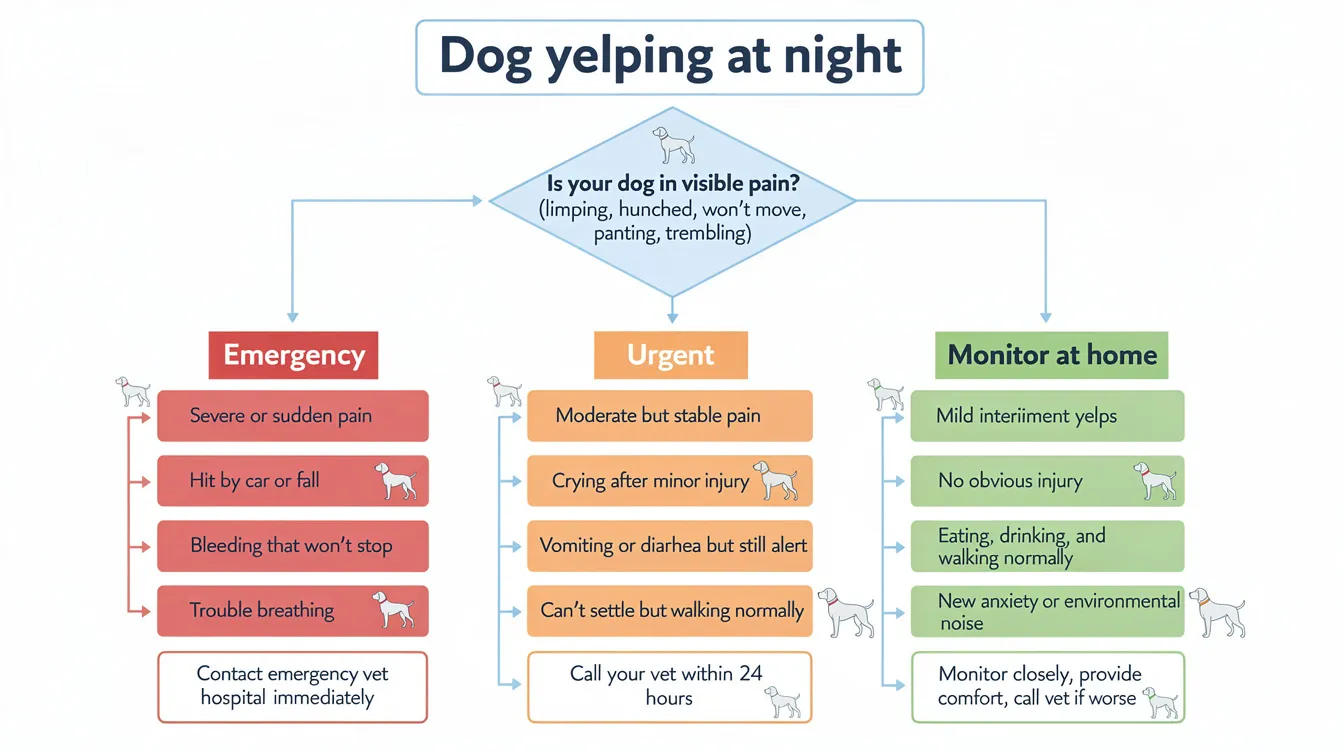
A dog yelping at night may be painful, frightened, confused, or otherwise distressed. Timing and the sound of a cry do not establish the cause. New or repeated yelping deserves veterinary advice, and breathing difficulty, collapse, severe weakness, repeated unproductive retching, or a swollen abdomen requires emergency care.
This article covers the critical distinction between emergency and non-emergency night crying, helping dog owners recognize when their pet needs to see a veterinarian immediately versus when monitoring at home is appropriate. Whether you’re worried about a senior dog who suddenly started crying at 2 a.m. or concerned about a young pup acting strange after lying down, this guide is built for you. Conditions like spinal disc disease, gastric torsion (bloat), and internal organ crises can progress from painful to life-threatening within hours if left untreated.
Quick decision path:
- Emergency now: collapse, inability to stand, difficulty breathing, a hard or distended abdomen, pale or blue gums, or pain so severe the dog won’t settle – contact an emergency veterinary hospital immediately
- Same-day veterinary visit: repeated yelping when touched or moved, reluctance to walk or climb stairs, or crying that doesn’t resolve with a calm, comfortable setup
- Prompt appointment: occasional stiffness or a single yelp that resolves quickly and doesn’t recur, with the dog otherwise acting normal
Dogs express pain fundamentally differently than humans. While we can describe what hurts and how badly, dogs rely on vocalizations, body language, and behavioral changes to communicate distress – whining, limping, panting, or trembling can all be signs of pain.
Normal vs. Pain-Related Vocalizations
You cannot reliably distinguish pain from anxiety or another problem by pitch alone, or by whether the dog briefly settles with comfort. Note the circumstances, posture, ability to move normally, appetite, and breathing without deliberately provoking another cry.
For a broader description of distress and next steps, see what to do when a dog is crying in pain. Contact your veterinarian if the cause is unclear or the behavior is new or recurring.
What Nighttime Timing Can and Cannot Tell You
Nighttime is when owners may first notice restlessness or difficulty settling. A cry when lying down, getting up, or changing position is useful information for the veterinarian, but it cannot identify a joint, spinal, abdominal, or behavioral cause by itself.
Keep a brief record of when episodes occur and any change in movement, breathing, eating, or toileting. A quiet period or improvement the next morning does not prove the underlying problem is gone.
Identifying Night-Time Pain in Dogs

Emergency Pain Symptoms
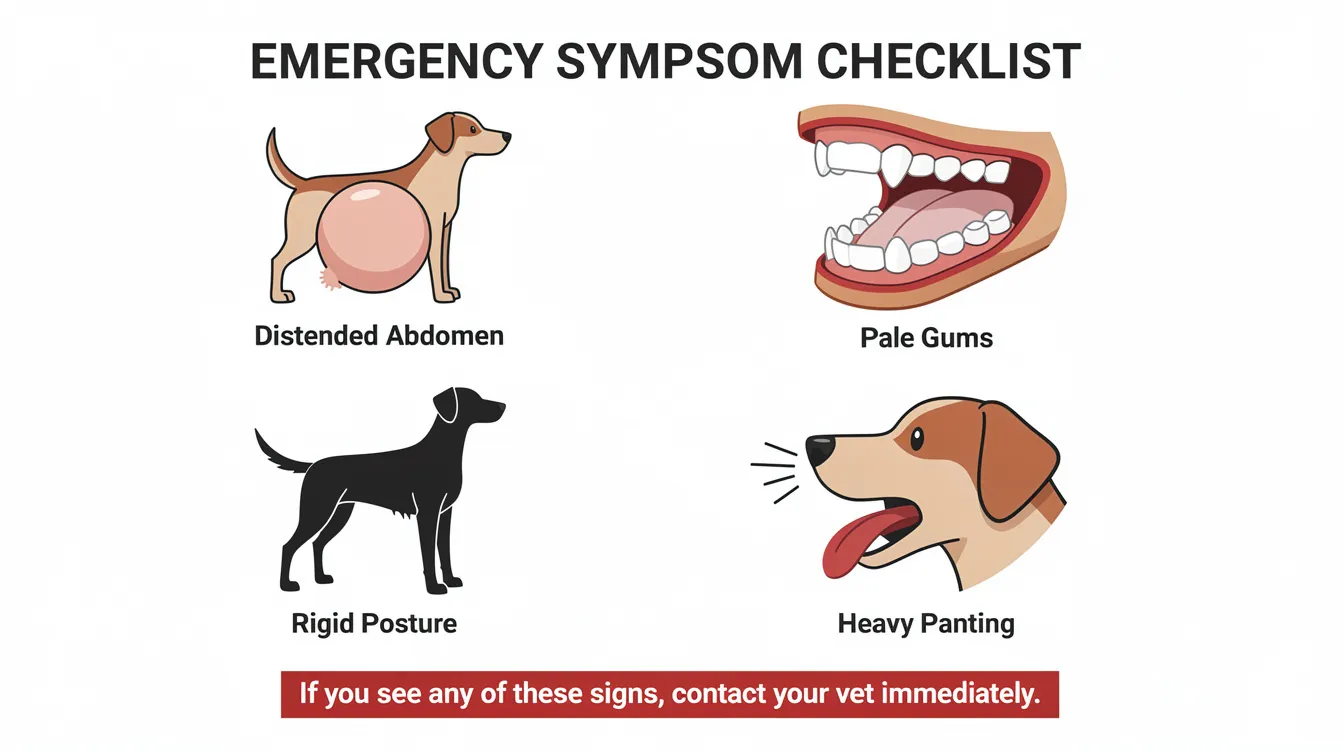
When a dog is continuously yelping or crying while attempting to lie down, then immediately yelps upon any movement or touch, you are likely witnessing acute pain that constitutes an emergency. Look for a rigid or hunched posture – the dog may refuse to stretch out, keeping legs stiff and body curled tight. Rapid, shallow breathing or panting at rest (when the room is not hot) is a critical warning sign. Check the gums: they should be pink and moist. Pale, white, or blue-tinged gums with a weak or rapid pulse indicate shock, and a dog that cannot stand or breathe normally needs emergency care right away. In the most severe cases, the dog may collapse entirely, unable to rise even with extra support.
For internal emergencies, watch for a distended abdomen that feels hard like a drum, repeated attempts to vomit with nothing coming up (dry retching), and excessive drooling. Decreased appetite can also be a sign of pain, and if your pet refused food earlier in the evening before the yelping began, that history matters. These signs can occur with gastric dilatation-volvulus (GDV, or bloat), a life-threatening emergency. Contact an emergency veterinary clinic immediately rather than waiting to see whether the signs settle.
Yelping When Touched
If your dog yelps sharply when you touch a specific area – the back, an ear, a limb, or the belly – that localized reaction is telling you something specific hurts, even if the dog seems otherwise normal. This is not a symptom to diagnose at home; it’s a reason for a physical exam. Possible causes range from a pulled muscle or a sore ear to a spinal problem or an internal injury, and the location and severity of the reaction help your veterinarian narrow down the cause quickly. Avoid repeatedly pressing on the area to “test” it – a single gentle check to confirm the location is enough information to bring to the appointment.
Yelping While Lying Down or Changing Position
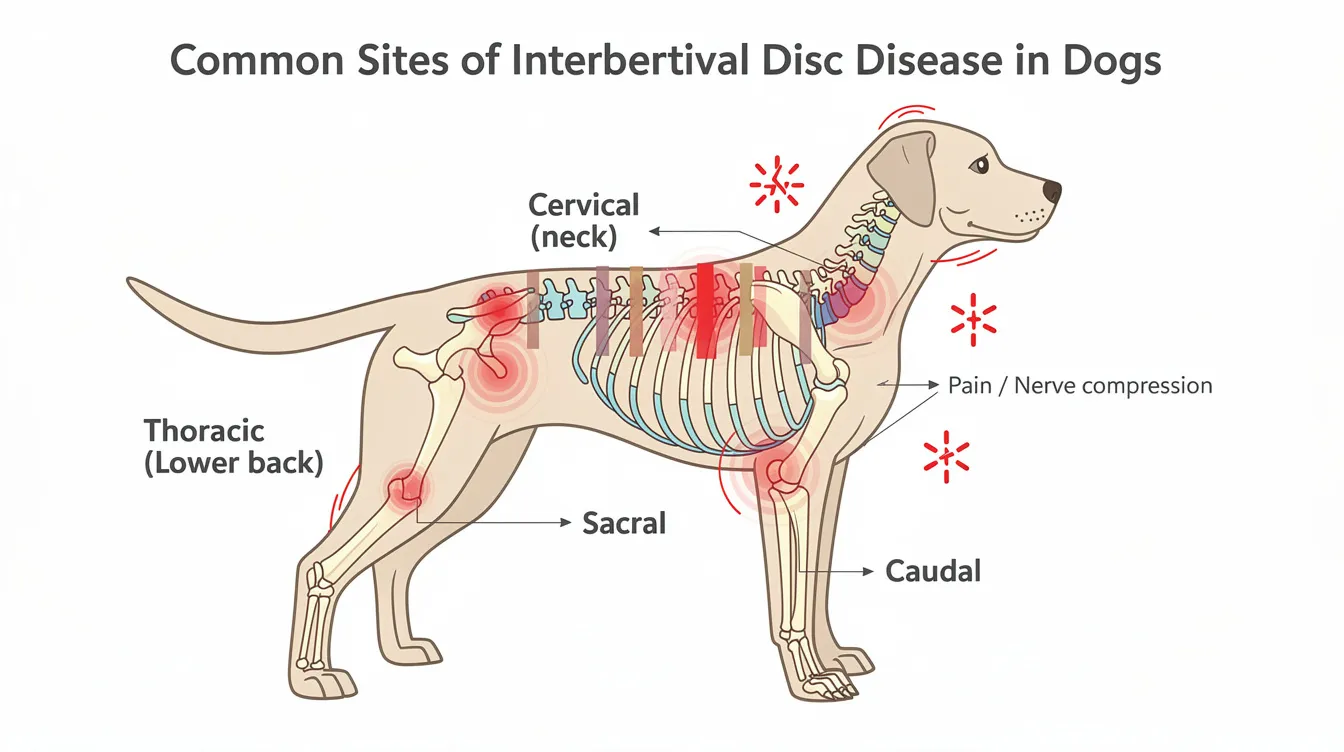
Yelping that happens specifically when a dog lies down, gets up, or shifts position during the night points toward a musculoskeletal or spinal cause more often than an internal one. This pattern is common with arthritis, disc disease, and soft-tissue injuries, where movement briefly stresses an already irritated area. It still deserves veterinary evaluation, particularly if it’s new, worsening, or happening every night, because ongoing pain of this kind is uncomfortable for your dog and often treatable once identified.
Spinal and Neurological Pain Signs
Difficulty standing, abnormal walking, reluctance to move, a lowered head, or crying when changing position are observations to report to your veterinarian. These signs do not identify a particular spinal diagnosis at home. Do not press along the back or force movement to test for pain.
Inability to stand or new marked weakness needs urgent assessment. Keep movement limited while asking the clinic about safe transport. AAHA’s owner pain checklist includes posture, mobility, vocalization, and behavior changes.
Senior Dogs and Nighttime Discomfort
Older dogs face a wider range of possible causes, which is exactly why a night-crying senior dog warrants a veterinary exam rather than a guess. Arthritis is the most common culprit and typically eases somewhat once the dog moves and warms up in the morning – but that morning improvement does not rule out a more serious problem, since spinal conditions and organ-related pain can also feel worse at rest and better with activity. Cognitive dysfunction (canine “dementia”) can also cause vocalization at night, but it usually looks different from pain: disorientation, pacing, house soiling, and a reversed sleep-wake cycle, rather than sharp yelps tied to a specific movement or touch. If your senior dog is yelping at night, a physical exam – and possibly x-rays or blood work – is the most reliable way to tell these apart and get an appropriate treatment plan.
Internal Medical Conditions
Abdominal illness can also cause distress. Repeated unsuccessful attempts to vomit, a swollen abdomen, drooling, weakness, or collapse can occur with GDV and need emergency assessment. Breed and time of day cannot rule it out. See Cornell’s bloat guidance.
Kidney disease and urinary obstruction can also cause dogs to wake in pain. Acute obstructions from stones cause sudden abdominal or flank pain – the dog may posture to urinate, cry, lick the abdomen, or become restless. Dental pain and ear infections may manifest at night as well – a severe ear infection can lead to yelping when touched, and dogs may shake their head repeatedly or paw at the affected ear.
Other conditions to consider include pyometra (in unspayed females), internal bleeding, and liver failure – any situation where organ swelling, infection, or fluid accumulation causes pain that flares during rest.
Key distinction: Internal emergencies typically involve whole-body signs (pale gums, distended abdomen, collapse, decreased appetite), while musculoskeletal pain tends to be position-dependent and localized to specific body regions. Both require veterinary attention, but the urgency differs significantly.
Common Causes and Emergency Response
Building on the symptom identification above, you now need a systematic approach to assess your dog’s condition and determine the appropriate response speed. Knowing what’s wrong is only half the equation – knowing how fast to act completes it.
Immediate Assessment Protocol
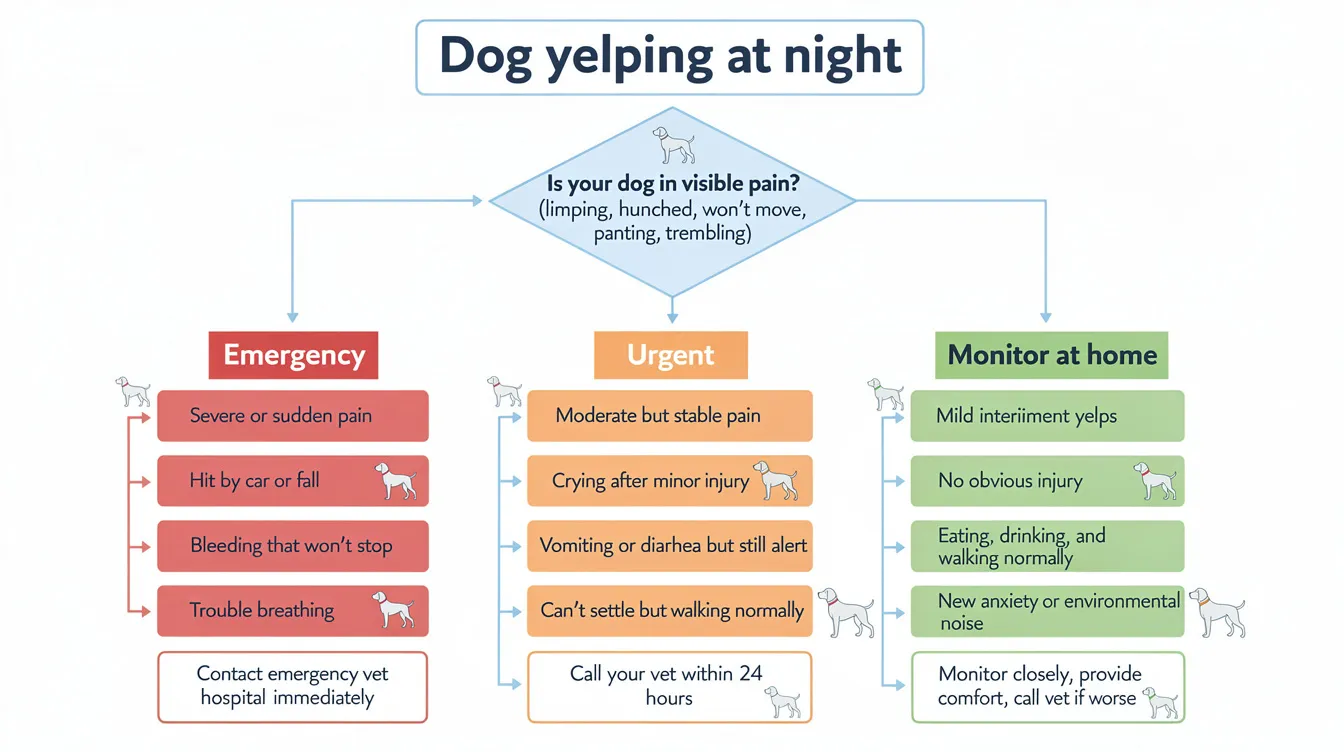
- Watch breathing, posture, and movements without pressing painful areas or forcing the dog to walk.
- For breathing difficulty, collapse, inability to stand, severe weakness, repeated unproductive retching, or abdominal swelling, contact an emergency hospital and prepare to leave.
- Minimize handling and prevent jumping or stairs while arranging advice. Pain can make even a normally gentle dog bite.
- Tell the clinic when it began, any injury or unusual ingestion, current medicines, and changes in appetite or toileting. A short video may help if it does not delay care.
Do not use a normal-looking gum color or a temporary response to comfort to rule out a serious problem. The dry-heaving and bloat guide explains why repeated unsuccessful vomiting attempts are urgent.
What You Notice and What to Do
| What you notice | What to do |
|---|---|
| Collapse, breathing difficulty, sudden inability to stand or use a limb, or pale or blue gums | Contact an emergency veterinary clinic immediately. |
| A swollen abdomen, repeated attempts to vomit without bringing anything up, or inability to pass urine | Seek emergency veterinary care. Do not press on the belly to test for pain. |
| New or repeated yelping, limping, reluctance to move, or a change in appetite or behavior without an obvious emergency sign | Call your veterinarian or an after-hours service for triage and the appropriate examination timing. |
| Your dog settles, eats, or has gums that look pink | These observations do not rule out pain or serious disease. Report the episode and follow veterinary advice rather than using appearance alone to decide it is safe to wait. |
Do not make your dog walk, bend the neck, or tolerate repeated touching to test for pain. If you are unsure how urgent the signs are, call an emergency veterinary clinic for guidance.
Common Challenges and Solutions
Even armed with knowledge, owners frequently face difficult judgment calls when their dog is crying in pain at night. These are the most common scenarios and the best advice for handling each one.

Dog Won’t Stop Yelping Despite Comfort Measures
Call a veterinarian promptly for persistent or repeated yelping. You do not need to prove the cause before asking for help. Breathing difficulty, collapse, inability to stand, severe weakness, or repeated unproductive retching means emergency care.
Keep your dog quiet, limit unnecessary movement, and ask the clinic how to lift or transport the dog safely. Do not repeatedly reposition the dog, press a painful area, or give extra medication to test whether the crying stops.
Uncertainty About Pain Medication Timing
Call the prescribing veterinarian or emergency clinic before giving an extra dose, doubling a missed dose, or adding another medicine. Do not give human pain relievers or another animal’s prescription as a substitute.
Do not combine two NSAIDs or an NSAID with a steroid unless the veterinarian has explicitly directed the treatment plan. If your dog develops vomiting, black or bloody stool, reduced appetite, or other suspected NSAID side effects, stop the NSAID and call the veterinarian, following FDA safety guidance.
See safe pain-relief questions to discuss with your veterinarian. The right choice depends on the cause of pain, other medicines, and your dog’s health.
Dog Seems Better in Morning But Was Yelping All Night
This is perhaps the most deceptive scenario. Many owners assume their dog is fine because symptoms improve with morning activity – but temporary improvement does not rule out serious disease. Arthritis pain may ease once the dog moves and warms up stiff joints. Spinal conditions can feel less painful after rest but flare again with movement later. Injuries such as sprains often follow a pattern where the dog seems to improve only to worsen again. Veterinary consultation is important for recurrent yelping regardless of how the dog looks by morning – schedule a same-day physical exam, since your veterinarian will likely recommend x-rays and possibly blood work to identify what’s actually wrong. Older dogs may yelp due to cognitive dysfunction or confusion, which follows its own pattern (see the senior-dog section above) and requires a different diagnostic approach.
Conclusion and Next Steps
New or repeated nighttime yelping deserves attention even if your dog seems better later. Observe without provoking pain, call for veterinary triage, and follow the clinic’s advice about transport and medication.
For ongoing problems, agree on a treatment and reassessment plan with your veterinarian. AAHA’s pain checklist can help you describe changes in sleeping, movement, appetite, and behavior between visits.
Related Reading
If your dog’s yelping isn’t specifically tied to nighttime or rest, or if limping is the main symptom you’re seeing, these related guides can help you narrow down next steps:
- Dog Yelping in Pain and Limping–broader causes of yelping and limping outside the nighttime-specific pattern covered here
- My Dog Is Limping–a gait-focused guide to next steps if limping, not nighttime pain, is your dog’s main symptom
Frequently Asked Questions
When is dog yelping at night an emergency rather than a behavioral issue? Breathing difficulty, collapse, inability to stand, marked weakness, a swollen abdomen, or repeated unproductive retching warrants emergency care. Sound and response to comfort alone do not distinguish pain from a behavioral cause. Call a veterinarian if you are unsure.
Can I give my dog human pain medication for nighttime yelping? Do not give a human medicine, another pet’s prescription, or an extra dose unless your veterinarian instructs you to. Some human pain relievers can cause serious harm in dogs. Follow the FDA’s pet pain-reliever precautions and call the clinic for an individual plan.
What should I do if my dog is yelping but seems fine during the day? This pattern is common with intermittent conditions like arthritis, mild IVDD, or early-stage internal issues. Don’t assume everything is fine – schedule a same-day veterinary examination. Your veterinarian will perform a physical exam, may recommend x-rays or blood work, and can identify conditions that only flare during rest or specific sleeping positions.
How can I comfort my dog while waiting for veterinary care? Provide a comfortable bed on a flat, soft surface. Limit movement to prevent worsening any potential injury. Keep the environment quiet, calm, and gently warm (not heat pads directly on skin), and avoid giving any food or medication unless directed by your veterinarian.
What information should I gather before calling the emergency vet? Document the timeline (when yelping started, what happened before – eating, walking, a fall), describe the vocalization type (sharp yelps vs. continuous crying), note posture and body position, breathing patterns, whether the abdomen appears distended, and any other symptoms like shaking, decreased appetite, or inability to use the back legs. Include breed, age, medical history, current medications, and whether similar episodes have occurred before.
How do I know if my senior dog’s night crying is pain or cognitive dysfunction? The sound alone cannot distinguish them, and more than one problem may be present. Report changes in sleep, orientation, toileting, movement, and appetite. A veterinary assessment is needed before choosing treatment.
Additional Resources
Sources referenced in this article:
- American College of Veterinary Surgeons (ACVS) – Intervertebral Disc Disease clinical guidelines
- PetMD – Neurological conditions in dogs: IVDD diagnosis and treatment
- American Kennel Club (AKC) – Kidney disease in dogs: recognition and management
- PMC/National Library of Medicine – Degenerative lumbosacral stenosis: clinical presentation and outcomes
- PMC/National Library of Medicine – Chiari-like malformation and syringomyelia: pain vocalization patterns in affected breeds
If your dog is experiencing an emergency right now, contact your nearest emergency veterinary clinic or call your regular veterinarian’s after-hours line. Do not wait until morning if your dog shows any signs described in the emergency category above.
Source for the emergency signs and triage guidance: Cornell University Hospital for Animals: urgent care and emergency signs.