Introduction
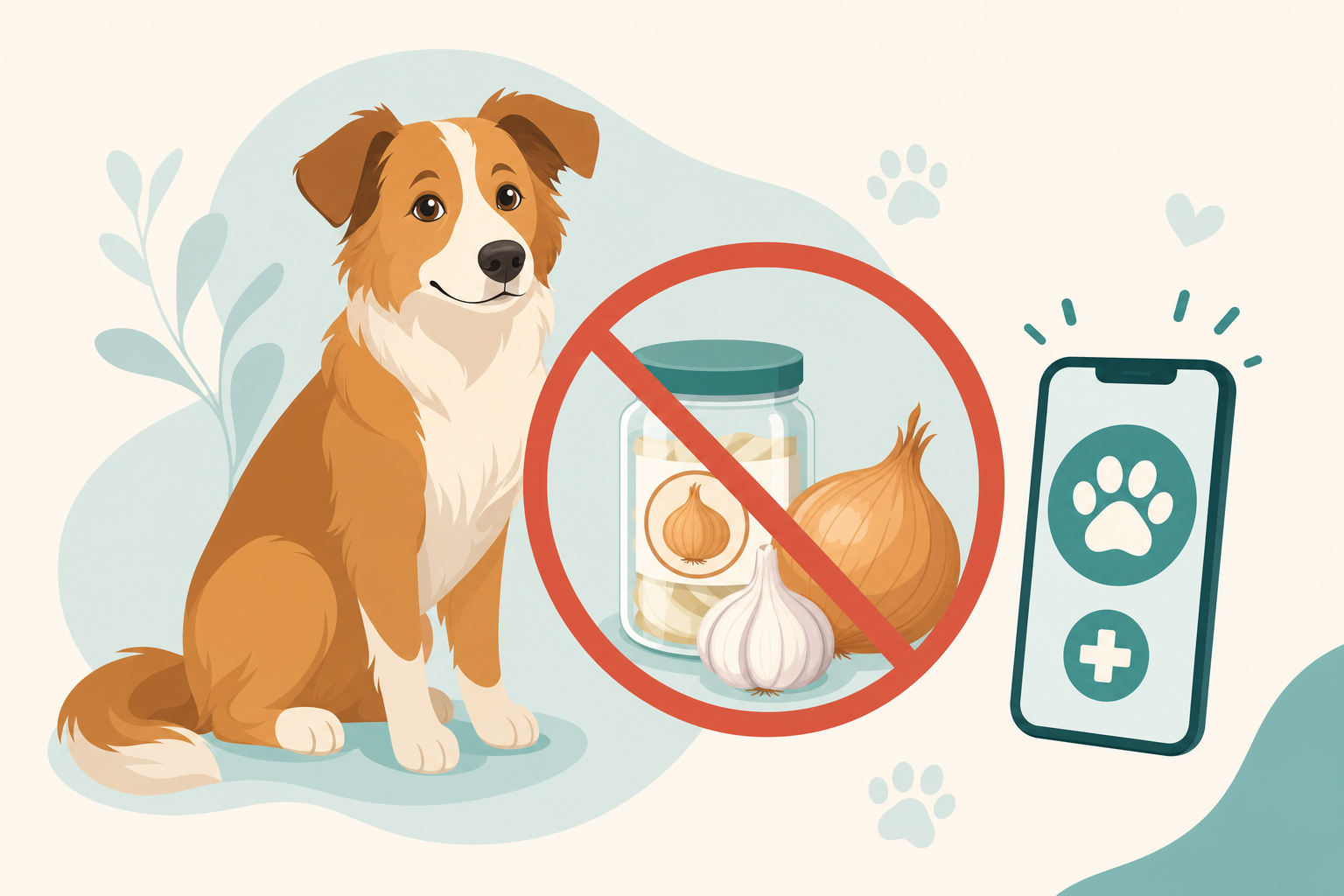
The toxic dose of onions for dogs is approximately 0.5% of their body weight in a single ingestion, with clinical signs consistently reported at 15 to 30 g/kg of body weight according to veterinary toxicology references. For a 44-pound dog, that means consuming roughly one medium onion can trigger a dangerous reaction-making onion toxicity a realistic household threat, not just a theoretical one.
This guide covers everything dog owners in Bushnell and Central Florida need to know about onion poisoning in dogs: how to calculate the toxic amount based on your dog’s weight, which symptoms to watch for, what emergency steps to take, and how to prevent accidental exposure. Whether your dog ate a slice of raw onion off the kitchen floor or got into leftovers seasoned with onion powder, the information here will help you act quickly and confidently.
Dogs can be toxic from 0.5% of their body weight in onions-a surprisingly small quantity, especially for smaller breeds. Understanding this threshold is the difference between a close call and a life threatening emergency.
By reading this guide, you will:
- Learn the exact toxic dose formula and how to calculate it for your dog’s weight
- Recognize the clinical signs of onion toxicosis across its full timeline
- Know the step-by-step emergency response protocol, including when to contact Dr. Roger Hart, DVM, at Bushnell Animal Clinic
- Understand why all forms of onions-raw, cooked, dried, and powdered-pose equal danger
- Gain prevention strategies tailored to Central Florida households
Understanding Onion Toxicity in Dogs
Onion toxicity-formally called allium toxicosis or onion toxicosis-occurs when dogs eat onions or other members of the allium family and the harmful compounds in those plants destroy the dog’s red blood cells. This destruction leads to hemolytic anemia, a condition where the body cannot carry enough oxygen to sustain normal organ function. Left untreated, severe cases can lead to anemia and death.
Onions are toxic to dogs but safe for humans because of a fundamental difference in how each species processes oxidative stress. Human red blood cells can efficiently neutralize the oxidant compounds found in allium species. Dogs lack this efficient detoxification capacity, making their red cells far more vulnerable to direct oxidative damage. This is also why dogs and cats-both domesticated species-are at risk, while humans can eat onions freely.
The Science Behind Onion Poisoning
Onions contain N-propyl disulfide, the primary organosulfur compound responsible for toxicity in dogs. When a dog chews, digests, or otherwise breaks down onion plant cells, these harmful compounds are released into the gastrointestinal tract and absorbed into the bloodstream.
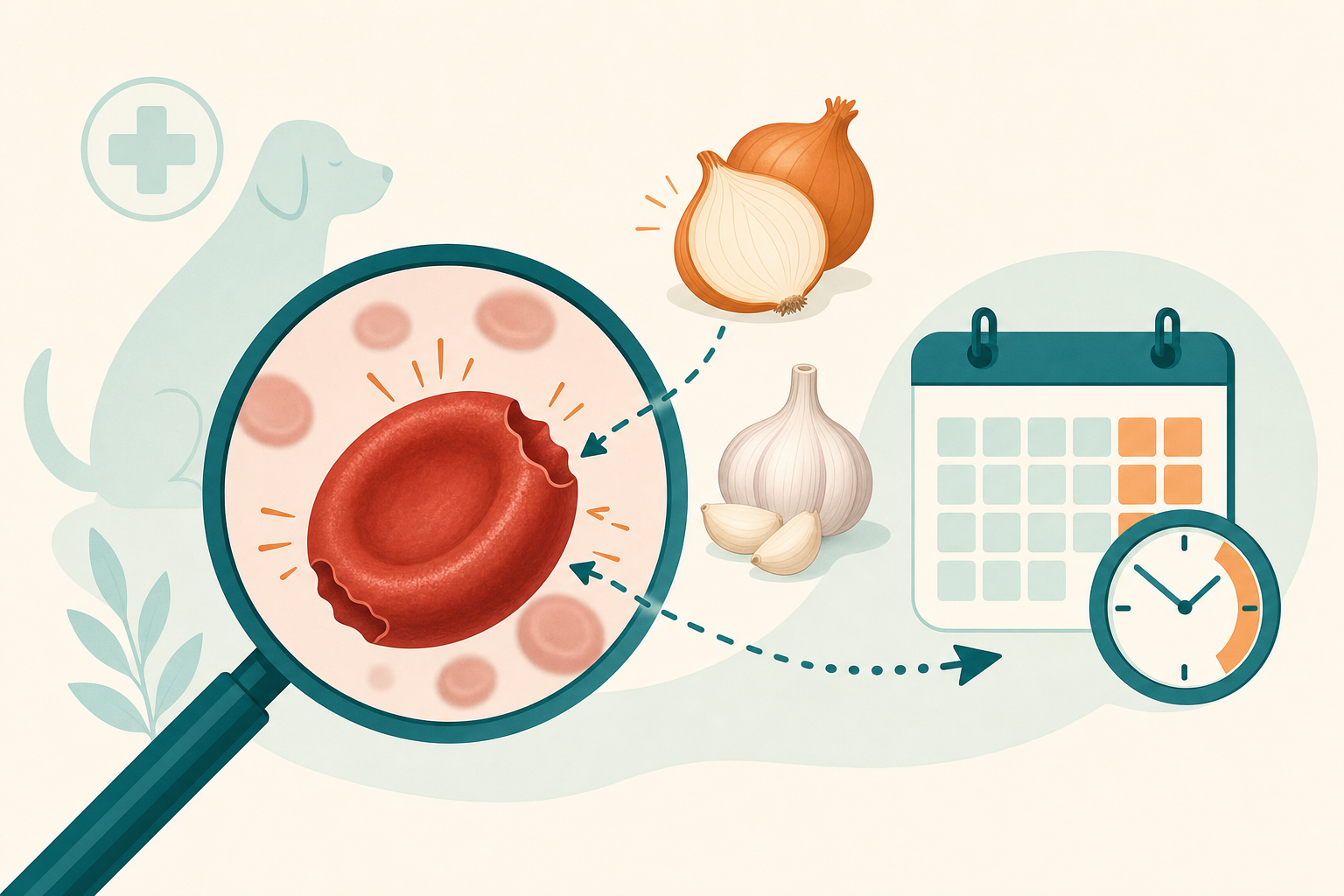
Once circulating, N-propyl disulfide and related thiosulfate compounds cause oxidative damage to hemoglobin inside the dog’s red blood cells. This damage produces structures called Heinz bodies-clumps of denatured hemoglobin visible on a blood smear. Heinz body anemia develops as the damaged red cells are flagged for destruction by the spleen, leading to progressive red blood cell damage and a declining ability to carry enough oxygen to tissues.
The Merck Veterinary Manual confirms that allium spp toxicosis causes methemoglobinemia in addition to Heinz body formation, meaning hemoglobin is converted into a form that cannot transport oxygen effectively. This dual mechanism-hemolysis plus methemoglobin formation-is what makes onion poisoning in dogs so dangerous. All parts of the onion contain thiosulfate which damages red blood cells.
All Forms of Onions Are Dangerous
A critical point many pet owners miss: all forms of onions including raw, cooked, dehydrated, and powdered contain toxins. Cooking does not reduce the concentration of organosulfur compounds. Whether your dog gets into fresh onions from the garden, cooked onions in a stew, or onion powder in a seasoning mix, the toxic effects remain.
Onion powder is more potent than fresh onions for dogs because removing moisture concentrates the harmful compounds by approximately 5–6 times. This means a tablespoon of onion powder carries roughly the same toxic load as a substantial portion of a raw onion bulb. Concentrated forms like dried flakes and powder are particularly dangerous because they’re easy to overlook in prepared foods.
Other allium species carry similar risks. Garlic (Allium sativum) is actually 3–5 times more toxic per gram than onion. Leeks (Allium porrum), chives (Allium schoenoprasum), and green onions all belong to the allium family and contain the same class of toxic compounds. Even “milder” varieties like spring onions have caused documented cases of Heinz body anemia when consumed in sufficient quantity.
With this foundation in place, the next step is understanding exactly how much onion constitutes a dangerous dose for your specific dog.
Calculating Toxic Doses Based on Dog Size
Knowing that onions are dangerous is important, but knowing how much onion crosses the line from incidental exposure to medical emergency is what allows you to make fast, informed decisions. The toxic dose depends primarily on your dog’s weight and the form of onion consumed.
Standard Toxic Dose Formula
The widely referenced threshold is that dogs can experience toxicity from 0.5% of their body weight in onions. This means you take your dog’s weight, calculate 0.5% of that figure, and the resulting number (in grams) represents the approximate amount of raw onion that could trigger serious health effects.
Clinical toxicology data establishes a broader range: 15 to 30 g/kg of onions can cause toxicity in dogs, with doses at the lower end producing mild clinical signs and doses at the upper end causing severe anemia and organ damage. The 0.5% body weight figure (~5 g/kg) represents a conservative concern threshold-the point at which veterinary evaluation becomes advisable. Smaller dogs are at greater risk for onion toxicity due to their body weight, since even small quantities of onion represent a large percentage relative to their size.
For cats, the threshold is even lower: 5 g/kg of onions can cause toxicity in cats, making feline companions especially vulnerable.
Size-Specific Toxic Amounts
The following table shows how much onion is potentially dangerous for dogs at common weights. A medium onion weighs approximately 150–170 grams. A 44-pound dog can be affected by one medium onion.
| Dog’s Weight | 0.5% BW Concern Threshold (Raw) | Clinical Signs Range (15–30 g/kg) | Onion Powder Equivalent |
|---|---|---|---|
| 10 lbs (~4.5 kg) | ~23 g (~¾ oz) | 68–135 g | ~4–5 g powder |
| 25 lbs (~11 kg) | ~57 g (~2 oz) | 170–340 g | ~10–11 g powder |
| 50 lbs (~23 kg) | ~113 g (~4 oz) | 340–680 g | ~19–23 g powder |
| 75 lbs (~34 kg) | ~170 g (~6 oz) | 510–1,020 g | ~28–34 g powder |
| 100+ lbs (~45 kg) | ~227 g (~½ lb) | 680–1,360 g | ~38–45 g powder |
| For context, half a pound of raw onion is roughly one large bulb. For larger dogs, this may seem like a lot, but remember that onion products in concentrated forms require far less to reach toxic thresholds. A small container of onion powder spilled and licked up could easily reach dangerous levels for most dogs. |
Breed Susceptibility Factors
Japanese breeds-including Akitas and Shiba Inus-are more susceptible to onion toxicity because their red blood cells have an inherently higher vulnerability to oxidative damage. Japanese dog breeds are more susceptible to onion toxicity and may show clinical signs at lower doses than the standard thresholds suggest.
Other factors that modify risk include:
- Age: Very young and elderly dogs may have less robust red cell regeneration
- Pre-existing conditions: Dogs with anemia, liver disease, or those taking medications that increase oxidative stress face amplified danger
- Cumulative exposure: Repeated small doses below the acute threshold can accumulate over days or weeks, eventually triggering hemolytic anemia even when no single exposure seemed significant
Understanding these calculations prepares you to act decisively when onion ingestion occurs-which brings us to emergency response.
Emergency Response and Treatment Protocols
When you suspect your dog ate onions, the speed and accuracy of your response directly affects the outcome. Prompt veterinary care is critical for preventing severe organ damage from onion ingestion.
Immediate Steps for Suspected Ingestion
If you believe your dog has eaten onions in any form, follow these steps:
- Estimate the amount consumed: Determine how much onion your dog ate, what form it was in (raw onions, cooked onions, onion powder, or mixed into food), and approximately when the ingestion occurred
- Calculate against your dog’s weight: Use the 0.5% body weight threshold to assess severity-if the amount consumed approaches or exceeds this level, treat it as an emergency
- Contact your veterinarian immediately: For pet owners in Bushnell and surrounding areas, contact (352) 793-7222 during business hours (weekdays 8 AM–5 PM, Saturday 8 AM–12 PM). led by Dr. Roger Hart, DVM, provides doctor-led veterinary care including urgent pet evaluation and diagnostics
- Call poison control after hours: If the clinic is closed, contact the ASPCA Animal Poison Control Center at 888-426-4435 or the Pet Poison Helpline at 855-764-7661
- Do not attempt home treatment: Inducing vomiting is recommended if ingestion was recent, but this should only be done under direct veterinary guidance-improper emesis induction carries its own risks
Before calling, have the following information ready: your dog’s weight and breed, the type and estimated amount of onion consumed, the time of ingestion, and any symptoms you’ve already observed (such as vomiting, decreased appetite, or abdominal pain).
Veterinary Treatment Options
Treatment depends on how recently the onion ingestion occurred and the estimated toxic amount consumed.
| Timeframe | Estimated Dose | Typical Treatment Approach |
|---|---|---|
| Within 2 hours | Any concerning amount | Early decontamination: induce vomiting, activated charcoal may be given to absorb toxins |
| 2–6 hours | Moderate to high dose | Possible decontamination plus baseline bloodwork, IV fluid support |
| 6+ hours or unknown | Any dose above threshold | Bloodwork monitoring, supportive care, watch for hemolysis |
| Symptomatic (any time) | Confirmed toxic exposure | Full supportive protocol: intravenous fluids, supplemental oxygen, possible blood transfusion |
| Veterinary treatment for onion toxicosis follows a structured approach from the Cornell University College of Veterinary Medicine toxicology guidelines: |
- GI decontamination: For recent ingestion, veterinarians may administer apomorphine to induce vomiting, followed by activated charcoal to bind remaining toxins in the gastrointestinal tract
- Fluid therapy: Veterinarians may administer intravenous fluids for hydration, maintain kidney perfusion, and help flush hemoglobin breakdown products that could cause kidney damage
- Oxygen support: Dogs showing rapid breathing, difficulty breathing, or exercise intolerance may receive supplemental oxygen to compensate for reduced oxygen-carrying capacity of damaged red cells
- Transfusion: Severely affected dogs may require blood transfusions when packed cell volume drops to critical levels and the body cannot produce new red cells fast enough
- Monitoring: Monitor your dog for several days after onion ingestion, as the hemolytic process can progress for 3–5 days after exposure. Veterinary medicine relies on serial CBC testing, Heinz body counts, and kidney value monitoring during this period
Common Challenges and Solutions
Real-world onion ingestion scenarios rarely come with neat labels. Here are the situations pet owners most commonly face and how to handle them.
Unknown Ingestion Amount
When you find evidence that your dog got into food containing onions but can’t determine the exact amount of onion consumed, assume the worst reasonable scenario. If onion powder was involved, treat it as a concentrated forms exposure (5–6× raw potency). When in doubt, contact Dr. Roger Hart’s clinic for evaluation-a blood panel can reveal early signs of red blood cell damage before external symptoms appear.
Delayed Symptom Recognition
Symptoms may appear 1-7 days after onion ingestion, making this toxicity uniquely deceptive. Vomiting and diarrhea may occur shortly after ingestion, but the more dangerous hemolytic process unfolds silently over days. Weakness and pale gums are common symptoms of onion poisoning that may not manifest until 2–3 days post-exposure. Reddish-brown urine indicates red blood cell damage and signals that significant hemolysis is already underway.
In Central Florida’s warm climate, owners sometimes attribute lethargy and decreased appetite to heat exhaustion or parasites rather than recognizing these as common signs of onion toxicosis. If your dog has had any possible onion exposure in the past week, report it to your veterinarian.
Watch for these warning signs that require immediate veterinary attention:
- Pale gums or yellowish discoloration
- Discolored urine (dark red, brown, or orange)
- Rapid breathing or exercise intolerance
- Severe weakness, collapse, or decreased urination
Hidden Onions in Food
Many prepared foods contain onion products that aren’t immediately obvious. Common hidden sources include:
- Seasonings and spice blends: Most contain onion powder or garlic powder
- Soups, broths, and gravies: Nearly all commercial varieties include onion in some form
- Baby food: Some formulations contain onion powder
- Restaurant leftovers: Sauces, marinades, and dressings frequently use onion
- Processed snacks and dips: Onion flavoring is widespread
Always check ingredient labels before sharing any human food with your dog. Even foods that don’t taste strongly of onion may contain enough onion powder to pose a risk, particularly for smaller breeds. This is why onions are bad for dogs in ways that aren’t always visible.
Conclusion and Next Steps
Onion toxicity represents one of the most common and preventable food-related emergencies in veterinary medicine. The critical number to remember: most dogs face serious health effects when they consume 0.5% of their body weight in onions, and onion consumption can lead to hemolytic anemia in dogs that can progress to organ failure or even death without treatment. Oxidative damage from onions causes red blood cell breakdown that unfolds over days, making both awareness and monitoring essential.
Take these prevention steps now:
- Secure all onion storage: Keep onions, garlic, and all allium cepa products in closed cabinets or elevated areas your dog cannot reach-including compost bins and garden plots
- Read ingredient labels: Before giving your dog any human food, check for onion powder, garlic powder, or “onion flavoring” in the ingredients
- Educate your household: Make sure family members and guests know never to feed dogs onions, table scraps with onion seasoning, or any onion products
- Post emergency numbers: Keep Bushnell Animal Clinic’s number (352-793-7222) and the ASPCA Poison Control number (888-426-4435) accessible
- Schedule preventive wellness visits: Regular checkups with Dr. Roger Hart, DVM, at Bushnell Animal Clinic help establish baseline blood values that make toxicity detection faster if exposure occurs
For related concerns about your dog’s health, explore topics like digestive health emergencies, bloat and GDV, and other toxic food hazards to keep your pet safe.
Frequently Asked Questions
How much onion powder is toxic to dogs?
Onion powder is approximately 5–6 times more concentrated than fresh onions. For a 20-pound dog, as little as 8–10 grams of onion powder (roughly 1.5–2 teaspoons) could reach the toxic dose threshold. Because concentrated forms pack so much more toxic compound per gram, even small seasoning amounts warrant concern for smaller breeds.
Can a small amount of onion kill a dog?
A single small piece of onion is unlikely to kill most dogs, but it depends on the dog’s weight, breed, and health status. Smaller dogs are at greater risk for onion toxicity due to their body weight-what seems like a trivial amount to a large breed could be a significant toxic amount for a toy breed. Additionally, repeated small exposures accumulate and can eventually trigger severe anemia and even death.
How long does it take for onion poisoning symptoms to appear?
Symptoms may appear 1-7 days after onion ingestion. Gastrointestinal signs like vomiting, diarrhea, and abdominal pain may develop within the first 24 hours. Anemia-related clinical signs-including pale gums, rapid breathing, weakness, and discolored urine-typically emerge 1–3 days after ingestion, with peak hemolysis occurring around days 3–5.
Are green onions and chives as toxic as regular onions?
Yes. Green onions and chives (Allium schoenoprasum) are allium species containing the same class of organosulfur compounds. While their concentration per gram may be somewhat lower than bulb onions, ingesting enough still poses significant risk. All members of the allium family-including garlic (Allium sativum) and leeks (Allium porrum)-should be kept away from dogs.
What should I do if my dog ate food with onion powder?
Estimate the amount consumed and your dog’s weight. Because onion powder is far more potent than raw onions, even small quantities can reach the toxic threshold. Contact your veterinarian or Bushnell Animal Clinic at (352) 793-7222 immediately. If it was a recent ingestion (within 2 hours), your vet may recommend early decontamination. Gather information on the food’s ingredient list and approximate serving size before calling.
Can cooking onions make them safe for dogs?
No. Cooking does not reliably reduce the organosulfur compounds responsible for toxicity. Cooked onions remain just as dangerous as raw onions. Whether fried, boiled, grilled, or baked into casseroles, the toxic effects on a dog’s red blood cells persist. This is a common misconception that leads to accidental poisoning when pet owners share cooked meals.
How is onion toxicity diagnosed at the veterinary clinic?
Diagnosis involves a combination of ingestion history and laboratory testing. Your veterinarian will perform a complete blood count (CBC) to measure red blood cell levels, examine a blood smear for Heinz bodies (markers of oxidative damage), check methemoglobin levels, and evaluate kidney values (BUN/creatinine) to assess for kidney damage from hemoglobinuria. Urine tests may reveal hemoglobin in the urine, confirming active red blood cell destruction.
What is the prognosis for dogs with onion poisoning?
With timely veterinary care, most dogs with mild to moderate onion toxicosis recover fully, often within 1–2 weeks. Severe cases-particularly those involving large ingestion amounts, delayed treatment, or dogs with pre-existing conditions-carry a more guarded prognosis. Kidney damage from hemoglobin breakdown products and the need for blood transfusion indicate more serious outcomes. Early intervention dramatically improves survival rates.
Additional Resources
Emergency Contacts for Bushnell and Central Florida Pet Owners:
- Bushnell Animal Clinic / Dr. Roger Hart, DVM: (352) 793-7222 – 5899 SW 18th Terrace, Bushnell, FL 33513. Open weekdays 8 AM–5 PM, Saturday 8 AM–12 PM
- ASPCA Animal Poison Control Center: 888-426-4435 (consultation fee may apply)
- Pet Poison Helpline: 855-764-7661
Toxic Dose Quick Reference:
- Concern threshold: 0.5% of body weight in raw onion
- Clinical toxicity range: 15–30 g/kg body weight
- Onion powder multiplier: divide raw onion amounts by 5–6 for equivalent powder dose
- Garlic is 3–5× more toxic per gram than onion
Trusted Veterinary Resources:
Leave a Reply