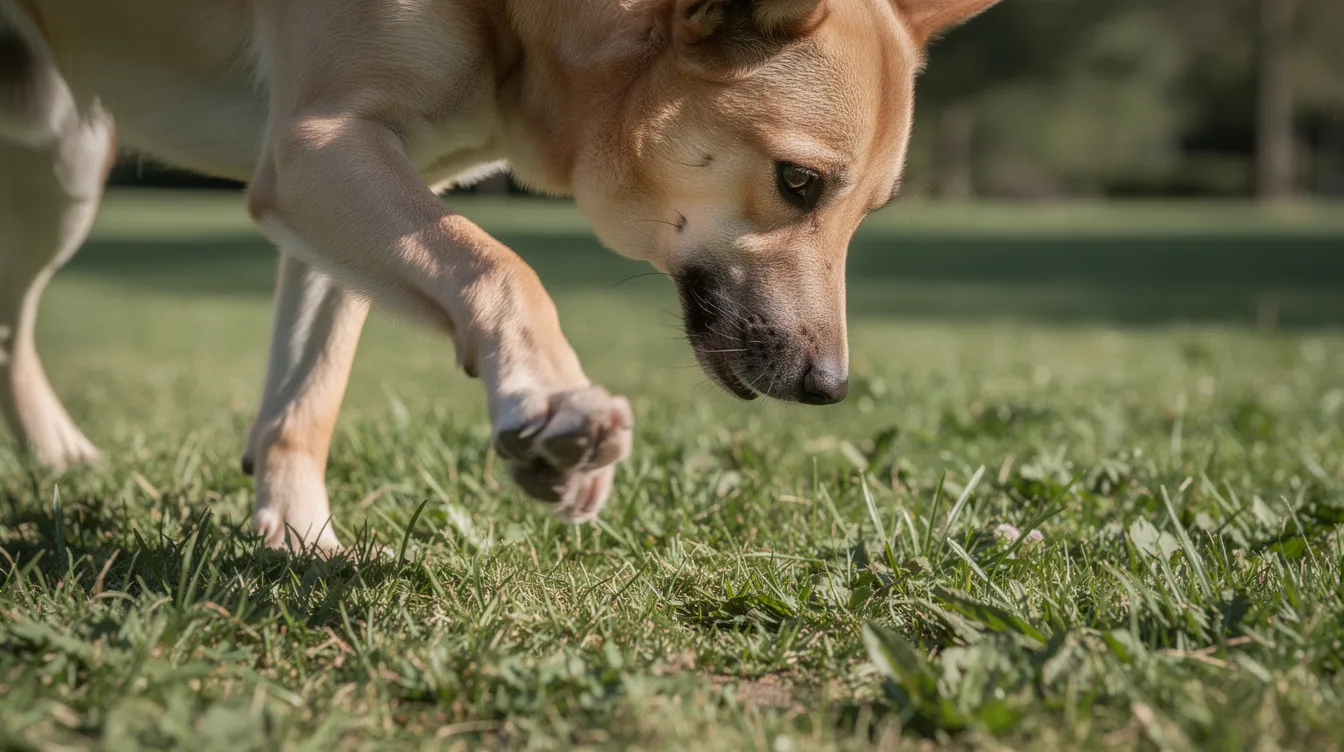
Introduction
If your dog is limping and cannot bear weight, is in severe pain, has visible trauma, or shows other signs like lethargy, fever, vomiting, or disorientation, get to a veterinarian right away. A sudden change in gait can point to anything from a stone lodged between the toes to a torn cruciate ligament, a dislocated joint, or an internal injury after a fall or collision. When in doubt, act quickly.
The advice below is educational and does not replace medical care for your individual pet. If you are unsure how serious the problem is, call your regular veterinarian or an emergency clinic.
Understanding Dog Limping
Lameness means your dog’s gait has changed because of pain, weakness, instability, or a mechanical problem in one or more legs. Dogs often hide discomfort, hold the head unusually still, or quietly shift weight off the sore leg until the change becomes obvious.
The list of possible causes is long: soft-tissue strains, an embedded object in the paw, an insect sting, rough play, arthritis, ligament damage, neurologic disease, or trauma. Reviewing common bone and joint problems can help you sort out what may need faster attention. Whether the dog can put weight on the leg is one of the clearest signals of severity — partial weight bearing usually points to a milder injury than complete refusal to touch down.
Types of Limping
Acute lameness starts suddenly, often after a jump, twist, fall, collision, or something caught in a paw. Muscle tears can produce it in active dogs, and even a small foreign object can trigger a dramatic reaction.
Chronic lameness develops gradually or keeps returning. It often reflects early arthritis or a slow ligament problem. The dog may look fine after rest and then flare up again after walks, stairs, or trips outside.
Sorting the pattern into acute, chronic, or intermittent helps your veterinarian decide which exam and tests — physical exam, orthopedic exam, radiographs, blood work, tick panels, or advanced imaging — make the most sense.
Severity Levels
A mild case means your dog still uses the leg, bears some weight, and shows no obvious deformity, open wound, extreme pain, or systemic illness. These situations can sometimes be watched briefly at home with rest and reduced activity.
A severe case looks very different: the dog refuses to put the foot down, holds the leg up, cries when the area is touched, or has an obvious angle change, dangling limb, or dramatic swelling. Get veterinary help without delay.
Once you have a general sense of severity, a careful home check — only if your dog tolerates it without pain — is the next step.
Assessing Your Dog’s Limping at Home
Start by deciding whether your dog is stable, alert, and able to bear weight. Restrict activity while you observe — no running, jumping, stairs, or rough play — and think about how this fits into their normal daily care routine.
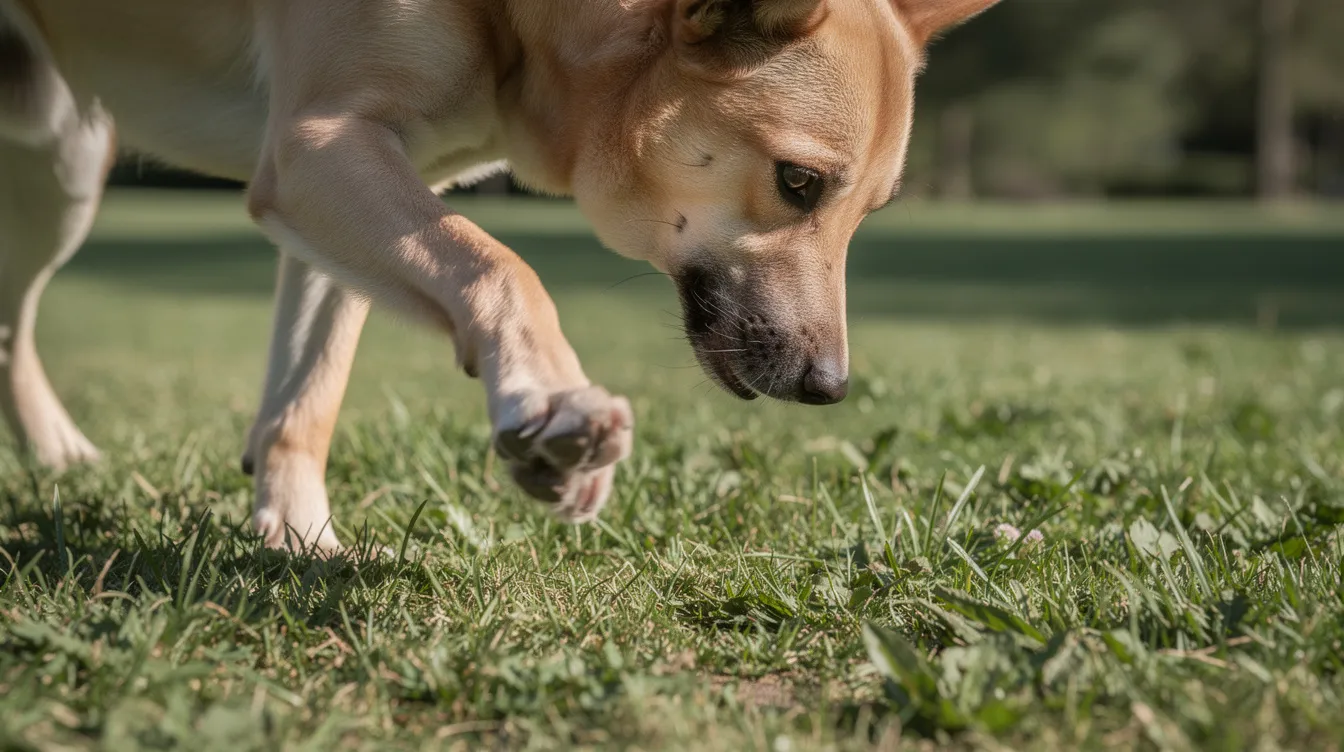
A short check at home helps you describe the problem clearly to your veterinarian. Only inspect the leg if your dog allows it calmly. If they growl, snap, cry, tremble, or pull away, stop and arrange a visit — those reactions usually mean the pain deserves a professional exam.
Observable Signs to Monitor
Watch your dog walk slowly across a flat surface. Look for shortened steps, toe-touching, weight shifting, head bobbing, or reluctance to place the sore leg down. A front-leg issue often shows up as the head lifting when the painful side hits the ground, while hind-leg pain may appear as hip hiking or reduced push-off.
Behavior matters too. Whimpering, panting, or trembling can indicate significant pain, and any yelping when you touch the area is a clear signal to get veterinary input.
Also scan for swelling, heat, redness, a stuck object, cracked nails, pad burns, or an insect bite. Whole-body signs — lethargy, fever, vomiting, continuous vocalizing, or heavy panting — turn a local problem into a more urgent one.
Initial Home Examination
If it is safe, start with the paw. Check the pads for cuts or foreign material such as thorns, glass, burrs, or a small stone wedged between toes. Trimming nails every two to four weeks helps, because overgrown or broken nails can change gait and cause pain on their own.
Use your eyes more than your hands to scan the rest of the leg for swelling, wounds, heat, bruising, an odd angle, or exposed tissue. Any visible bone is an emergency.
Do not force the joint, stretch the leg, try to pop anything back into place, or apply a tight bandage unless your veterinarian tells you to. Never give human pain medications — ibuprofen, naproxen, and acetaminophen are all toxic to dogs. Prescription NSAIDs exist for canine pain, but only a veterinarian can choose and dose them safely.
Ice or heat should be used only with veterinary guidance: cold packs early for swelling, warmth later for stiffness. Never place either directly on the skin, and stop if your dog seems uncomfortable.
Documenting the Episode
Write down when the problem started, what your dog was doing beforehand, and whether things are improving or worsening with rest. Note any rough play, jumps, heat exposure, tick contact, stings, strains, or possible trauma.
If your dog can walk safely, take a short video from the front, side, and rear as they move slowly. Video is especially useful for intermittent cases that may not show up in the exam room.
Also record appetite, energy, bathroom habits, vomiting, fever, panting, trembling, and whether the leg feels warm. All of this helps your veterinarian pinpoint the cause and plan treatment.
When to Seek Emergency Care
Some cases can wait for a scheduled appointment, but severe pain, obvious trauma, or sudden mobility changes should not be watched at home.

Go straight to a veterinarian when the problem is severe, follows a significant impact, or comes with signs of illness.
Symptoms That Need Same-Day Care
- Complete refusal to bear weight on the affected leg
- Visible bone, dramatic swelling, or open wounds
- Signs of severe pain — crying, trembling, or aggression when touched
- Lameness paired with lethargy, vomiting, or disorientation
A dangling limb, suspected fracture, joint dislocation, exposed bone, deep bleeding wound, or obvious deformity should be treated as an emergency.
Urgent vs Routine Care Decision Matrix
| Situation | What it may mean | Recommended timing |
|---|---|---|
| Refuses to bear weight | Fracture, ligament tear, joint dislocation, or severe soft-tissue injury | Call now and seek emergency care |
| Started after a major impact | Trauma, internal injury, broken bone, or neurologic injury | Immediate or emergency visit |
| Open wound, exposed bone, deep cut, or dangling limb | Visible trauma or severe orthopedic injury | Immediate attention |
| Severe pain, continuous vocalizing, heavy panting, or trembling | Extreme distress or uncontrolled pain | Same-day care |
| Mild lameness, partial weight bearing, no other symptoms | Strain, mild soft-tissue irritation, or paw tenderness | Rest and monitor 24–48 hours |
| No improvement after 24–48 hours | Persistent injury, early arthritis, ligament damage, or infection | Schedule a veterinary appointment |
| Intermittent, returns after activity | Chronic joint issue, early arthritis, or cruciate disease | Book a routine visit soon |
What to Do Before Arriving at the Vet
- Call ahead so the team can prepare
- Restrict movement and arrange safe transport
- Gather information about onset and possible causes
- Avoid human medications or home treatments
Keep your dog in a small room or crate, use a leash only for bathroom breaks, and carry small dogs when you can do so safely. For larger breeds, a towel sling can help, but avoid handling the sore leg.
Bring photos, videos, a current medication list, and your notes on when the problem started. If your pet is in severe pain, skip repeated touching — pain control is a job for the veterinary team.
Common Causes and When to Seek Care
Because the same outward sign can come from soft tissue, bone, joint, paw, or nervous system problems, an accurate diagnosis matters. A thorough workup may combine a physical exam, orthopedic exam, radiographs, blood work, tick testing, and sometimes advanced imaging, all interpreted alongside your dog’s general health.
The Merck Veterinary Manual describes lameness as a clinical sign rather than a diagnosis, with evaluation built on gait observation, palpation, joint assessment, imaging, and treatment aimed at the underlying cause: Merck Veterinary Manual: Lameness in Dogs.
Age-Related Patterns
Puppies and young dogs may struggle with growth-plate injuries, developmental orthopedic disease, or trauma during play. Hip dysplasia, elbow dysplasia, and panosteitis show up more often in larger breeds during this stage.
Adult dogs more commonly deal with soft-tissue strains, muscle tears, paw wounds, nail injuries, or ligament damage. Cranial cruciate ligament tears are frequent and can cause sudden hind-leg lameness, stiffness, or difficulty rising.
Older dogs are more likely to have chronic joint disease. Arthritis leads the list, but cancer, spinal disease, and neurologic conditions can also change how a senior dog moves. Book a visit when stiffness worsens, more than one leg is involved, or activity drops off.
Treatment depends on the cause. Rest, weight control, leash-only walks, physical therapy, prescription anti-inflammatories, and pain control help many dogs, and consistent wellness care supports long-term joint health. Surgery is reserved for the more serious orthopedic injuries.
Location-Specific Causes
Front-leg problems can involve the paw, wrist, elbow, shoulder, tendons, or muscles. Shoulder strain, elbow arthritis, nail injuries, pad cuts, and embedded debris all show up here.
Hind-leg problems more often involve the knee, hip, ankle, lower back, or nervous system — cruciate injury, hip arthritis, luxating patella, iliopsoas strain, and spinal pain are all on the list.
Paw problems are worth a closer look because they are easy to miss. A single paw can hide a thorn, cut, burn, cracked nail, insect sting, or infection between the toes, and a stuck object can make a dog refuse to step down even when the rest of the leg looks normal.
Breed-Specific Considerations
Breed shapes the odds. Larger dogs like Labrador Retrievers, German Shepherds, Rottweilers, and Great Danes are more prone to hip dysplasia, elbow dysplasia, cruciate injury, and certain bone diseases.
Small breeds face different risks. Luxating patella is common in Yorkies, Chihuahuas, Pomeranians, and similar dogs, and often looks like a skip, hop, or briefly held-up hind leg.
Environment plays a role too — heat, rough terrain, ticks, sandspurs, storms, and yard debris all contribute. Protective booties on rough ground, a healthy body weight, and regular exercise all reduce the strain on joints over time.
Conclusion and Next Steps
The key question is whether your dog can bear weight. Partial weight bearing with no other symptoms may allow short-term monitoring, but refusal to touch down, visible trauma, severe pain, dramatic swelling, deformity, or systemic illness needs urgent care.
Immediate next steps:
- Call now if your dog cannot bear weight, has a visible injury, or seems to be in serious pain
- Text your veterinarian if you need help deciding between scheduling and coming in urgently
- Rest and limit activity while you wait for the appointment
- Do not give human pain medicine
- Bring videos, photos, and your notes
For mild cases, chronic stiffness, or anything that persists beyond 24–48 hours, book an evaluation with your regular veterinarian. Ask about orthopedic findings, radiograph recommendations, and a pain-management plan matched to your dog’s age, weight, and activity level.
On the prevention side, focus on a healthy weight, regular exercise, safe surfaces, nail trims every two to four weeks, routine paw checks, and early follow-up on puppy development or senior mobility concerns. Small changes now can prevent a minor issue from becoming a long-term one.
Frequently Asked Questions
Can I give my dog human pain medication?
No. Ibuprofen, naproxen, acetaminophen, and similar products can cause serious stomach, kidney, or liver problems in dogs.
Veterinarians can prescribe canine NSAIDs, but they require the right dose, health screening, and monitoring.
How long should I wait before calling the vet?
If the lameness is mild, your dog can bear weight, there is no severe pain, and no other signs of illness, monitoring at home for 24–48 hours with rest is reasonable.
Anything that lasts beyond that window deserves a call. Get help immediately if your dog refuses to bear weight, shows severe pain, has visible trauma, or becomes lethargic, feverish, or nauseated.
What’s the difference between a sprain and a fracture in dogs?
A sprain or strain usually involves soft tissue — ligaments, tendons, or muscles. Dogs with these injuries often still place some weight on the leg, though they may move stiffly or avoid activity.
A fracture is a broken bone and often causes complete non-weight-bearing, dramatic swelling, an unnatural angle, severe pain, or a dangling leg. Any exposed bone is an emergency.
Should I restrict my dog’s activity?
Yes. Rest and limited movement matter. Use a leash only for bathroom breaks, skip stairs and jumping, and avoid rough play until your veterinarian gives specific guidance.
Too much activity can worsen soft-tissue damage and delay healing.
How much does a lameness evaluation cost?
Cost depends on the exam findings and what tests are needed. A workup may include a physical exam, orthopedic exam, radiographs, blood work, tick testing, and pain control.
Can lameness be prevented in dogs?
Not every case is preventable, but many injuries can be avoided. Regular exercise supports overall health, and a healthy body weight reduces joint strain.
Trim nails every two to four weeks, check paw pads regularly, and use protective booties on rough terrain. If the problem is intermittent or keeps returning, book a visit rather than waiting for a severe episode.
Additional Resources
Veterinary clinics can help with lameness evaluations, orthopedic exams, radiographs, pain control, treatment planning, and follow-up. They can also discuss physical therapy, weight management, joint-support options, and whether advanced imaging or surgery may be needed.
For post-injury care, follow your veterinarian’s instructions for rest, leash walks, medication, recheck visits, and gradual return to activity.
For after-hours emergencies, call your regular clinic for guidance or contact the nearest emergency hospital if your dog has severe pain, visible trauma, a dangling limb, suspected internal injuries, or cannot bear weight.