
Introduction
Paralysis in dogs means the complete or partial inability to move one or more limbs due to disrupted nerve communication along the spinal cord, peripheral nerves, or brain. If your dog is paralyzed, immediate veterinary care is essential – but know that many paralyzed dogs can still live fulfilling, comfortable lives with proper care and the right treatment plan. In situations where my dog is paralyzed, understanding the care options is vital.
This guide covers everything a pet owner needs to navigate a paralysis diagnosis: recognizing the early signs and emergency situations, understanding causes like intervertebral disc disease and degenerative myelopathy, comparing medical management versus surgical intervention, and building a sustainable daily care routine for your paralyzed pet. Whether you’re facing a sudden crisis or managing a degenerative condition in an older dog, this resource is built for you.
Paralysis in dogs often signals a severe underlying health issue. Prompt veterinary attention is crucial for improving prognosis in paralyzed dogs – the difference between acting within hours versus days can determine whether your dog walks again.
After reading this guide, you will understand:
- The types and causes of paralysis in dogs, including IVDD, degenerative myelopathy, and traumatic spinal injuries
- How to recognize a medical emergency and respond safely
- Treatment options, success rates, and realistic cost expectations
- Daily care techniques including bladder expression, pressure sore prevention, and mobility support
- How to evaluate your dog’s quality of life and make informed decisions
Reviewed by Dr. Roger Hart, DVM
Understanding Dog Paralysis
Paralysis is the loss of voluntary movement in one or more limbs caused by interrupted signal transmission within the nervous system. When the dog’s spinal cord, nerve roots, or brain pathways are damaged, the messages that control muscle movement cannot reach their destination. This affects far more than mobility – it can compromise bladder control, bowel function, and sensation throughout the body.
For any pet owner, understanding the type and location of paralysis is the first step toward effective treatment. It shapes every decision from emergency response to long-term care planning.
Types of Paralysis in Dogs
Paralysis can be full or partial in dogs. Full paralysis means complete loss of limb movement and voluntary control. Partial paralysis may cause weakness and dragging of hind legs, with some residual voluntary movement remaining – veterinarians call this paresis.
The classification depends on which limbs are affected:
- Monoplegia – paralysis of a single limb, often from peripheral nerve damage or localized injury
- Paraplegia – paralysis of both hind legs, the most common presentation, typically caused by thoracolumbar spinal cord compression
- Tetraplegia (quadriplegia) – paralysis of all four legs, indicating damage to the cervical region of the dog’s spine
The location of damage along the spinal cord determines the pattern. Cervical (neck) lesions can cause front leg paralysis or affect all four legs. Thoracolumbar lesions – the most frequent site – cause hind leg paralysis. Damage to the lumbosacral region or individual nerve roots may produce monoplegia or varying degrees of hind end weakness.
As a pet owner, it’s important to be aware of the signs indicating that my dog is paralyzed and know the best practices for supporting them through this challenging time.
A critical assessment veterinarians perform is testing for deep pain sensation. Loss of deep pain perception indicates severe spinal cord damage and carries a significantly worse prognosis than cases where sensation remains intact.
Most Common Causes
Intervertebral disc disease (IVDD) is the leading cause of acute paralysis in dogs. In one study of 845 canine acute paralysis cases, IVDD accounted for approximately 72% of diagnoses. The disease IVDD occurs when the cushioning discs between vertebrae degenerate, bulge, or rupture, causing disc material to compress the dog’s spinal cord. IVDD can cause paralysis in dogs within hours. Dachshunds account for 40 to 75% of IVDD cases, with French Bulldogs, Corgis, and Beagles among other predisposed breeds. 65% of IVDD problems occur in the thoracolumbar region, which is why hind limb paralysis is the most common presentation.
Degenerative myelopathy is a genetic disease in senior dogs that leads to paralysis. This degenerative condition involves slow degeneration of the spinal cord’s myelin sheaths and axons, linked to mutations in the SOD1 gene. It typically affects older dogs around 6–9 years of age – breeds like German Shepherds, Boxers, and Pembroke Welsh Corgis are at highest risk. Unlike IVDD, degenerative myelopathy is generally non-painful and progresses gradually over months. According to Cornell University College of Veterinary Medicine, there is no cure, but physical therapy may slow progression.
Accidental trauma is a leading cause of acute paralysis in dogs – vehicular accidents, falls, and blunt force injuries can fracture vertebrae or cause acute spinal cord compression. Tumors within the brain or spinal cord can cause progressive paralysis in dogs as they grow and compress neural tissue. Blood clots can reduce blood flow and lead to sudden hind leg paralysis in dogs through a mechanism called aortic embolus. Infections and inflammatory diseases can cause spinal cord swelling leading to paralysis. Exposure to certain toxins can disrupt the nervous system and cause paralysis in dogs. Even conditions like diabetes and Cushing’s disease can cause weakness resembling paralysis, making accurate diagnosis essential.
Understanding what caused your dog’s paralysis directly determines how urgently you need to act – and what treatment options are available.
Recognizing Emergency Signs and Immediate Response
Many causes of paralysis progress rapidly. Whether triggered by disc herniation, trauma, or vascular events, the window for effective treatment can be narrow. Knowing the emergency signs and responding correctly can be the difference between recovery and permanent disability.
When Paralysis Becomes an Emergency
Any sudden onset of paralysis is a medical emergency. Contact an emergency veterinarian immediately if you observe:
- Sudden inability to walk or stand, particularly dragging hind legs or collapse of the hind end
- Loss of bladder control – involuntary urination or inability to urinate, indicating the dog has lost control of bladder function
- Severe pain – crying out, yelping, hunched posture, panting, or reluctance to move
- Rapid progression – weakness worsening over minutes to hours, moving from mild discomfort to complete paralysis
- Neck rigidity or difficulty swallowing, which may signal cervical spinal cord involvement
Signs of IVDD specifically include dragging back legs and incontinence, often preceded by back pain or a stiff gait. IVDD symptoms can escalate from mild cases of wobbliness to complete loss of movement within hours. If your dog suddenly cannot climb stairs, knuckles on its back feet, or shows a change in how it carries its hind end, do not wait – these are early signs that demand prompt veterinary care.
Emergency Transport and First Aid
During transport, your priority is preventing further damage to the dog’s spine:
- Use a rigid surface – slide a board, baking sheet, or firm piece of cardboard under the dog to act as a makeshift stretcher
- Minimize spinal movement – avoid bending, twisting, or lifting the dog by the belly; keep the body structure aligned
- Keep the dog calm – speak softly, cover with a blanket to reduce stress, and restrict activity during transport
- Call ahead – inform the veterinary clinic of the situation, including when symptoms started, whether your dog can feel its back legs, and whether it has lost bladder or bowel control
Restricting movement can prevent further injury in paralyzed dogs. Every minute counts, particularly if deep pain sensation is fading.
Veterinary Diagnostic Process
Once at the clinic, the veterinarian performs a thorough physical exam and neurological evaluation. This includes testing motor function, reflexes, and – critically – deep pain sensation by firmly pinching the toes. The neurological exam helps localize the lesion along the spinal cord.
Diagnostic imaging is typically required to identify the underlying cause:
- X-rays can reveal vertebral fractures, disc space narrowing, or obvious bony abnormalities
- MRI provides the most detailed view of the spinal cord, disc herniation, and soft tissue compression
- CT scan with myelogram offers an alternative for evaluating spinal cord compression
Blood work and urinalysis help rule out metabolic or infectious causes. In breeds predisposed to degenerative myelopathy, genetic testing can confirm the SOD1 mutation. Cerebrospinal fluid analysis may be performed if infection or inflammation is suspected. Managing endocrine diseases like diabetes or Cushing’s can help treat paralysis when those conditions are contributing factors.

Treatment and Management Options
Once a diagnosis is established, treatment decisions depend on the cause, severity, and timing. The two primary approaches – medical management and surgical intervention – have very different applications, costs, and expected outcomes.
Medical Treatment Approaches
Medical management is appropriate for mild cases of IVDD (Grades I–III where dogs retain some voluntary movement), for degenerative conditions where surgery offers no benefit, and for dogs that are not surgical candidates due to age or other health issues.
The core components include:
- Strict rest and restricted activity – crate rest for 4–8 weeks is the cornerstone of conservative IVDD treatment, allowing disc material to stabilize and inflammation to resolve
- Pain medications – NSAIDs, gabapentin, or other analgesics to manage severe pain and mild discomfort during recovery
- Anti-inflammatory medications – to reduce swelling around the spinal cord and nerve roots
- Muscle relaxants – to address spasms that contribute to pain and restricted mobility
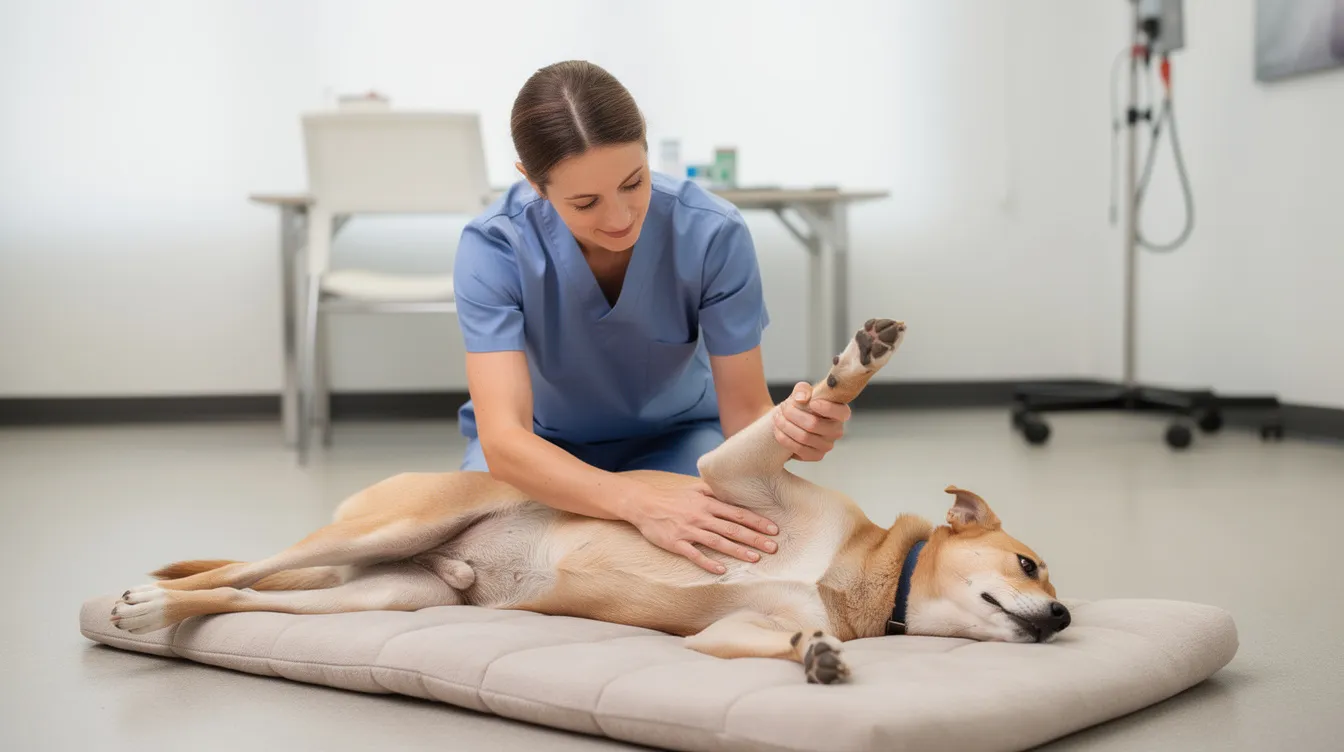
- Physical therapy – passive range-of-motion exercises, hydrotherapy, underwater treadmill sessions, and massage to maintain muscle tone and promote neurological recovery
For IVDD Grades II–III with retained deep pain sensation, medical management achieves ambulatory recovery in approximately 80–95% of affected dogs. However, for Grade IV and V cases, medical-only treatment produces substantially worse outcomes, and for dogs that have lost deep pain, conservative management alone carries very low recovery rates.
For degenerative myelopathy, no curative treatment exists. Medical management focuses on slowing progression through daily physical therapy, weight management, harness support, and comfort measures. Dogs with DM typically become non-ambulatory within 6–12 months of the first clinical signs, with average life expectancy of 1–2 years from onset.
Recovery from conservative IVDD treatment takes weeks to months, and some dogs may retain residual weakness. At-home exercises can prevent muscle atrophy in paralyzed dogs during this period, and physical therapy is crucial for rebuilding strength after paralysis treatment.
Surgical Intervention Options
Surgery is often needed for dogs with severe IVDD symptoms – particularly nonambulatory dogs with intact deep pain sensation (Grade IV), dogs that fail medical management, or those with recurring disc herniation. Surgical intervention may be necessary for spinal disc issues or tumors in paralyzed dogs.
Common surgical procedures include:
- Hemilaminectomy – removal of a portion of the vertebral bone to access and remove compressive disc material (most common for thoracolumbar IVDD)
- Ventral slot – approach used for cervical disc disease
- Dorsal laminectomy – decompression from above, used in specific cases of spinal cord compression
Timing is critical. Emergency surgery within 12–24 hours of symptom onset provides dramatically better outcomes, especially for dogs that have lost deep pain sensation. For dogs with intact deep pain, surgery achieves walking recovery rates of 80–95%. When deep pain has been lost for less than 24–48 hours, success drops to approximately 50–60%. If deep pain has been absent for more than 48–72 hours, recovery chances fall significantly to just 10–30%.
Dogs may require crate rest after spinal surgery, and recovery from IVDD surgery can take six to eight weeks. Post-surgical rehabilitation including physical therapy, hydrotherapy, and assisted walking exercises significantly improves functional outcomes.
Cost considerations: Total U.S. costs for IVDD surgery – including emergency examination, MRI or CT imaging ($1,500–$3,000 alone), surgical fees, hospitalization, anesthesia, and medications – typically range from $3,000 to $10,000 or more. Post-operative rehabilitation can add $1,000–$4,000. Conservative medical management is substantially less expensive, usually ranging from $300–$1,500 depending on diagnostics and pain medications needed.
Treatment Comparison Table
Criterion | Medical/Conservative Management | Surgical Intervention |
|---|---|---|
Ideal Candidate | Grades I–III IVDD, ambulatory paresis, retained deep pain; DM (no surgical option); dogs with comorbidities | Grades IV–V IVDD with intact deep pain; recurring herniation; acute severe spinal cord compression |
Cost | $300–$3,000 (diagnostics, medications, therapy) | $3,000–$10,000+ (imaging, surgery, hospital, rehab) |
Recovery Timeline | Weeks to months; crate rest 4–8 weeks | 6–8 weeks post-op; many dogs walking within 2–3 months |
Success Rate (Deep Pain Intact) | ~80–95% ambulatory return for Grades II–III | ~80–95% ambulatory return |
Success Rate (Deep Pain Lost) | Very low; poor outcomes | ~50–60% if surgery within 24–48 hours; 10–30% if delayed |
Key Risks | Muscle atrophy, pressure sores, UTIs, further disc herniation | Anesthesia complications, infection, incomplete recovery, myelomalacia |
The best course of treatment depends on your dog’s specific grade, timing, breed, and overall health. Your veterinarian and a veterinary neurologist can help you weigh these factors against your family’s resources and your dog’s ability to tolerate treatment.
Daily Care Management for Paralyzed Dogs
Caring for a paralyzed dog requires a structured routine for management. Whether your dog is recovering from surgery or living with a permanent condition, consistent daily care directly determines comfort, health, and quality of life.
Mobility and Exercise Support
Maintaining movement is essential for both physical health and mental well-being:
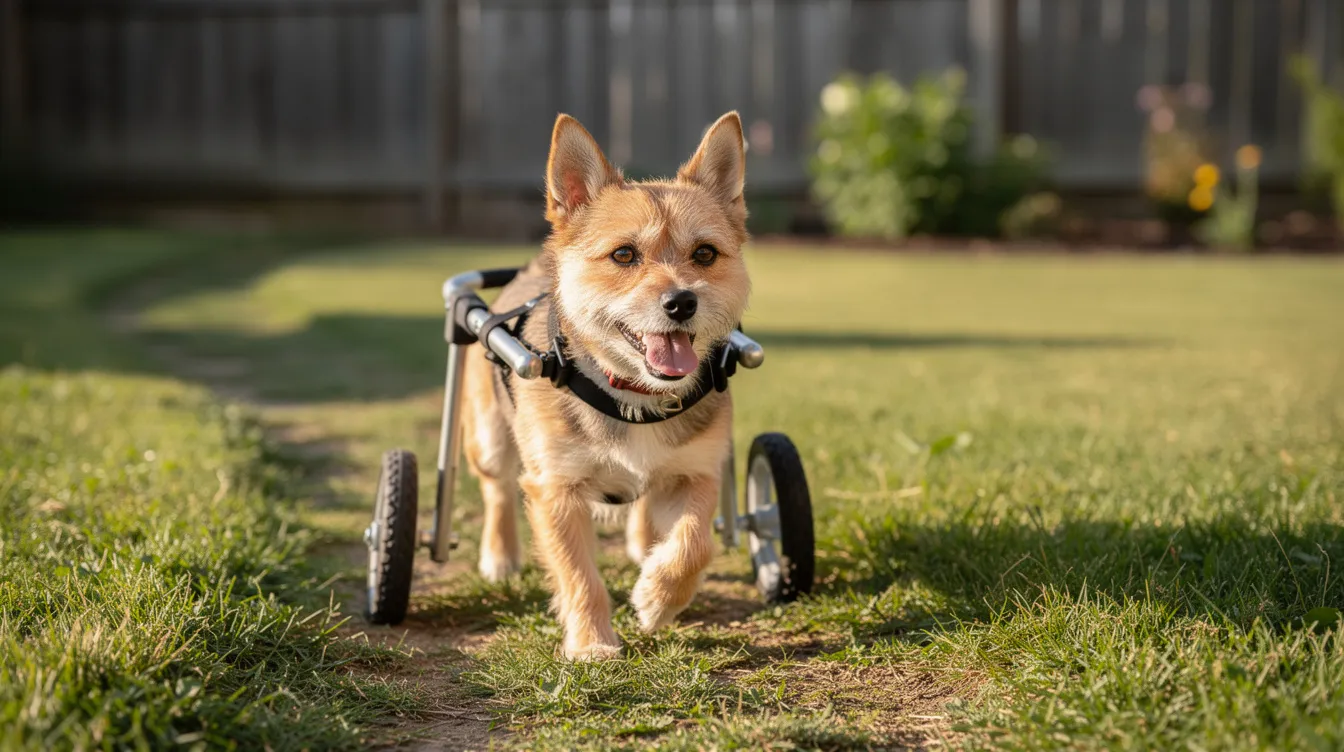
- Wheelchairs and carts – custom-fitted dog wheelchairs allow paralyzed dogs to move independently, explore outdoors, and maintain a sense of normalcy. Sizing and fit are critical; consult your veterinarian or a canine rehabilitation specialist
- Harnesses and slings – rear-support harnesses help with assisted walking, bathroom breaks, and short exercise sessions. Mobility assistance aids like slings can help paralyzed dogs with bathroom breaks
- Physical therapy at home – passive range-of-motion exercises (gently flexing and extending each joint in the hind legs), massage to maintain blood flow, and assisted standing exercises all help prevent muscle atrophy and joint contractures
- Mental stimulation – puzzle feeders, scent games, gentle socialization, and varied environments prevent boredom and depression. Mental stimulation is important for preventing depression in paralyzed dogs
Even dogs with complete paralysis benefit from supervised time in a wheelchair and regular interaction. The goal is to preserve as much of the dog’s ability to engage with its environment as possible. If your dog is slowing down or showing signs of reduced activity, adding structured enrichment is especially important.
Hygiene and Health Maintenance
Paralyzed dogs may need help with bladder and bowel care – this is one of the most demanding aspects of daily management.
Bladder care: Many paralyzed dogs cannot empty their pet’s bladder on their own. Bladder expression – manually pressing on the dog’s belly in a specific location to release urine – must be performed multiple times daily. Your veterinarian should demonstrate the technique so you can safely express the bladder at home. Incomplete emptying leads to urinary tract infections, one of the most common complications in paralyzed dogs. Nursing care is required to keep incontinent dogs clean and prevent infections.
Skin care and pressure sore prevention: Dogs that cannot reposition themselves are at high risk for pressure sores over bony prominences – elbows, hocks, hips, and the sides of the rear legs. To prevent pressure sores:
- Use thick, padded bedding (orthopedic or memory foam)
- Reposition your dog every 2–4 hours
- Check skin daily for redness, warmth, or broken areas
- Keep skin clean and dry, especially around areas prone to urine contact
Grooming adaptations: Bathe with support (using a sling or non-slip mat), trim nails carefully since reduced movement means less natural wear, and use booties to protect back feet from dragging injuries if the dog has partial mobility.
Monitor consistently for secondary health issues: urinary tract infections, respiratory complications (particularly in late-stage DM or cervical lesions), and signs of pain or lethargy that may indicate new problems.

Common Challenges and Solutions
Even with a solid care plan, paralyzed dog caregivers face recurring obstacles. Here are the most common challenges and practical solutions.
Bladder and Bowel Management Issues
Learning proper bladder expression technique takes practice and initial veterinary guidance. Ask your vet to show you the correct hand placement on the dog’s belly and the amount of pressure needed. Express the bladder at least 3–4 times daily. Use diapers or belly bands between expressions, and protect bedding with waterproof liners. If your dog develops recurring UTIs despite good hygiene, discuss prophylactic strategies with your veterinarian.
Skin Breakdown and Pressure Sores
Pressure sores develop quickly and heal slowly. The best approach is prevention: rotate your dog’s position frequently, invest in quality padded bedding, and inspect skin over pressure points daily. If redness appears, relieve pressure on that area immediately, keep it clean, and contact your vet before it progresses. Dogs that drag their hind legs benefit from protective clothing or drag bags to shield skin on the hind end.
Mental Health and Depression
Paralyzed dogs can become withdrawn, especially if their routine becomes monotonous. Maintain social interaction – include your dog in family activities, introduce novel toys, and vary walking or wheelchair routes. Adjust exercise routines to match your dog’s current abilities rather than eliminating activity entirely. Understanding your dog’s body language helps you recognize signs of frustration, anxiety, or depression early.
Financial and Time Management Burden
The ongoing costs of caring for a paralyzed pet – mobility aids, diapers, special bedding, veterinary checkups, physical therapy sessions – add up. Create a sustainable routine by batching care tasks, setting up a dedicated care station with supplies, and building a support network of family members or pet sitters who can help. Discuss a realistic long-term plan with your veterinarian, including expected costs and whether pet insurance or payment plans can offset expenses.
Conclusion and Next Steps
A paralysis diagnosis is frightening, but it is not the end of your dog’s story. With prompt veterinary care, appropriate treatment, and dedicated daily management, many paralyzed dogs maintain good quality of life – some even regain the ability to walk. The key factors are speed of intervention, accurate diagnosis, and consistent long-term care built around your dog’s specific needs.
Your immediate next steps:
- If paralysis is sudden or worsening – treat it as a medical emergency and transport to a veterinary neurologist or emergency clinic immediately
- Get a complete diagnosis – ensure imaging (MRI or CT scan) is performed to identify the underlying cause and guide treatment decisions
- Establish your veterinary team – work with your primary veterinarian and, ideally, a veterinary neurologist and rehabilitation specialist
- Set up your home – gather padded bedding, a harness or sling, bladder expression supplies, and protective skin care items before your dog comes home
- Learn daily care techniques – have your vet demonstrate bladder expression, positioning, and physical therapy exercises
Related topics worth exploring include mobility aid fitting and selection, rehabilitation after orthopedic injuries, managing arthritis in senior dogs who may have concurrent mobility challenges, and connecting with online support communities for owners of paralyzed dogs.
Frequently Asked Questions
Can a paralyzed dog ever walk again? Yes – many dogs with paralysis can recover the ability to walk, depending on the cause and severity. Dogs with IVDD Grade IV (paralyzed but retaining deep pain sensation) have an 80–90% chance of regaining walking after timely surgery. Even dogs with Grade V IVDD (no deep pain) may recover if surgery is performed within 24–48 hours, though success rates drop to approximately 50–60%. For degenerative myelopathy, walking recovery is not expected, but physical therapy can extend the ambulatory period.
How do I know if my paralyzed dog is in pain? Pain indicators include vocalization (crying, whining, yelping), reluctance to move, guarded posture, hunched posture, panting, loss of appetite, and aggression when touched. IVDD and traumatic spinal injuries typically cause significant pain, while degenerative myelopathy is generally non-painful. If you’re unsure, your veterinarian can perform a thorough assessment and trial pain medications to evaluate response.
What is the average lifespan of a paralyzed dog? This varies enormously by cause. Dogs that recover from IVDD surgery can live normal lifespans. Dogs with degenerative myelopathy typically survive 1–2 years after the onset of clinical signs, though some live beyond 3 years with dedicated care. Dogs with trauma-related paralysis depend on the extent of nerve damage and response to treatment. Quality of life, not just lifespan, should guide decisions.
How much does it cost to care for a paralyzed dog? For IVDD surgical cases including MRI, surgery, hospitalization, and rehabilitation, total costs often reach $6,000–$12,000 or more. Conservative medical management is significantly less expensive at $300–$1,500. Ongoing care – mobility aids ($200–$500+), diapers, specialized bedding, veterinary checkups, and physical therapy – adds recurring monthly expenses that vary based on your dog’s needs.
Should I consider euthanasia for my paralyzed dog? This deeply personal decision should be guided by your dog’s comfort, prognosis, and quality of life. Factors to weigh include whether your dog is in unmanageable pain, whether it has lost deep pain sensation with no surgical option, whether complications like skin breakdown or chronic infection are progressing, and whether you can provide the level of care required. Discuss honestly with your veterinarian – their role is to help you make the most compassionate choice.
What mobility aids work best for different types of paralysis? Rear-support wheelchairs work best for dogs with hind leg paralysis (paraplegia). Full-support carts accommodate dogs with tetraplegia or significant front leg weakness. Harnesses and slings are ideal for dogs with partial paralysis who need intermittent support. Proper fitting is essential – an ill-fitting wheelchair can cause pressure sores or additional injury.
How do I express my dog’s bladder safely? Have your veterinarian demonstrate the technique in person. Generally, you’ll position your hands on either side of the dog’s belly, just in front of the pelvis, and apply steady, gentle pressure to express urine. The bladder feels like a water balloon when full. Never squeeze forcefully. Express at minimum 3–4 times daily. If the bladder feels hard, distended, or you cannot express it, contact your veterinarian immediately – this may indicate a blockage.
When should I seek emergency care for complications? Seek immediate veterinary care if your paralyzed dog develops fever, inability to urinate despite a full bladder, worsening neurological signs (front legs becoming weak, breathing difficulty), foul-smelling or bloody urine, rapidly expanding pressure sores, sudden severe pain, or loss of appetite and lethargy lasting more than 24 hours.
Additional Resources
Veterinary References:
- Cornell University College of Veterinary Medicine – comprehensive information on degenerative myelopathy causes, progression, and management
- Merck Veterinary Manual – neurological disorders and tick paralysis in dogs
- Veterinary Information Network (VIN) – consensus guidelines among veterinary neurologists on IVDD grading, prognostic factors, and surgical outcomes
- Published research on prognostic factors in canine IVDD – peer-reviewed data on recovery outcomes
Practical Resources:
- Veterinary rehabilitation specialist directories – ask your veterinarian for referrals to board-certified canine rehabilitation therapists in your area
- Mobility aid manufacturers – companies specializing in custom-fitted dog wheelchairs and support harnesses offer sizing guides and fitting consultations
- Canine physical therapy protocols – your rehabilitation specialist can provide home exercise plans tailored to your dog’s condition and stage of recovery
Reviewed by Dr. Roger Hart, DVM