Reviewed by Dr. Roger Hart, DVM
Introduction
Canine pyometra is a severe uterine infection in unspayed female dogs that can escalate to life-threatening shock within days. If your intact female dog is showing lethargy, vaginal discharge, or increased thirst-especially within weeks of her last heat cycle, canine pyometra is a medical emergency requiring immediate veterinary intervention. Fast action is crucial for canine pyometra.
This guide covers how to recognize the early signs of pyometra in dogs, what happens during diagnosis and emergency surgery, and how prevention through spaying eliminates the risk entirely. It’s written specifically for pet owners in Central Florida with intact female dogs, particularly older dogs or those who have recently gone through heat.
The direct answer: Pyometra requires prompt treatment, and emergency surgery via ovariohysterectomy-surgical removal of the infected uterus and ovaries-is the definitive treatment. When treated promptly with surgery, survival rates exceed 95%.
After reading this guide, you’ll understand:
- How to identify the early and advanced symptoms of pyometra before they become fatal
- Why the disease process accelerates so dangerously in closed pyometra cases
- What happens during diagnostic workup and pyometra surgery at a veterinary clinic
- Why spaying is the single most effective strategy for preventing pyometra
- When to treat vaginal discharge, abdominal swelling, or behavioral changes as a veterinary emergency
Understanding Canine Pyometra
Recognizing how pyometra develops-and why it’s so dangerous-helps you detect the condition in its early stages, when treatment is most successful and survival odds are highest.
What Is Pyometra and How It Develops
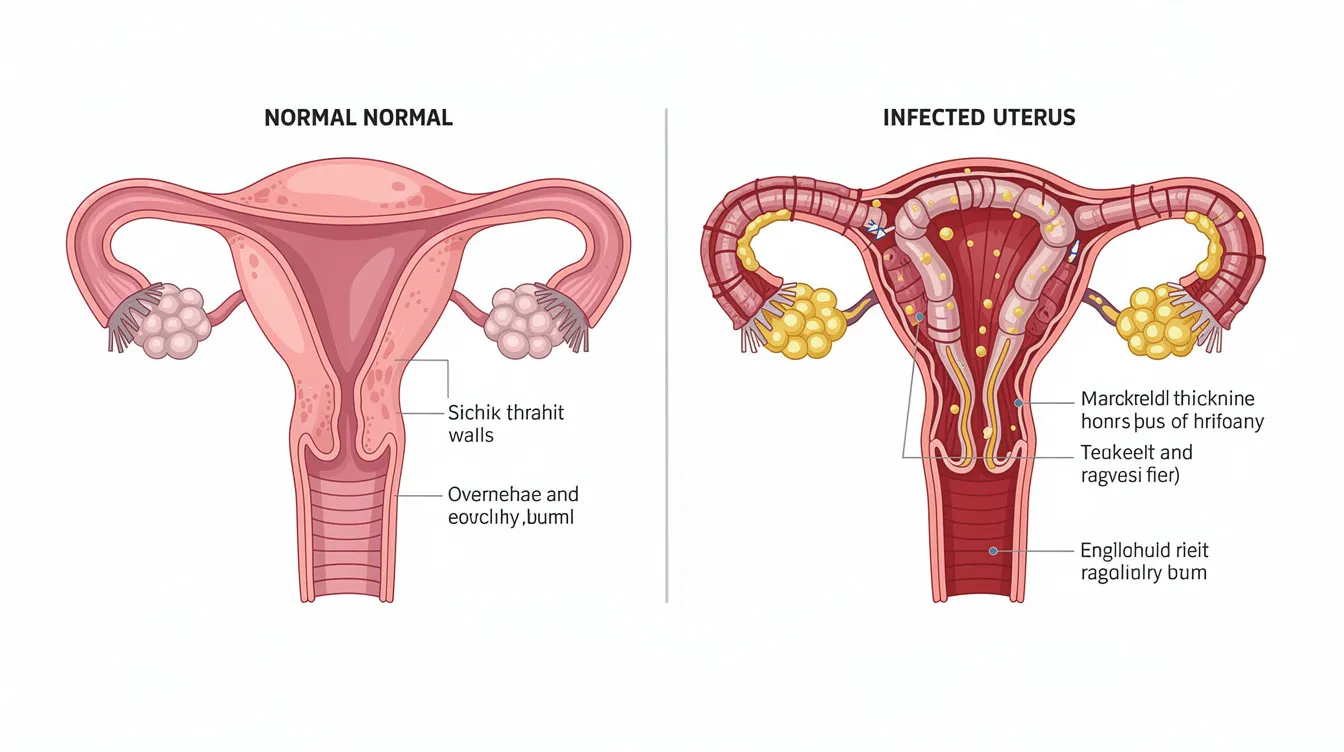
Pyometra is a bacterial infection of the uterus characterized by pus accumulation within the uterine cavity. It is one of the most prevalent reproductive diseases in dogs, and left untreated, it is almost always fatal.
The disease process begins with hormonal changes during the diestrus phase of a dog’s heat cycle. After estrus, elevated progesterone levels cause the uterine lining to thicken, suppress the local immune system, and promote glandular secretions that create a stagnant, nutrient-rich environment inside the uterus. This progesterone-dominated state also reduces myometrial contractions and contributes to cervical closure, trapping fluids within the uterine wall.
Bacteria-most commonly Escherichia coli-ascend from the vagina into the uterus during or shortly after estrus. E. coli is a common bacterium involved in the infection of pyometra, though Staphylococcus spp, Streptococcus, Klebsiella, and Proteus species have also been isolated. In a microbiology study of 100 dogs, E. coli was isolated from approximately 74–76% of uterine content, and many isolates carried multiple virulence genes. As bacteria release toxins, they trigger inflammation and further fluid buildup, ultimately producing a pus filled uterus.
Pyometra develops 1–2 months after a heat cycle due to hormonal changes, typically during diestrus. Multiple heat cycles without pregnancy increase the risk significantly. Cystic endometrial hyperplasia is a condition that can lead to pyometra-cysts can form in the uterus due to prolonged progesterone exposure, and recent research also points to pseudoplacentational endometrial hyperplasia as strongly associated with naturally occurring cases. According to Cornell University’s Riney Canine Health Center, complete removal of ovaries and uterus is necessary to prevent any form of the condition, including the less common stump pyometra that can occur if residual uterine or ovarian tissue remains after spaying.
Open vs. Closed Pyometra
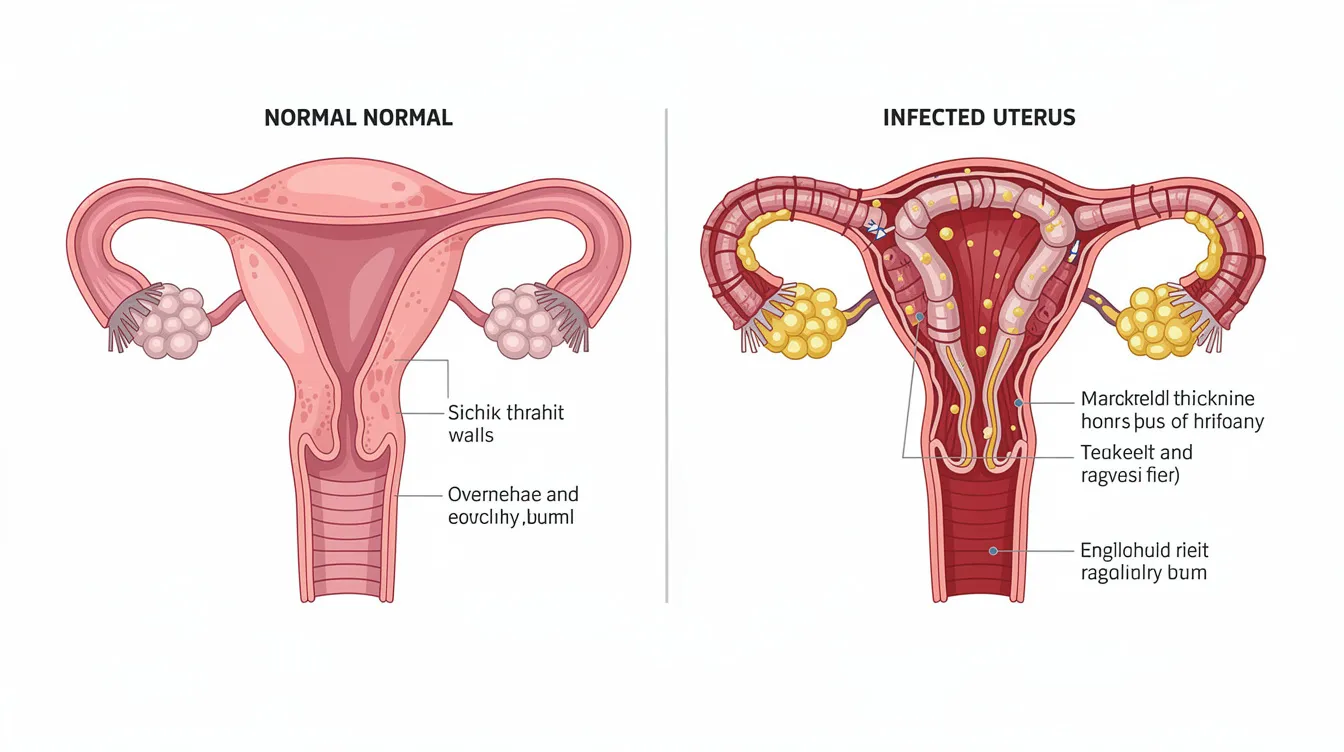
Understanding the differences between open and closed pyometra is crucial for diagnosis and treatment.
In open pyometra, the cervix remains partially patent, allowing purulent vaginal discharge to drain externally. This vulvar discharge is often foul-smelling and may be bloody, yellowish, or greenish. Because the discharge is visible, pet owners tend to recognize something is wrong sooner.
Closed pyometra is far more dangerous. With a sealed cervix, pus and infection remain trapped inside the uterus, leading to rapid distension. Closed pyometra leads to a swollen abdomen due to fluid buildup and carries a significantly higher risk of uterine rupture, peritonitis, and sepsis. Because there’s no visible discharge, closed cases are often diagnosed later-and at a more critical stage of systemic illness.
A retrospective study from Bengaluru (2023–2024) examining 3,952 intact female dogs found 418 pyometra cases-a 10.58% incidence-with approximately 90.9% classified as open type. Understanding which type your dog may have directly affects how the clinical signs present and how urgently treatment must begin.
Recognizing early warning signs of pyometra is vital. Early detection can dramatically improve the outcome of treatment.
Recognizing Critical Warning Signs
Now that you understand how pyometra develops and why the open versus closed distinction matters, here’s what to watch for in your own dog. Early detection is the single most important factor in survival.
Early Warning Symptoms
Common symptoms include lethargy, decreased appetite, vomiting, and increased drinking. Increased thirst and urination are common in both forms of pyometra-bacteria release toxins that can impair kidney concentration, driving polydipsia and polyuria.
In open pyometra, you may notice vaginal discharge that ranges from blood-tinged to thick and purulent. Open pyometra causes foul-smelling vaginal discharge that may soil bedding or be noticed when the dog sits.
These early signs typically appear 4–8 weeks after the dog’s heat cycle, during the diestrus phase. If your female dog recently went through heat and is now lethargic or refusing food, pyometra should be considered immediately.
Advanced Clinical Signs
As the infection progresses, symptoms can worsen rapidly leading to potential sepsis or organ failure. Advanced clinical signs include:
- Vomiting and diarrhea from systemic toxemia
- Abdominal distension or a swollen belly, particularly in closed pyometra where the enlarged uterus presses against surrounding organs
- Abdominal pain and reluctance to move or be touched
- Weakness, collapse, or pale mucous membranes indicating shock
- Fever or hypothermia, tachycardia, and rapid breathing
Symptoms of pyometra can vary with open or closed cervix. Dogs with closed pyometra tend to deteriorate faster because the infection has no drainage outlet-abdominal swelling may be the most prominent finding rather than discharge.
When to Seek Emergency Care
Any combination of the following warrants same-day emergency veterinary care:
- Vaginal discharge of any color in an unspayed female dog, especially within weeks of a heat cycle
- Sudden lethargy combined with increased thirst in an intact female
- Abdominal distension, vomiting, or collapse in an older female dog
- Any rapid deterioration in a dog you suspect may have been in heat recently
Pyometra can escalate to life-threatening shock within days. Delayed treatment can lead to sepsis or kidney failure, and closed pyometra can cause the uterus to rupture, spilling infection into the abdominal cavity. If you’re unsure whether your dog or cat needs more help, err on the side of caution and call your veterinarian immediately.
How Pyometra Is Diagnosed and Treated
Veterinary clinics follow a comprehensive diagnostic approach designed to confirm pyometra quickly, assess your dog’s stability, and move to surgical treatment as rapidly as possible.
Diagnostic Process
Veterinarians diagnose pyometra through a combination of history, examination, and targeted diagnostics. Here is the step-by-step process:
Diagnosis and treatment follow a comprehensive process designed to confirm the condition quickly.
- Complete physical examination and patient history – We assess hydration status, check for fever, palpate the abdomen, evaluate mucous membranes, and gather information about your dog’s age, breed, heat cycle timing, and current symptoms.
- Blood work analysis (CBC, chemistry panel) to assess infection and organ function – Blood tests typically reveal leukocytosis (elevated white blood cells) in approximately 77% of cases, with possible anemia and elevated BUN or ALP values indicating kidney or liver involvement. According to research published in the Brazilian Journal of Veterinary Science, anemia was present in approximately 73% and thrombocytopenia in roughly 41% of studied cases.
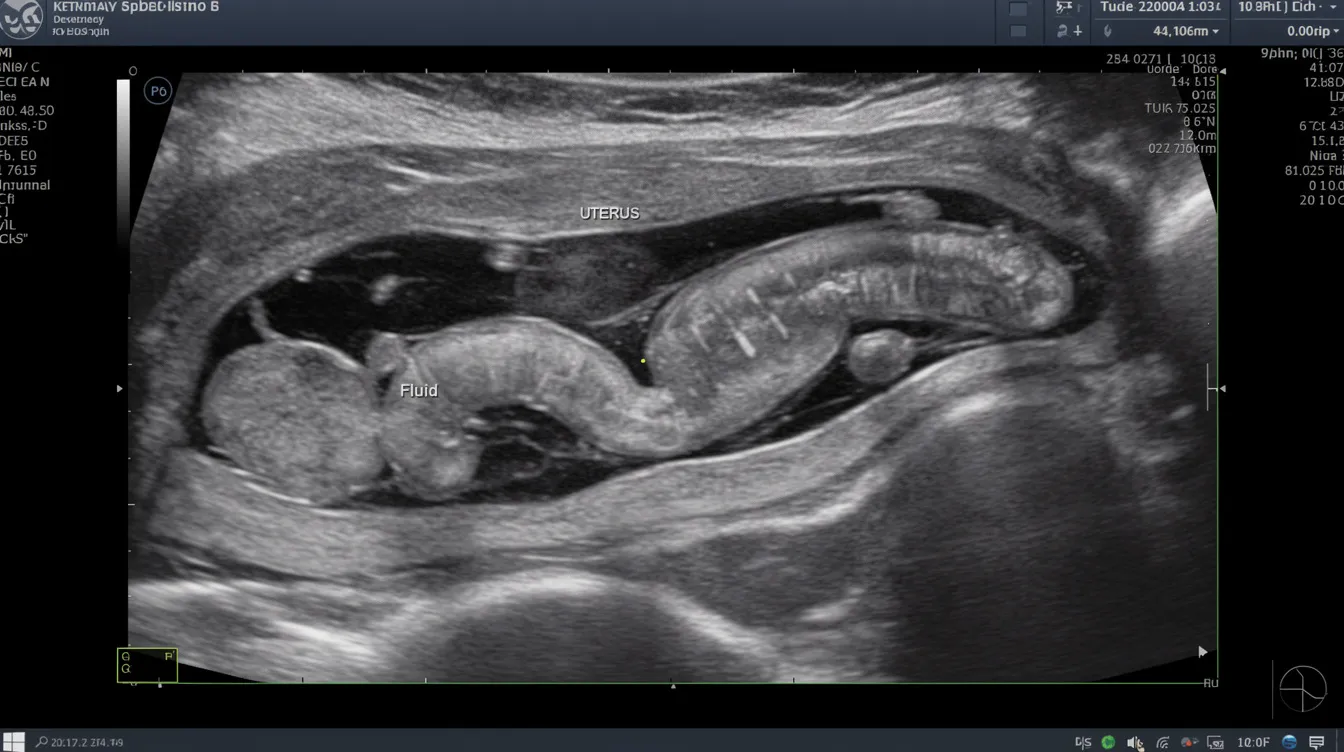
- Abdominal radiographs or ultrasound to visualize uterine enlargement – Ultrasound is the more sensitive imaging modality, capable of revealing fluid-filled, thickened uterine horns even in early stages. Radiographs may show a dramatically enlarged uterus in advanced cases. Cornell University recommends imaging as a critical diagnostic step for confirming uterine involvement.
- Pre-surgical stabilization with IV fluids and supportive care – Most patients presenting with pyometra are dehydrated and may be in early shock. IV fluids restore perfusion, and broad-spectrum antibiotics are initiated to begin addressing the bacterial infection before surgery.
Treatment Options Comparison
Surgery is necessary to prevent fatal complications from pyometra, and understanding the difference between surgical and medical approaches helps explain why ovariohysterectomy remains the standard of care.
Treatment Approach | Surgical Ovariohysterectomy (OHE) | Medical Management |
|---|---|---|
Success Rate | 95–97% survival when performed promptly | 60–85% in carefully selected open cases |
Recurrence Risk | Virtually none-infection source permanently removed | High-recurrence common in subsequent heat cycles |
Eligible Cases | All forms: open pyometra, closed pyometra, critically ill dogs | Limited to open cervix cases in stable, young dogs intended for breeding |
Speed of Resolution | Immediate removal of infected uterus | Days to weeks; may ultimately still require surgery |
Long-Term Outcome | Permanent cure; eliminates future fertility and hormonal disease risk | Preserves future fertility but carries ongoing risk of developing pyometra again |
Surgical removal of the uterus is the preferred treatment. Emergency surgery is the definitive treatment for pyometra-it immediately eliminates the source of infection and stops the hormonal cycle driving the disease process. Prompt surgery improves survival odds significantly. In a large retrospective study comparing referral and community veterinary clinics, 97% of 133 dogs treated with OHE survived to hospital discharge.
Ovariohysterectomy for pyometra is more complex than a routine spay. The uterus is often massively distended and fragile, requiring careful surgical technique to prevent spillage into the abdominal cavity. Antibiotics are given before and after pyometra surgery to address bacterial growth and reduce the risk of post-operative infection.
Medical treatment with prostaglandins is less reliable. Prostaglandin injections can induce cervical relaxation and uterine evacuation, but they carry side effects including vomiting, panting, and diarrhea-and carry a risk of uterine rupture. According to the Merck Veterinary Manual, medical management is not appropriate for closed pyometra or systemically compromised patients, and re-examination after medical resolution is essential to confirm complete recovery. Medical treatment may be considered only in dogs that are young, clinically stable, have an open cervix, and whose owners need to preserve future fertility. University of Missouri veterinary medicine resources similarly emphasize that OHE remains the most effective treatment across virtually all clinical scenarios, with medical management reserved for exceptional circumstances.
For pet owners, the takeaway is clear: surgical treatment offers the highest survival rate, the lowest recurrence risk, and the fastest resolution. Most dogs recover well from pyometra surgery when early intervention occurs.
Common Challenges and Solutions
Pet owners facing a pyometra diagnosis often have similar concerns. Here are the most common.
Concern About Surgery in Sick Dogs
It’s natural to worry about putting an already sick dog through surgery. The solution is pre-surgical stabilization: IV fluids correct dehydration and restore blood pressure, antibiotics begin combating the bacterial infection, and careful anesthetic monitoring ensures patient safety throughout the procedure. During surgery, the veterinary team continuously monitors heart rate, blood pressure, oxygen saturation, temperature, and respiratory function. Even in unstable patients, soft tissue surgery outcomes are excellent when stabilization protocols are followed-studies show survival rates remain high even when surgery must be briefly delayed for patient preparation.
Financial Concerns About Emergency Surgery
Emergency pyometra surgery involves diagnostics, hospitalization, anesthesia, the surgical procedure itself, and post-operative care-costs that can feel overwhelming. However, delayed treatment only increases expense: untreated pyometra leads to sepsis, organ failure, and potentially a ruptured uterus requiring even more intensive and costly intervention. Many veterinary clinics offer payment options, and pet insurance is worth discussing for intact unspayed females. The most cost-effective approach by far is preventing pyometra entirely through a routine spay before the disease develops-a fraction of the cost of emergency surgery.
Uncertainty About Post-Surgical Care
After pyometra surgery, most patients are monitored in hospital until stable, then discharged with clear instructions. Recovery typically involves:
- Monitoring the incision site daily for swelling, redness, or discharge
- Restricted activity for 10–14 days to allow proper healing
- Completing the full course of prescribed antibiotics and pain medication
- Follow-up visits to assess recovery and recheck blood work if needed
- Ensuring adequate nutrition, hydration, and a calm recovery environment
Many veterinary clinics offer 24/7 availability for post-surgical questions, so ask your veterinary team about after-hours support during your dog’s recovery.
Prevention and Long-Term Health Management
Pyometra is 100% preventable through routine spaying. Spaying eliminates the hormonal cycle that causes pyometra by removing the ovaries and uterus entirely-no progesterone elevation, no uterine lining changes, no environment for bacterial growth. Spaying prevents pyometra entirely in female dogs and cats.
Beyond preventing pyometra, early spaying reduces mammary cancer risk in dogs significantly and eliminates heat cycles and associated behavioral changes. Spaying is recommended as part of a long-term wellness plan for overall health.
Spaying female dogs at a young age helps prevent pyometra-ideally before the first heat cycle or during early adulthood. For older female dogs who remain intact, the risk of developing pyometra increases with each passing heat cycle. If your dog is over five years old and unspayed, it’s worth scheduling a consultation with your veterinarian to discuss the benefits of spaying or neutering.
Immediate next steps:
- If your intact female dog is showing any signs of pyometra, contact your veterinarian or an emergency animal hospital immediately-this is a time-sensitive emergency.
- If you have an unspayed female dog with no current symptoms, schedule a spay surgery consultation, particularly for older dogs or those who have been through multiple heat cycles.
- If your dog has been recently spayed, monitor for any signs of stump pyometra (rare, but possible if residual tissue remains) and attend all follow-up appointments.
You may also want to learn about recognizing dystocia and other reproductive conditions that affect unspayed females.

Frequently Asked Questions
Can pyometra be prevented completely?
Yes. Spaying-complete ovariohysterectomy-is 100% effective at preventing pyometra in female dogs. The only exception is stump pyometra, which can occur if residual uterine or ovarian tissue is inadvertently left behind during surgery. A properly performed spay eliminates the condition entirely.
How quickly does pyometra progress from early signs to emergency?
Pyometra can escalate from early stages to a potentially life threatening infection within a few hours to days, depending on whether the cervix is open or closed. Clinical signs typically appear 4–8 weeks after a heat cycle. Closed pyometra tends to progress more rapidly to sepsis and collapse because infection remains trapped inside the uterus.
What is the survival rate for dogs with pyometra surgery?
When diagnosed and treated promptly with surgical ovariohysterectomy, survival rates for pyometra surgery are approximately 95–97%. A large retrospective study found that 97% of 133 dogs survived to hospital discharge. Prognosis worsens with delayed treatment, uterine rupture, sepsis, or significant organ dysfunction.
Can young dogs develop pyometra?
Yes, though it’s uncommon. Pyometra is most common in middle-aged and older unspayed dogs, with a median diagnosis age near nine years. However, studies have documented cases in dogs under two years old-approximately 4–5% of cases in large incidence studies. Any unspayed female dog that has gone through a heat cycle is potentially at risk.
Is pyometra more common in certain dog breeds?
Some breeds appear more frequently in pyometra studies, including Labrador Retrievers, Poodles, Golden Retrievers, Pomeranians, Pugs, and Yorkshire Terriers. However, no definitive genetic causation has been proven-breed popularity, owner management practices, and study population characteristics likely influence these numbers. Any intact female dog is susceptible.
What should I do if I suspect my dog has pyometra?
Treat it as a veterinary emergency. Contact your veterinarian or emergency animal hospital immediately-do not wait to see if symptoms improve. Pyometra requires prompt treatment, and delays of even a few hours can allow the condition to progress to sepsis, kidney failure, or uterine rupture. Note your dog’s symptoms, the date of her last heat cycle, and any changes in appetite, thirst, or energy level to share with the veterinary team.
How much does pyometra surgery typically cost?
Costs vary by region, clinic, and the severity of your dog’s condition. Emergency pyometra surgery includes diagnostics (blood tests, imaging), anesthesia, the surgical procedure, hospitalization, and post-operative medications. In Central Florida, costs can range from several hundred to over a thousand dollars depending on the complexity of the case. Contact your veterinarian for a specific estimate based on your dog’s situation.
Can dogs have puppies after recovering from pyometra?
If treated with surgical ovariohysterectomy-the preferred treatment-the dog will be permanently sterilized and cannot have future litters. If medical management is used and is successful, future fertility may be preserved, though the risk of pyometra recurrence in subsequent heat cycles is high. Most veterinarians in veterinary medicine recommend breeding on the very next cycle after medical resolution, then pursuing spay, due to the elevated risk of recurrence.
Additional Resources
- Emergency contact: If you suspect pyometra in your dog or cat, call your veterinarian or an emergency animal hospital immediately for same-day triage and assessment.
- After-hours emergencies: Most veterinary clinics and emergency hospitals maintain after-hours contact protocols for critical situations including pyometra, bloat, and intestinal blockages.
- Spay surgery scheduling: Contact your regular veterinarian to schedule a spay consultation for your intact female dog-early intervention through routine spaying is the most reliable way to protect your dog’s long-term health.
- Pre-surgical preparation: Your veterinary team will provide detailed pre-surgical preparation guidelines upon scheduling, including fasting instructions, medication management, and what to bring on surgery day.