Short answer: A lump in or around a dog’s ear is not automatically cancer, but it should not be ignored. Ear-canal growths can block airflow, trap infection, cause pain, or affect balance. A growing mass, bleeding or ulcerated lump, foul discharge, repeated head shaking, facial weakness, or a new head tilt deserves prompt veterinary care.
Owners often use “dog ear tumor” to describe any bump on the ear flap, a mass at the opening of the canal, or tissue seen deep inside an inflamed ear. Those locations and appearances can represent very different problems. The safest approach is to document the change and have the ear examined rather than trying to identify a tumor from its appearance at home.
| What you see | Why it matters | Action |
|---|---|---|
| Small stable bump on the ear flap | May be benign, inflammatory, traumatic, or another skin lesion | Schedule an examination, especially if it changes |
| Mass at the canal opening, odor, discharge, or repeated scratching | May obstruct the canal or accompany infection | Prompt veterinary visit; do not probe |
| Bleeding, ulceration, rapid growth, severe pain, or facial swelling | More concerning behavior or complication | Same-day veterinary advice |
| Head tilt, loss of balance, facial droop, or collapse | Possible deeper ear or neurologic involvement | Urgent or emergency care |
Where can a dog ear mass occur?
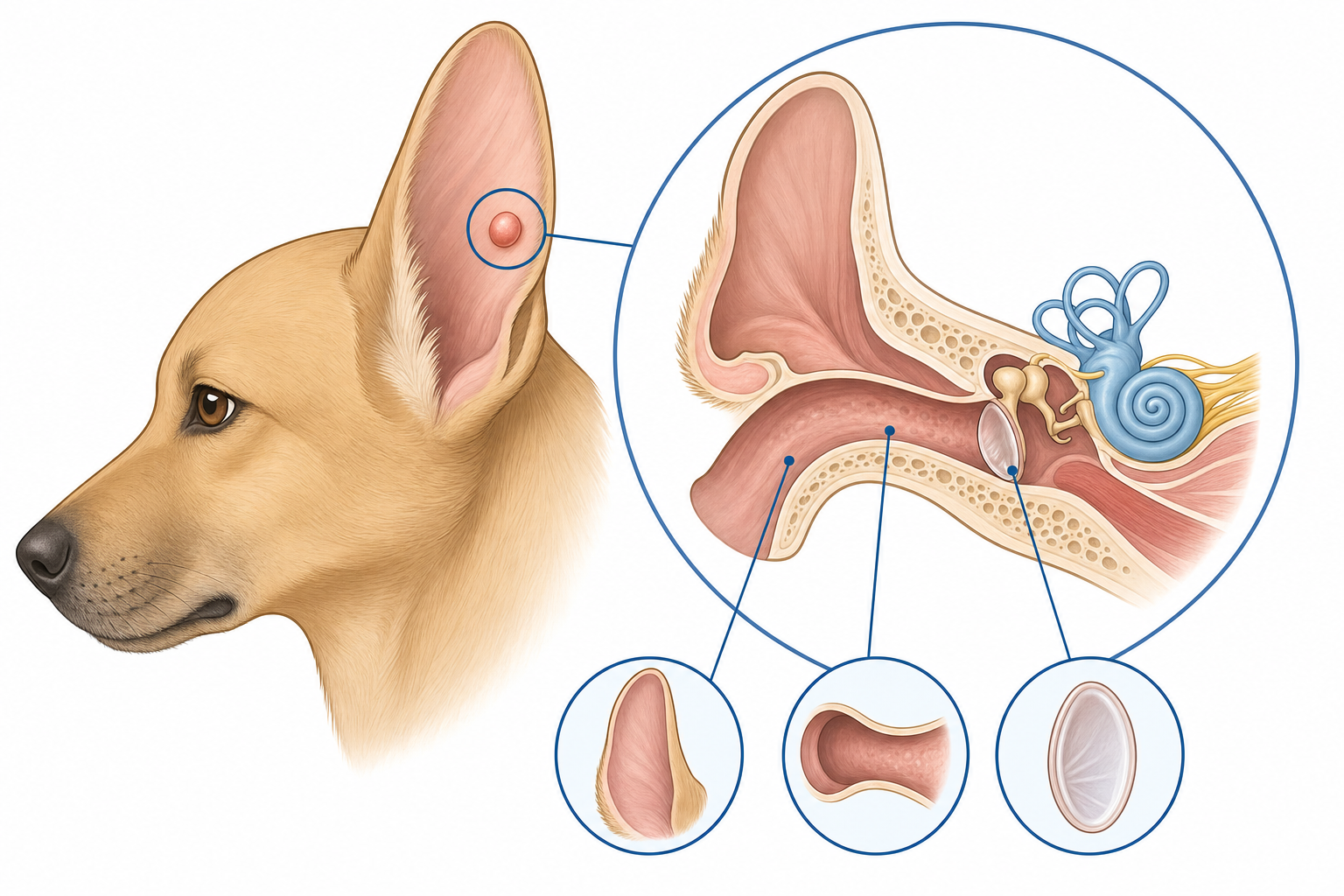
A bump may sit on the outer ear flap, at the entrance to the canal, or farther inside where owners cannot safely see it. The ear canal is narrow and sensitive. Swelling or a growth can change ventilation and drainage, while repeated scratching can create bleeding and a painful ear hematoma. An ear infection and a mass can also occur together, so temporary improvement after drops does not prove that the underlying problem is gone.Possible causes of a lump or growth
- Benign skin growths: Some noncancerous lesions occur on the ear flap or around the canal. “Benign” does not mean harmless if the lesion repeatedly traumatizes the ear or blocks the canal.
- Inflammatory polyps or tissue changes: Chronic inflammation can produce thickened tissue or a polyp-like mass. The appearance alone cannot determine the cause.
- Ear-canal tumors: Growths may arise from glands or other canal tissues. Some are benign and some are malignant; the distinction usually requires sampling or removal and laboratory examination.
- Infection, foreign material, or wax: Swollen tissue, debris, or a lodged object may look like a lump but needs its own treatment.
- Trauma: Scratching, bites, and repeated shaking can cause swelling of the ear flap. A soft fluid-filled swelling may be an aural hematoma rather than a tumor.
Do not put cotton swabs, peroxide, vinegar, essential oils, or leftover ear medication into an ear with a visible mass. A blocked or painful canal may have an injured eardrum, and the wrong product can worsen damage.
Signs that make an ear mass more concerning
Book an appointment promptly if the lump is enlarging, changes color or texture, ulcerates, bleeds, smells bad, or produces discharge. Also watch for pain when the ear is touched, persistent head shaking, scratching, reduced hearing, a closed or narrowed canal, or repeated “ear infection” episodes that return after treatment. Head tilt, stumbling, circling, vomiting with balance changes, facial droop, inability to blink, marked lethargy, or collapse can indicate deeper ear involvement or another urgent neurologic problem. These signs warrant same-day or emergency evaluation depending on severity.What will the veterinarian do?
- History and examination: The veterinarian will ask when the lump appeared, whether it is changing, prior ear infections, medications, scratching, and balance or hearing changes.
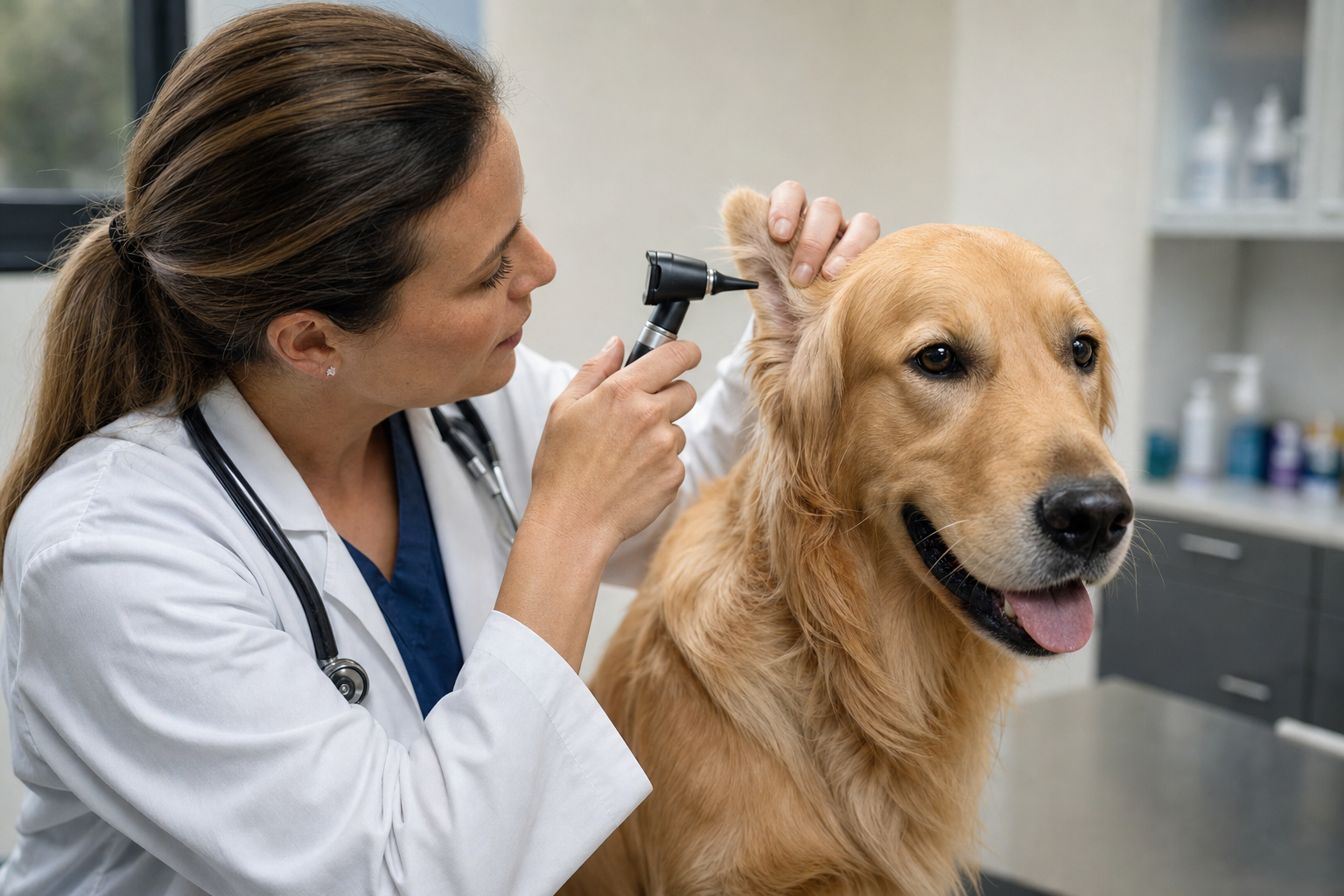
- Otoscopy: The canal and eardrum may be examined with an otoscope. A painful or obstructed ear may require sedation for a safe, complete evaluation.
- Sampling: Cytology can identify infection or inflammatory cells. A fine-needle sample, biopsy, or tissue submitted after removal may be needed to identify a growth.
- Imaging or staging: Deeper masses may require radiographs, CT, or other imaging. If cancer is diagnosed, staging helps guide treatment discussions.
- Treatment planning: Options depend on location, size, tissue type, symptoms, and the dog’s overall health. They may include medical treatment for infection, surgery, referral to a veterinary dermatologist or surgeon, and monitoring.
How to monitor a stable-looking bump
Take a clear photograph beside a ruler or another consistent size reference, record the date, and note changes in color, surface, bleeding, odor, discharge, scratching, or pain. Do not squeeze, cut, freeze, or attempt to drain it. Keep nails trimmed if appropriate and prevent vigorous scratching with a veterinarian-approved protective plan.Frequently asked questions
Does every dog ear lump mean cancer?
No. Ear lumps can be inflammatory, traumatic, infectious, benign, or malignant. Only an examination and, when indicated, a tissue sample can establish the diagnosis.Can an ear infection cause a lump?
Inflammation, swelling, debris, and trauma can make the canal or ear flap look lumpy. A mass can also cause or worsen an infection, so recurring infection should be evaluated rather than repeatedly treated without checking the canal.Should I clean around a dog ear tumor?
Clean only as directed by a veterinarian. Avoid inserting anything into a painful, blocked, bleeding, or mass-containing ear.Is a bump on the ear flap an emergency?
A small, stable bump is usually an appointment issue, but rapid growth, bleeding, severe pain, facial swelling, balance changes, or collapse makes the situation more urgent.Can a dog ear tumor cause a head tilt?
A deeper ear problem can affect balance and may cause a head tilt, but other conditions can do that too. A new head tilt or loss of balance should be evaluated promptly.Has your veterinarian used the term hamartoma when discussing the lump? See hamartomas in dogs for an explanation. The appearance or location of an ear lump alone does not establish that diagnosis.
Comments
One response
[…] Emergency care now. Keep handling minimal and transport safely. […]