
Reviewed by Dr. Roger Hart, DVM
Introduction
Heat stoke in dogs is a life threatening condition that can kill a dog within 15 minutes of onset. Any breed, age, or size of dog can suffer from this medical emergency during warm weather – and in Central Florida’s humid subtropical climate, the risk persists for much of the year. Understanding how to recognize, respond to, and prevent heat stoke in dogs can mean the difference between a full recovery and fatal heatstroke. Heat stoke in dogs is a serious concern that every dog owner should be aware of.
This guide covers the full spectrum of heat stroke in dogs: how heatstroke occurs, recognizing clinical signs at every stage, performing emergency treatment before reaching a veterinary hospital, understanding risk factors, and implementing proven prevention strategies. It is written specifically for pet owners in Central Florida and similar hot, humid environments where dogs face elevated heat exposure for extended periods each year, especially concerning heat stoke in dogs.
During hot weather, heat stoke in dogs can occur unexpectedly, so it is essential to be vigilant. It’s crucial to monitor your dog’s behavior and physical condition closely to prevent the dangerous consequences of heat stoke in dogs.
The core answer: Heat stroke occurs when a dog’s body cannot cool down and core body temperature rises above 104°F (40°C), triggering systemic organ damage. Immediate cooling with cool water and rapid veterinary intervention are the two most critical actions an owner can take.
After reading this guide, you will be able to:
- Recognize early signs and advanced symptoms of heat stroke before they become fatal
- Perform correct emergency cooling techniques safely
- Identify whether your dog has higher risk characteristics for developing heatstroke
- Implement daily and seasonal prevention strategies tailored to hot weather
- Understand what happens during professional veterinary care and long-term recovery
Understanding Heat Stroke in Dogs
Heat stroke is defined as nonpyrogenic hyperthermia – meaning a dangerous rise in body temperature not caused by fever or infection – that exceeds approximately 104°F (40°C) and is accompanied by systemic organ dysfunction. A dog’s normal body temperature is around 39.0 degrees Celsius (approximately 100.5–102.5°F). When a dog’s body temperature climbs above that safe range and cooling mechanisms fail, thermal injury to cells, organs, and the central nervous system begins rapidly.
Dogs cool themselves primarily through panting and, to a minimal degree, through sweat glands located on their paw pads. Unlike humans, who have millions of sweat glands distributed across their skin, dogs lack this efficient evaporative cooling system. In a humid environment – like Central Florida, where dew points are frequently high – even panting becomes less effective because moisture-saturated air limits evaporation. This is why dogs are fundamentally more vulnerable to heat induced illness than their owners might expect.
Understanding the two distinct types of heat stroke helps pet owners recognize when and how their dogs may be at risk.
Additionally, understanding heat stoke in dogs can help pet owners make informed decisions about their pets’ health and safety during hot weather.
Exertional Heat Stroke
Heat stoke in dogs frequently leads to serious health issues, so recognizing the symptoms early is vital. If you suspect your dog is suffering from heat stoke in dogs, it’s imperative to act quickly.
Exertional heatstroke occurs when a dog generates more internal heat through physical activity than its body can dissipate. This type accounts for approximately 74% of all heat-related illness events in dogs, according to a large UK veterinary study. Active dogs participating in running, fetch, hiking, or canine sports are particularly vulnerable – especially during late spring and early summer before they have acclimatized to rising temperatures.
Risk factors for exertional heat stroke include exercising unconditioned dogs, intense activity during peak heat, and working in hot or humid conditions where evaporative cooling through panting is compromised. If you exercise dogs regularly outdoors, this type of heat stroke is the most likely threat to your pet.
Recognizing the signs of heat stoke in dogs is crucial for their safety and well-being.
Nonexertional Heat Stroke
Nonexertional, or “classic,” heat stroke occurs from environmental heat exposure alone – no vigorous exercise required. Common scenarios include dogs left in parked vehicles, confined to yards without adequate shade, or kept in poorly ventilated spaces during high temperatures. Never leave dogs alone in parked cars, even briefly – on an 85°F day, the interior temperature can exceed 100°F within just 10 minutes, and cracking windows provides minimal protection.
Dogs can develop heat stroke even in temperatures as low as 70°F when humidity is high, ventilation is poor, or the dog has underlying health conditions. Recognizing the symptoms early – regardless of which type of heat exposure caused them – is the next critical step.
Recognizing Heat Stroke Signs and Symptoms
Knowing how to distinguish mild heat stress from severe heatstroke can save your dog’s life. Symptoms progress through identifiable stages, and every minute of delay reduces the chance of survival. The most common clinical signs appear in a predictable escalation from discomfort to organ failure.

Proper education on heat stoke in dogs can prevent tragedies and ensure that your furry friends stay safe during the sweltering summer months.
Early Warning Signs
The early signs of heat stroke often look like an exaggerated version of normal warm-weather behavior, which is why many pet owners miss them:
Heat stoke in dogs can manifest with symptoms that can escalate quickly, requiring immediate attention from owners.
- Excessive panting – faster, deeper, and louder than normal; this is one of the earliest and most common signs of heat stroke
- Heavy drooling – often thick or ropey saliva, sometimes foaming
- Reddened gums – bright red or dark mucous membranes indicate rising blood flow to the surface as the dog’s body attempts to cool itself
- Restlessness or anxiety – pacing, seeking cool surfaces, reluctance to move
- Increased heart rate – a rapid heart rate beyond what activity level would explain
At this stage, a dog’s temperature may be approaching 104°F. According to Cornell University’s Riney Canine Health Center, any reading above 104°F signals heatstroke and demands immediate intervention. If your dog shows breathing that seems labored or unusually noisy, this could also indicate heat stress compounding an underlying respiratory issue.
Advanced Symptoms
Without intervention, heat stroke progresses rapidly to more dangerous symptoms:
- Vomiting – vomiting may be a symptom of heatstroke in dogs, sometimes containing blood
- Diarrhea – potentially bloody, indicating gastrointestinal thermal injury
- Disorientation – staggering, confusion, inability to follow commands; disorientation can occur in dogs suffering from heatstroke as cerebral edema develops
- Weakness and collapse – the dog may be unable to stand or walk
- Dark or purple gums – indicating poor oxygen delivery and cardiovascular compromise
Heat stroke symptoms can include rapid heart rate, lethargy, and collapse. A dog that is not eating and appears lethargic after heat exposure should be evaluated immediately. Vomiting combined with any of these signs in warm weather should be treated as a heat stroke emergency until proven otherwise.
Critical Emergency Signs
At this stage, severe heatstroke has triggered life-threatening systemic damage:
Understanding the signs of heat stoke in dogs is the first step in preventing a potentially fatal outcome.
- Body temperature above 106°F – temperatures in this range cause extensive cellular damage, protein denaturation, and tissue necrosis
- Seizures – indicating central nervous system involvement and potential cerebral edema
- Loss of consciousness – the dog becomes unresponsive
- Signs of shock – weak or absent pulses, pale or marbled gums, rapid shallow breathing
- Multiple organ failure – including acute kidney injury (reduced or absent urine output), disseminated intravascular coagulation (abnormal bleeding), and acute respiratory distress syndrome
Immediate action is crucial to prevent brain damage or death from heat stroke. Heat stroke can lead to multi-organ failure in dogs, and without emergency treatment, the cascade of organ damage becomes irreversible. A retrospective study of 54 dogs published in the Journal of Veterinary Internal Medicine (J Vet Intern Med) found a 50% mortality rate among severe heatstroke patients, with most fatalities occurring within the first 24 hours.
Emergency Treatment and Veterinary Care
The guiding principle of heat stroke emergency care is simple: cool first, transport second. Research shows that early cooling by owners before veterinary admission can increase survival probability from approximately 50% to roughly 80%. Every minute of cooling delayed increases the risk of organ damage and death – delays greater than 90 minutes from the thermal insult to veterinary admission are associated with dramatically worse outcomes.
By being educated about heat stoke in dogs, you empower yourself to take effective action to protect your pet.
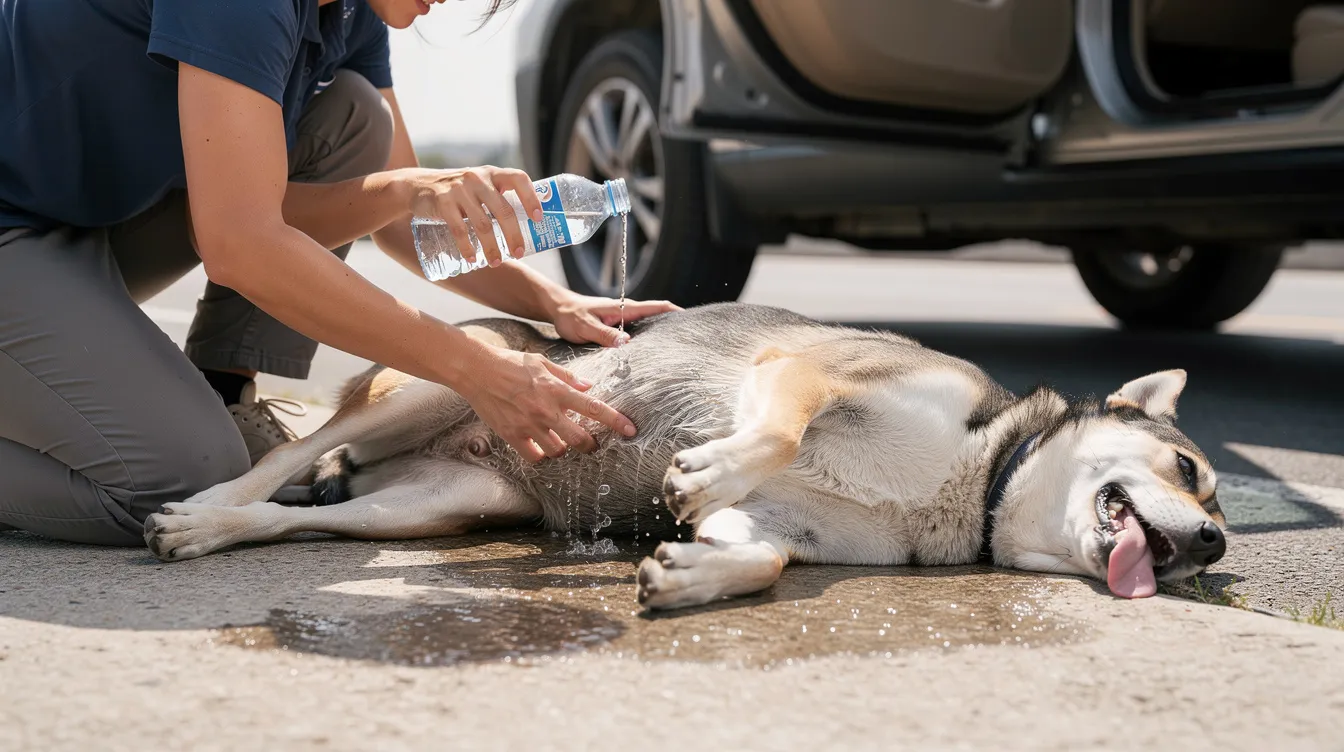
Dr. Roger Hart emphasizes that initiating cooling at home or on-scene is not optional – it is a critical first step in medical therapy that directly determines whether the dog survives.
Immediate First Aid Cooling
Begin cooling your dog the moment you suspect heat stroke, even before calling your veterinarian or starting transport:
To protect against heat stoke in dogs, proactive measures can help keep your pet cool and comfortable during the hottest days of summer.
- Move the dog to air conditioning or the nearest shaded, cool area immediately. Dogs should be moved to air conditioning to cool down during heat stress whenever possible.
- Apply cool water – not ice cold – to the dog’s body, focusing on the head, belly, armpits, groin, and paw pads. Pouring water or dousing a dog in cool water helps reduce body temperature effectively. Use room temperature water if cool water is unavailable.
- Use fans for evaporative cooling while wetting the skin. Point a car’s air conditioning vents at the dog during transport. Wet towels can be draped on a dog during transport, but replace them frequently as they trap heat.
- Monitor a dog’s temperature every 5 minutes during cooling using a rectal thermometer if available. Stop active cooling when the dog’s temperature reaches approximately 103–103.5°F to prevent hypothermia from overcooling.
- Offer small sips of drinking water only if the dog is conscious and able to swallow safely. Do not force water into an unresponsive dog.
Critical warning: Avoid using ice as it can cause shock in dogs. Ice or cold water immersion may trigger peripheral vasoconstriction, which traps heat in the dog’s body core and paradoxically slows cooling. Stick to cool water and airflow.
It is vital to take a dog to the vet even after initial cooling for heat stroke. Even if your dog appears to recover after cooling measures, internal organ damage – including acute kidney injury, coagulation disorders, and cerebral edema – may be developing silently.
Professional Veterinary Treatment
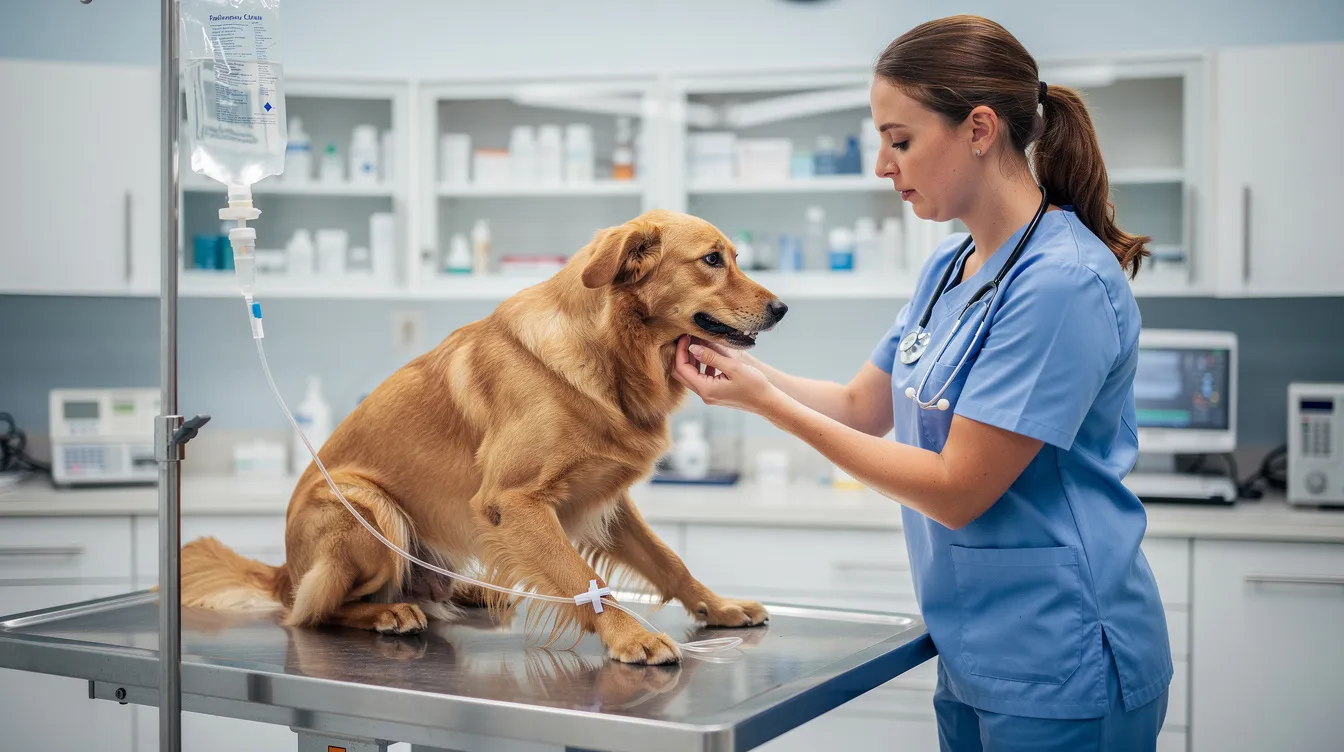
At the veterinary hospital, treatment protocols address the systemic damage that heat stroke inflicts across multiple organ systems. According to Veterinary Information Network (VIN) treatment guidelines, the standard approach includes:
Treatment Component | Purpose | Monitoring Required |
|---|---|---|
IV Fluid Therapy | Restore circulation and blood pressure | Cardiovascular status |
Oxygen Therapy | Support respiratory function | Breathing effort and blood oxygen |
Temperature Management | Controlled cooling to normal range | Core body temperature |
Organ Support | Prevent/treat multi-organ failure | Kidney, liver, brain function |
Beyond these core interventions, veterinary medicine offers additional targeted therapies for dogs suffering from severe heatstroke:
- Coagulation support – Disseminated intravascular coagulation (DIC) is a common and deadly complication. Fresh frozen plasma transfusion may be required when coagulation panels show prolonged PT (>18 seconds) or aPTT (>30 seconds).
- Neurological management – Mannitol can reduce cerebral edema, while benzodiazepines control seizures. Mental status is monitored continuously.
- Renal and hepatic monitoring – Blood work tracks BUN, creatinine, liver enzymes (ALT/AST), and electrolyte imbalance. Elevated creatinine above 1.5 mg/dL at 24 hours post-admission is a negative prognostic indicator, suggesting tubular necrosis or acute kidney injury.
- Additional supportive care – May include broad spectrum antibiotics if intestinal barrier breakdown is suspected, proton pump inhibitors for gastrointestinal protection, and C reactive protein monitoring for systemic inflammation.
Diagnostic biomarkers guide treatment intensity: creatine kinase (CK) levels in heatstroke patients can reach median values of approximately 17,000 U/L (normal is below 400 U/L), and the presence of nucleated red blood cells in blood samples strongly correlates with non-survival.
Risk Factors and Prevention Strategies
Prevention is far more effective than treatment. With a mortality rate reaching 50–64% in severe cases, understanding which dogs face higher risk and how to manage environmental and exercise factors can prevent heatstroke entirely.
High-Risk Dog Characteristics
Not all dogs face equal risk. The following characteristics place dogs at significantly higher risk of developing heatstroke:
- Brachycephalic breeds – Bulldogs, Pugs, French Bulldogs, Boston Terriers, and Boxers have shortened airways that reduce panting efficiency. Brachycephalic breeds are at higher risk for heatstroke across all categories – exertional, environmental, and vehicular. High-risk dog breeds for heat exhaustion include flat-faced and overweight pets.
- Obese and overweight dogs – Extra insulation and higher metabolic demands impair the dog’s body from dissipating heat. Obesity increases a dog’s risk of developing heatstroke significantly.
- Older dogs – Senior dogs (typically over 7–10 years) have impaired thermoregulation and may have concurrent conditions that compound heat vulnerability. Older dogs are more likely to suffer from heatstroke.
- Puppies – Still-developing thermoregulatory centers make puppies more susceptible to heatstroke than adult dogs.
- Dogs with heart disease or respiratory conditions such as laryngeal paralysis have compromised oxygen exchange, making heat dissipation through panting less effective. Dogs with heart disease are at increased risk of heatstroke.
- Dogs with thick coats – Dense double coats retain heat, though all coat types can overheat in extreme heat.
- Dogs with previous heat stroke – Prior episodes may damage the thermoregulatory center in the brain, creating predisposition to future events.
In the Bruchim et al. study, certain breeds showed striking vulnerability: Belgian Malinois had an odds ratio of approximately 24 for death from heat stroke compared to reference breeds, while Labradors, Golden Retrievers, and brachycephalic breeds were all overrepresented among cases.
Environmental Prevention
Controlling your dog’s environment is the most reliable way to prevent heatstroke:
- Never leave dogs in parked vehicles – Not even for “just a minute.” Interior temperatures become lethal within minutes regardless of cracked windows or shade.
- Always provide shade and water for your dog outdoors – Constant access to fresh drinking water and covered rest areas is essential.
- Keep pets indoors with air-conditioning on hot days – When temperatures are extremely hot or humidity is high, indoor time with air conditioning is the safest option.
- Test surfaces before walking – Hot surfaces can burn a dog’s paw pads and should be tested before walking on them. Place the back of your hand on pavement for 5 seconds; if it’s too hot for you, it’s too hot for your dog.
- Use paddling pools to help keep dogs cool in summer – shallow pools provide an easy way for dogs to lower their body temperature during outdoor time.
Exercise and Activity Management
Preventing heat stroke includes avoiding exercise during peak heat hours. In Central Florida, this means keeping dogs indoors or sedentary between approximately 10 AM and 4 PM during summer months.
Being proactive about heat stoke in dogs can significantly reduce the risk of severe health consequences.
- Exercise dogs only during cooler parts of the day – Early morning or after sunset provides the safest conditions.
- Gradual heat acclimatization over 10–60 days helps dogs adapt their physiological cooling responses to rising seasonal temperatures. Late spring and early summer pose the greatest risk because dogs are not yet acclimated.
- Ensure frequent water breaks and rest periods during any activity, and watch for early diagnosis signs: excessive panting, reluctance to continue, or seeking shade.

Recognizing that prevention is always preferable to emergency treatment, these strategies form the foundation of responsible dog ownership during hot weather months.
Prognosis and Long-term Considerations
Survival from heat stroke depends heavily on three factors: peak core body temperature reached, duration of hyperthermia, and time until cooling measures and veterinary care begin. According to the Merck Veterinary Manual, mortality ranges from 50–64% in severe heatstroke cases. However, animals surviving beyond 48–72 hours have a significantly better prognosis, as most fatalities occur within the first 24 hours.
Death from heat stroke can occur within 15 minutes in severe cases where temperatures exceed 106°F and cooling is delayed. Factors associated with the poorest outcomes include obesity, hypoglycemia (blood glucose below 47 mg/dL), elevated creatinine at 24 hours, presence of DIC or acute renal failure, seizures, and delayed veterinary admission beyond 90 minutes.
Dogs that do survive severe heatstroke may face long-term consequences:
- Renal insufficiency – Chronic kidney damage from acute kidney injury and tubular necrosis during the event
- Neurological deficits – Cognitive impairment, cortical blindness, or behavioral changes from central nervous system thermal injury
- Increased future vulnerability – Damage to the thermoregulatory center in the hypothalamus may predispose recovered dogs to recurrent heat stroke episodes
- Hepatic damage – Sustained liver enzyme elevations requiring ongoing monitoring
Many dogs recover fully from heat stroke if treated early and aggressively. Early diagnosis and rapid intervention remain the single most significant difference between survival and death. Dr. Roger Hart recommends scheduling recheck appointments at 24–72 hours post-event and again at 1–2 weeks to monitor kidney function, liver enzymes, and coagulation status – even in dogs that appear to have fully recovered.
Heat stoke in dogs requires quick recognition and response to avoid severe consequences.
Immediate action steps for every pet owner:
- Learn to recognize early signs of heat stroke before they progress
- Begin cooling immediately – cool first, transport second
- Seek emergency veterinary care for any suspected heat stroke, even after successful initial cooling
- Implement seasonal prevention strategies starting before temperatures rise
Frequently Asked Questions
How quickly can heat stroke kill a dog? Death from heat stroke can occur within 15 minutes of onset in severe cases, particularly when the dog’s temperature exceeds 106°F and no cooling measures are applied. Fatal heatstroke develops when thermal injury overwhelms the dog’s organs faster than they can compensate.
What temperature is too hot for dogs? A dog’s temperature over 104°F signals heatstroke and requires immediate intervention. Core body temperatures of 105.8°F (41°C) indicate clear hyperthermia, while readings between 106–109°F are perilous. Ambient temperatures above roughly 85°F combined with high humidity can overwhelm a dog’s cooling ability, though dogs can develop heat stroke even in temperatures as low as 70°F under certain conditions.
Can dogs recover fully from heat stroke? Yes, many dogs recover fully if treated early and aggressively. However, the risk of lasting organ damage exists – particularly to the kidneys, brain, and liver. Prognosis depends on peak temperature, duration of hyperthermia, time to treatment, and whether complications like disseminated intravascular coagulation or acute kidney injury developed.
Addressing heat stoke in dogs requires prompt action, which can be facilitated by knowing what to look for.
What’s the difference between heat stroke and heat exhaustion? Heat exhaustion refers to milder hyperthermia without systemic organ damage – signs include heavy panting, weakness, heat cramps, and mild dehydration. Heat stroke is the severe progression, involving core body temperature above approximately 105–106°F with altered mental state, organ dysfunction, and potential for death. Heat exhaustion can rapidly progress to heat stroke without intervention.
Ultimately, the goal is to ensure that heat stoke in dogs is prevented and that all dogs are safe during hot weather.
Which dog breeds are most at risk? Brachycephalic breeds (Pugs, Bulldogs, French Bulldogs, Boston Terriers, Boxers) face the highest risk due to impaired airways. Large working breeds (Labradors, Golden Retrievers), overweight dogs, senior dogs, puppies, and dogs with thick coats, heart disease, or respiratory conditions also face significantly higher risk.
The best way to prevent heat stoke in dogs is by understanding your dog’s specific needs and limitations in hot conditions.
When should I call emergency veterinary services? Contact your veterinarian or emergency veterinary hospital any time your dog shows signs beyond mild panting – particularly if the dog’s body temperature is at or above 104°F, vomiting or diarrhea is present (especially with blood), or the dog shows collapse, seizures, disorientation, or noisy breathing. Always seek veterinary advice after any cooling attempt, even if the dog appears improved.
How can I tell if my dog is too hot during exercise? Monitor the rate and depth of panting, gum color (should be pink, not bright red or purple), and behavior changes such as reluctance to continue, seeking shade, or lagging behind. Feel the dog’s ears and belly – if they’re extremely hot to the touch, the dog needs to stop and cool down. When ambient temperature plus humidity feels uncomfortable to you, it is likely dangerous for your dog.
Is it safe to use ice water for cooling? Generally, no. Ice or very cold water may cause peripheral vasoconstriction, trapping heat in the core and actually slowing the cooling process. Avoid using ice as it can cause shock in dogs. Use cool or room temperature water combined with fans for evaporative cooling. Ice packs may be used on specific areas (such as the neck or groin) only under veterinary supervision.
Additional Resources
Dr. Roger Hart Veterinary Clinic For emergency veterinary care or questions about heat stroke prevention in Central Florida, contact Dr. Roger Hart’s clinic directly. Emergency cases involving suspected heat stroke, bloat, or other acute conditions should be called in ahead of arrival so the team can prepare.
Heat Safety Checklist for Dog Owners
- Check pavement temperature before every walk (hand test: 5 seconds)
- Carry water on all outings longer than 15 minutes
- Schedule exercise before 8 AM or after 7 PM during summer
- Ensure yard has shade structures and filled water bowls
- Never leave your dog unattended in a vehicle
- Know your nearest 24-hour emergency veterinary hospital
- Keep a rectal thermometer in your pet first aid kit
Temperature and Humidity Risk Assessment
Ambient Temperature | Low Humidity Risk | High Humidity Risk |
|---|---|---|
70–80°F | Low to moderate | Moderate |
80–90°F | Moderate to high | High |
90–100°F | High | Very high |
100°F+ | Very high | Extreme |
When humidity exceeds 80%, even moderate temperatures can overwhelm a dog’s ability to cool through panting. In Central Florida, where summer humidity routinely exceeds this threshold, treat every outdoor outing as a potential heat exposure risk and monitor your dog continuously for early signs of heat related illness.
Regular checks on your dog’s temperature can also help in identifying heat stoke in dogs early.
Knowing how to respond to a dog experiencing heat stoke in dogs can save lives and prevent serious complications.
Always be prepared to identify heat stoke in dogs, especially in extreme weather conditions.
By educating yourself and others about heat stoke in dogs, you contribute to a safer environment for all pets.
Implement preventive measures for heat stoke in dogs, ensuring your dog stays hydrated and cool.
Fostering an understanding of heat stoke in dogs is vital for responsible pet ownership.
Being aware of heat stoke in dogs can help owners take immediate action when needed.
Every dog owner must understand the risks associated with heat stoke in dogs and how to mitigate them.
Conduct thorough research on heat stoke in dogs to become the best advocate for your pet’s health.
Understanding heat stoke in dogs helps to reduce panic and improve outcomes in emergencies.
Becoming knowledgeable about heat stoke in dogs can lead to more timely and effective interventions.