
Reviewed by Dr. Roger Hart, DVM
Introduction
Hypertrophic cardiomyopathy (HCM), also called feline HCM, is the most common heart disease in cats, affecting approximately 15% of the feline population. This condition causes the heart muscle walls—particularly of the left ventricle—to thicken abnormally, reducing the heart’s ability to pump blood efficiently and deliver oxygen throughout the body. Left unmanaged, this condition, known as cat hypertrophic cardiomyopathy, can progress to congestive heart failure, arterial thromboembolism, or sudden death. Cat hypertrophic cardiomyopathy can affect any breed of cat, but certain breeds are more susceptible.
This guide covers everything cat owners in Central Florida need to know about feline HCM: from recognizing early clinical signs to understanding diagnostic procedures, treatment options, and long-term management strategies. Whether you own an at-risk breed like a Maine Coon or Ragdoll, or you’re concerned about subtle changes in your domestic shorthair’s behavior, this resource will help you make informed decisions about your cat’s health.
Feline HCM is a critical condition that requires vigilant monitoring and proactive management.
In short: HCM is a genetic heart condition causing thickened walls in the left ventricle that reduces pumping efficiency, impairs blood flow, and can lead to heart failure in cats. While there is no cure for HCM, timely diagnosis and treatment can improve quality of life and extend survival.
After reading this guide, you will:
- Understand what hypertrophic cardiomyopathy is and how it damages your cat’s heart
- Recognize early warning signs and emergency symptoms that demand immediate veterinary care
- Know which diagnostic tests are essential and what each one reveals
- Learn about current treatment options, including medications and lifestyle modifications
- Be equipped to manage long-term care and monitoring for a cat diagnosed with HCM
Understanding Hypertrophic Cardiomyopathy and Heart Disease in Cats
Hypertrophic cardiomyopathy is a disease of the heart muscle in which the muscular walls of the left ventricle become abnormally thick. This thickening reduces the chamber’s capacity, stiffens the walls, and impairs the heart’s ability to relax and fill with blood between beats. For cat owners, understanding HCM matters because many cats show no symptoms initially-the condition often exists in a subclinical phase with no outward signs for months or years-making early detection through routine veterinary examinations critical for effective intervention.

How HCM Affects the Heart
In a healthy cat’s heart, the left ventricle contracts to pump blood out to the body and then relaxes to refill during diastole. With HCM, the thickened walls create a stiffer chamber that cannot relax properly. This impaired filling forces the heart to compensate by beating faster, which increases oxygen demand on the already-compromised heart muscle.
Over time, this cycle damages the heart in several ways. The left atrium enlarges as it works harder to push blood into the stiff ventricle. In obstructive forms of HCM, the thickened septum or abnormal mitral valve movement can partially block the outflow tract, further reducing effective blood flow. The heart muscle itself may develop scar tissue-both between muscle cells and in areas where cells have died from insufficient oxygen-which worsens stiffness and promotes dangerous irregular heart rhythms. As heart disease progresses, the combined effects can lead to congestive heart failure, where fluid accumulates in the lungs or chest cavity, or to blood clots that form in the enlarged left atrium.
Genetic and Risk Factors
HCM is heavily linked to genetic mutations in certain cat breeds, although unlike acquired HCM, some cats are born with congenital heart defects. The primary mutations identified are in the MYBPC3 gene: the A31P mutation in Maine Coons and the R820W mutation in Ragdolls. These follow an autosomal dominant inheritance pattern with incomplete penetrance, meaning cats with two copies of the mutation face the highest risk and often develop heart disease early, while those with one copy may have milder or subclinical disease.
The ventricular septal defect is the most common congenital heart defect in cats.
However, the majority of cats with HCM do not carry these two known mutations, indicating that additional genetic factors remain undiscovered. Beyond Maine Coons and Ragdolls, certain breeds at higher risk include British Shorthairs, Persians, Sphynx, Norwegian Forest cats, Bengals, and Birmans. Mixed-breed cats also commonly develop heart disease. Male cats tend to show more severe disease. While HCM is most common in middle aged cats, it has been documented in kittens as young as four months and in older cats beyond 15 years. In older cats, prevalence may reach as high as 29% even after excluding secondary causes like high blood pressure or hyperthyroidism.
Understanding these risk factors connects directly to prevention: genetic testing is available for the known mutations in Maine Coons and Ragdolls, and breeders can use this information to make more informed decisions, though a negative result does not guarantee a cat will never develop heart disease.
Recognizing HCM in Your Cat
Because HCM often begins silently-cats with heart disease may show no symptoms initially-knowing what behavioral and physical changes to watch for can mean the difference between early intervention and a medical emergency.
Early Warning Signs and Difficulty Breathing
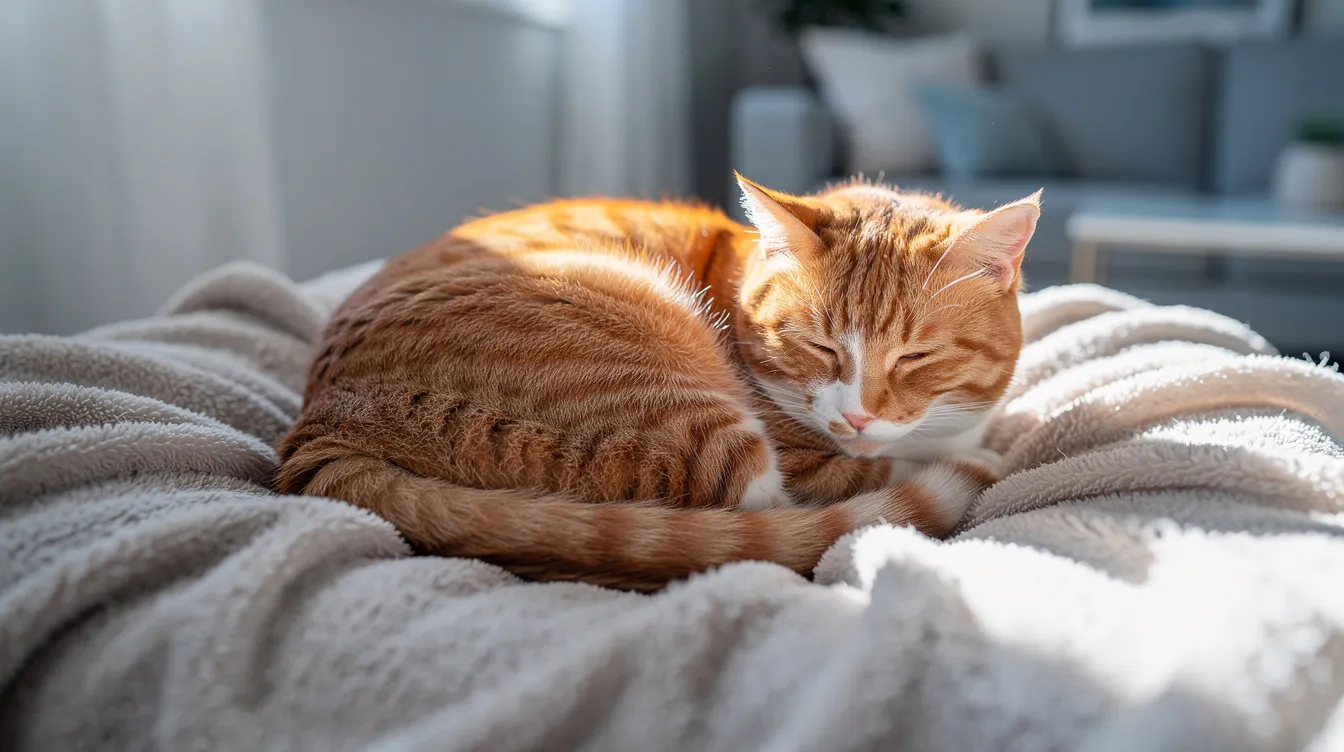
The earliest clinical signs of HCM are often subtle, and the common signs owners notice at home can be easy to dismiss. Cats may exhibit decreased appetite or hide more when unwell. You might notice your cat sleeping more, showing reluctance to jump onto surfaces they previously accessed easily, or seeming less interested in play; these are common signs owners may notice at home. These behavioral shifts reflect the heart’s decreasing ability to meet the body’s demands during activity.
Breathing changes provide another important clue. Rapid breathing-particularly a resting respiratory rate over 35 breaths per minute-indicates potential heart issues and developing pulmonary congestion. Fast breathing or trouble breathing during rest, rather than after exertion, is especially concerning.
It’s important to understand that most cats with early HCM show no obvious symptoms. HCM often exists in a subclinical phase with no outward signs for months or years, which is why routine wellness examinations that include cardiac auscultation are so valuable for early detection.
Advanced Symptoms
When HCM progresses, the signs become more urgent and harder to miss. CHF causes symptoms like rapid breathing and fluid accumulation in the lungs. Cats with heart failure may exhibit labored breathing or lethargy, and you may observe your cat breathing through its mouth-a behavior that is never normal in cats and represents severe respiratory distress.
One of the most frightening complications is arterial thromboembolism, which can result in sudden paralysis and severe pain. Blood clots develop in 10–20% of cats with heart disease. These clots typically lodge where the aorta divides, cutting off blood supply to the hind legs. Sudden lameness can signal a blood clot in cats-affected limbs become cold, painful, and the cat may cry out. Blue or pale gums indicate a lack of oxygen in the bloodstream. This is a medical emergency requiring immediate emergency treatment.
The first sign of HCM can sometimes be sudden cardiac death due to lethal arrhythmias, with no preceding symptoms at all.
Physical Examination Findings
During a physical examination, your veterinarian may detect a heart murmur-a sound created by turbulent blood flow through the heart or nearby blood vessels. However, murmur loudness does not reliably correlate with disease severity, and some cats with significant heart disease have no audible murmur at all. Other symptoms your vet may identify include irregular heart rhythms, gallop sounds (an extra heartbeat sound), weak pulses, and tachycardia.
According to Cornell University’s College of Veterinary Medicine, treatment goals for cats with HCM include controlling heart rate, alleviating pulmonary congestion, removing pleural fluid if present, and decreasing the risk of thromboembolism. These exam findings often shape how heart disease is diagnosed and which tests are chosen next. These findings during examination help guide which diagnostic tests are needed next.
Diagnostic Procedures and Testing
Once a physical examination raises suspicion of heart disease, a systematic diagnostic workup is essential for confirming HCM, assessing its severity, and ruling out secondary causes of heart muscle thickening.
Essential Diagnostic Steps
A complete physical examination is the first step in diagnosis, providing baseline information about heart sounds, respiratory patterns, and pulse quality. From there, your veterinarian will recommend additional testing based on findings:
- Physical examination and medical history review – Establishes baseline heart function and identifies risk factors including breed, age, and family history of heart disease
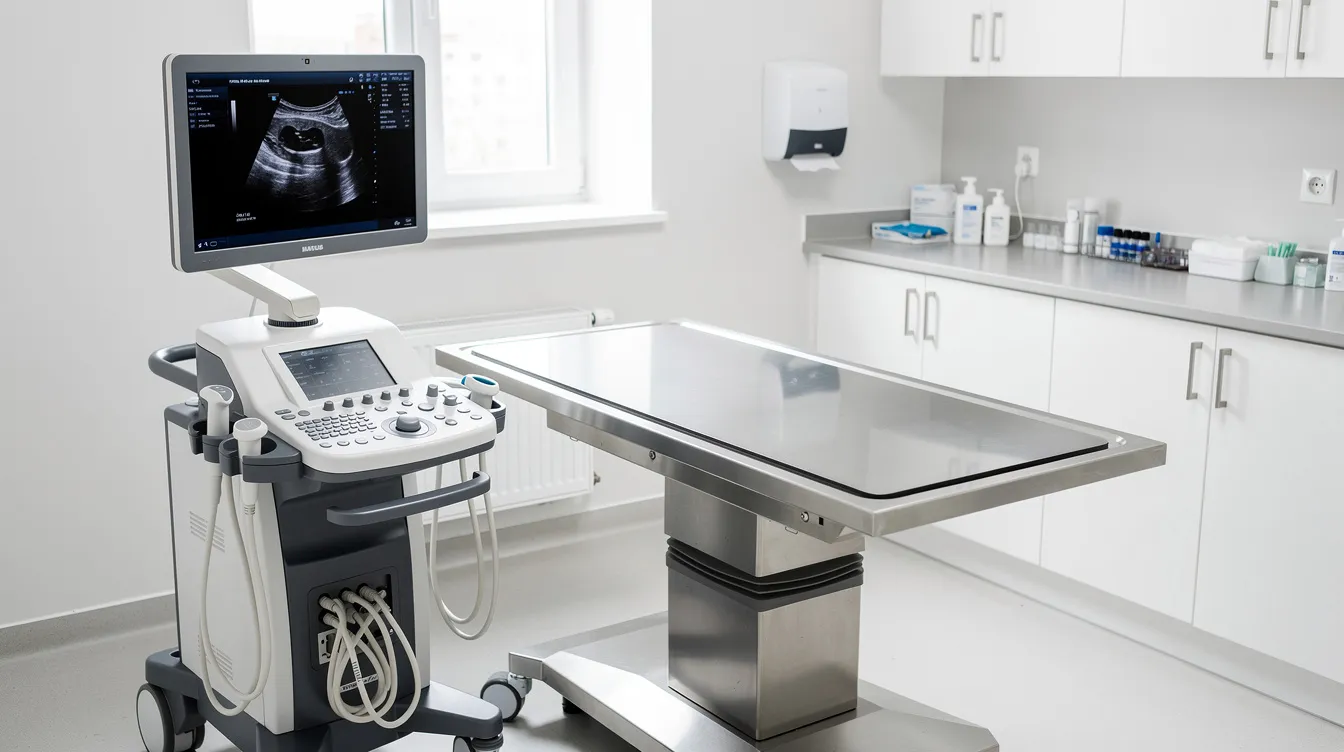
- Echocardiogram (ultrasound) – Uses sound waves to create detailed images of the heart; an echocardiogram is the best test for diagnosing HCM, measuring wall thickness, chamber dimensions, left atrial size, and detecting obstruction or thrombi
- Chest X-rays – Chest x rays measure heart size and check for fluid buildup in the lungs or chest cavity, helping confirm whether congestive heart failure has developed
- Electrocardiogram (ECG) – An ECG helps determine irregular heart rhythms in cats, which is important because arrhythmias are both a common complication of HCM and a risk factor for sudden death
- Blood pressure monitoring and laboratory tests – Blood tests can assess organ health and thyroid function, helping rule out high blood pressure, hyperthyroidism, and kidney disease as secondary causes of heart wall thickening
Additionally, biomarkers such as NT-proBNP and cardiac troponin I may be elevated in cats with more severe disease and can aid in early detection. Genetic testing is available for the known MYBPC3 mutations in Maine Coons and Ragdolls-useful for breeders and for early risk assessment, though a negative result does not rule out HCM.
Diagnostic Accuracy Comparison
Test Method | Accuracy | Information Provided |
|---|---|---|
Echocardiogram | Gold standard | Wall thickness, chamber size, function |
Chest X-rays | Supportive | Heart size, lung fluid |
ECG | Complementary | Heart rhythm, electrical activity |
The echocardiogram remains the definitive tool for diagnosing HCM-no other test can directly measure the thickened walls and assess diastolic function. Chest x rays and ECG provide critical supporting information but cannot confirm the diagnosis alone. Blood pressure measurement is essential because hypertension can mimic HCM-like hypertrophy and requires different treatment. For pet owners in Central Florida, echocardiography may require referral to a veterinary cardiologist at a nearby specialty center-ask your veterinarian about arranging this referral.
Regular monitoring through ongoing echocardiograms is crucial for managing HCM, as the disease can progress unpredictably. This diagnostic foundation directly informs treatment planning.
Common Challenges and Solutions
Managing a cat with hypertrophic cardiomyopathy presents practical challenges for pet owners. Treatment for HCM may require 3 to 5 medications, each needing consistent administration, alongside regular monitoring and lifestyle adjustments.
Medication Administration Difficulties
Giving multiple daily medications to cats is notoriously difficult. Common medications for HCM include furosemide and beta-blockers like atenolol, along with antiplatelet agents such as clopidogrel for thromboembolism prevention. Calcium channel blockers like diltiazem may be used when beta-blockers are less suitable, and ACE inhibitors may be added for cats in heart failure. Heart failure cannot be cured but can be managed with medications when administered consistently.
Practical solutions include pill pockets designed for cats, compounded liquid formulations that can be flavored, and transdermal medications applied to the ear flap. Your veterinarian can discuss which formulations work best for your cat and provide written medication schedules to help with adherence. When possible, medications are selected that require less frequent dosing to reduce stress for both cat and owner.
It’s worth noting that a landmark 5-year study found that atenolol did not significantly improve survival in cats with preclinical (asymptomatic) HCM compared to no treatment-the only independent predictors of survival were age at diagnosis and left atrial size. This means treatment decisions should be carefully tailored to each cat’s disease stage rather than applied broadly.
Monitoring Breathing at Home
Increased respiratory rate indicates potential heart failure in cats, making home monitoring one of the most valuable tools for early detection of decompensation. To count your cat’s respiratory rate, observe them while sleeping or resting quietly and count the number of chest rises in 15 seconds, then multiply by four. Rapid breathing over 35 breaths per minute indicates heart issues and warrants a call to your veterinarian.
In Central Florida’s hot, humid climate-where summer temperatures regularly reach 90°F-heat can exacerbate difficulty breathing in cats with compromised heart function. Watch respiratory rates particularly closely during warm months. If your cat shows labored breathing, open-mouth breathing, or severe respiratory distress, seek emergency veterinary care immediately.
Managing Stress and Activity Levels
Environmental modifications play a significant role in protecting your cat’s quality of life. Cats with HCM, especially obstructive forms, should avoid vigorous activity that increases heart rate and oxygen demand. Keep your home cool with air conditioning, provide quiet retreat spaces, and minimize stressful events like loud gatherings or unfamiliar visitors.
For Central Florida cat owners, this means ensuring reliable indoor cooling during summer, providing clean cool water at all times, and keeping cats indoors where temperature can be controlled. A low-sodium diet may be recommended for heart disease management, particularly in cats showing signs of fluid build up. Weight management is also important-obesity increases cardiac workload. These lifestyle adjustments, combined with regular senior wellness care and frequent veterinary visits, help control symptoms and slow disease progression.
Conclusion and Next Steps
Hypertrophic cardiomyopathy is the most common cause of heart failure in cats, but early detection through routine screening and careful monitoring gives cats diagnosed with this condition the best chance for an extended, comfortable life. Median survival for cats with HCM who survive the initial diagnosis period ranges from approximately 596 to 732 days, and many cats with subclinical disease remain stable for years. The 5-year cumulative cardiac mortality among cats with preclinical HCM is approximately 23%, underscoring that while the disease is serious, many affected cats live well with appropriate care.
Your next steps:
- Schedule a veterinary examination if you notice any changes in your cat’s breathing, activity level, or behavior-especially if you own a breed with increased risk
- Discuss genetic testing with your veterinarian if you have a Maine Coon, Ragdoll, or other predisposed cat breeds
- Begin monitoring resting respiratory rate at home as a baseline, tracking changes over time
- Establish a regular follow-up schedule-in preclinical cases, echocardiography and physical examination every 6–12 months; more frequently if enlargement or arrhythmias are detected
If you’re concerned about feline heart disease or want to discuss screening for your cat, schedule an appointment with your regular veterinarian. Ask specifically about ProBNP testing and, if indicated, referral to a board-certified veterinary cardiologist for an echocardiogram. Related topics you may want to explore include other forms of cat heart disease such as dilated cardiomyopathy and restrictive cardiomyopathy, senior cat care strategies, and genetic counseling for breeding programs.
Frequently Asked Questions
Can HCM be prevented in cats?
HCM cannot be truly prevented because it arises from genetic mutations, many of which remain unidentified. Genetic testing can screen for the known MYBPC3 mutations in Maine Coons and Ragdolls, helping breeders make responsible decisions, but a negative genetic test does not guarantee a cat will never develop heart disease. Only two mutations have been identified, meaning many cats who develop HCM carry unknown genetic variants.
How long do cats with HCM typically live?
Cats diagnosed with HCM who survive the initial presentation have median survival times ranging from 596 to 732 days (roughly 1.6 to 2 years). However, survival varies enormously depending on disease stage. Cats with subclinical disease may live for many years, while those presenting with arterial thromboembolism or congestive heart failure have significantly shorter survival. Risk factors for a rapid decline include moderate to severe left atrial enlargement, tachycardia, obstruction, and presence of blood clots.
Is HCM painful for cats?
In conclusion, HCM is a serious condition that requires vigilant monitoring and care.
HCM itself is not directly painful in the way arthritis or injury would be. However, its complications can cause significant suffering. Aortic thromboembolism-where blood clots block blood flow to the hind limb-causes severe, acute pain along with hind limb paralysis. Difficulty breathing from fluid buildup is also deeply distressing. Managing these complications promptly is essential to maintaining your cat’s quality of life.
What’s the difference between HCM and heart murmurs?
A heart murmur is a sound heard during physical examination caused by turbulent blood flow-it is a clinical sign, not a disease. Hypertrophic cardiomyopathy is a structural disease of the heart muscle. While many cats with HCM have audible murmurs, some do not, and not every murmur indicates underlying heart disease. Diagnosing HCM requires echocardiography; a murmur alone cannot confirm or rule out significant heart disease.
Should I restrict my HCM cat’s activity?
Yes, particularly in cats with obstructive HCM or those showing clinical signs. Vigorous play or stress increases heart rate and oxygen demand, which can trigger arrhythmias or worsen obstruction. Gentle activity is acceptable, but avoid intense play sessions, rough handling, or situations that cause fear. In Central Florida’s heat, keeping cats indoors in air-conditioned spaces is especially important.
When is euthanasia considered for cats with HCM?
Euthanasia may be considered when a cat’s quality of life is severely and persistently compromised: uncontrolled congestive heart failure despite maximum medical therapy, repeated thromboembolism events, severe respiratory distress that doesn’t respond to treatment, inability to eat, or when the burden of treatment causes more suffering than benefit. This deeply personal decision should be made in consultation with your veterinarian, guided by compassion for your cat.
Are there dietary changes that help cats with HCM?
No specific diet has been proven to alter HCM disease progression. However, a low-sodium diet may be recommended for heart disease management, particularly in cats with congestive heart failure, to help reduce fluid retention. Maintaining a healthy weight with high-quality protein is sensible. The Merck Veterinary Manual emphasizes that management of feline cardiomyopathy includes ruling out contributing conditions and supportive nutritional care alongside medical therapy.
How often should HCM cats have check-ups?
Cats with preclinical HCM should have echocardiography and physical examination every 6–12 months. Those with left atrial enlargement, obstruction, or arrhythmias need more frequent veterinary visits-sometimes every 3–4 months. Blood pressure and thyroid function should be monitored at least annually, and more often in older cats. Regular follow-up exams are crucial for managing heart disease and catching progression before it becomes a crisis.
Additional Resources
- Cornell University Feline Health Center – Comprehensive information on feline cardiomyopathy types and management
- Merck Veterinary Manual – Guidelines on diagnosing and managing cardiomyopathy in cats, including differentiation of congenital heart disease, dilated cardiomyopathy, and restrictive cardiomyopathy
- For after-hours cardiac emergencies in the Central Florida region, contact your nearest emergency veterinary hospital immediately