Introduction
Cystitis in male cats is bladder inflammation that can escalate to a complete urinary blockage – a life-threatening emergency capable of killing a cat within 24-48 hours without treatment. Because male cats have narrower urethras than females, what begins as uncomfortable bladder inflammation can rapidly progress to urethral obstruction, kidney damage, and fatal electrolyte imbalances. Recognizing the clinical signs early and seeking immediate veterinary care is the single most important factor in saving a blocked cat’s life.
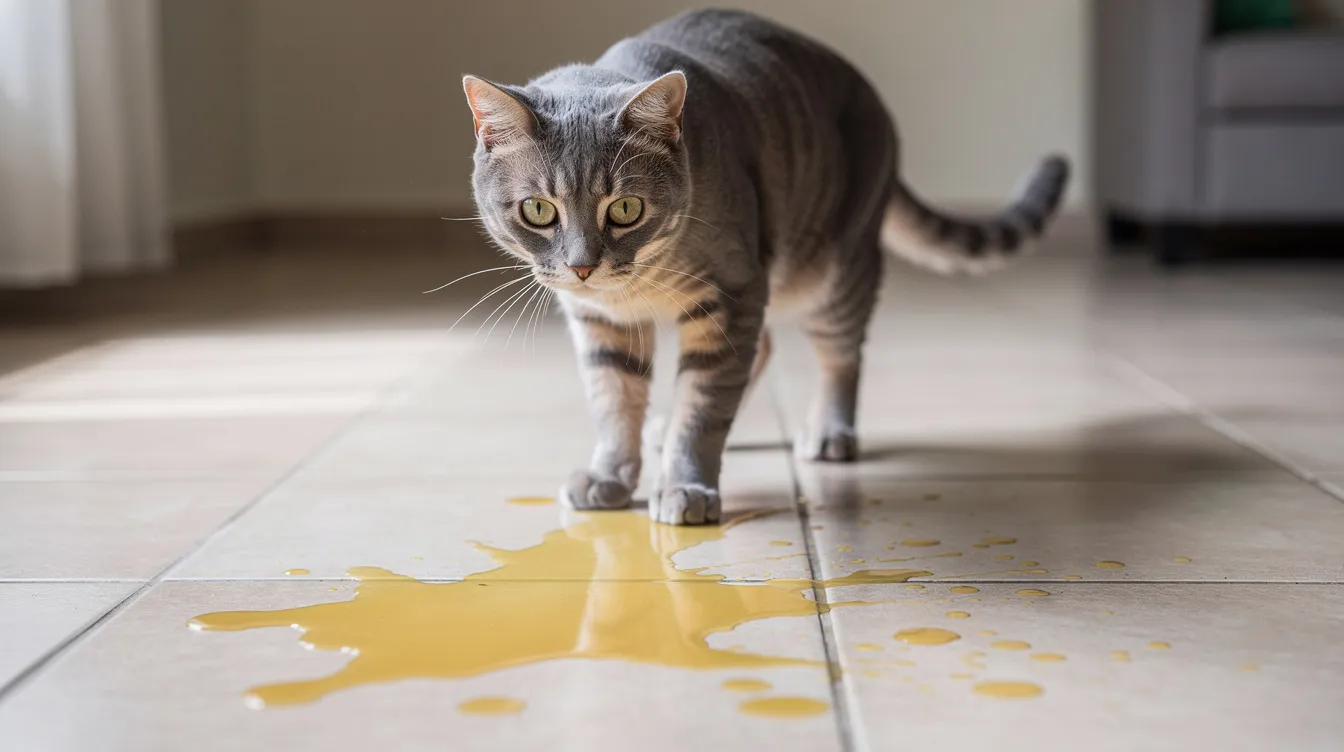
One common sign that your male cat may be suffering from this condition is if you notice that your cat is peeing blood.
If your male cat is peeing blood, it is critical to seek veterinary care immediately. A cat is peeing blood can indicate serious underlying health issues.
This article covers emergency warning signs of cystitis and urinary obstruction in male cats, immediate stabilization and emergency treatment protocols, long-term prevention strategies, and cost considerations relevant to Central Florida cat owners. Whether your male cat is straining in the litter box right now or you want to understand how to prevent future episodes, this guide provides the clinical detail you need to act decisively.
Male cat cystitis is bladder inflammation that requires immediate veterinary attention when straining occurs with little or no urine production, as a complete urinary blockage can become fatal within 24-48 hours.
By reading this article, you will:
- Recognize the emergency symptoms that distinguish mild cystitis from a life-threatening emergency
- Understand why male cats are anatomically predisposed to urinary obstruction
- Know exactly what happens during emergency treatment, including catheterization and fluid therapy
- Learn evidence-based prevention strategies – from prescription urinary diets to stress reduction – that reduce recurrence
- Gain clarity on treatment costs and when to contact your veterinarian immediately
Understanding Cystitis in Male Cats
Cystitis refers to inflammation of the bladder wall, and in cats it falls under the broader umbrella of feline lower urinary tract disease (FLUTD). FLUTD encompasses multiple conditions affecting the urinary tract – including idiopathic cystitis, urinary stones, urethral plugs, bacterial infections, and urethral obstruction. According to the Cornell University Feline Health Center, common clinical signs of FLUTD include painful urination (dysuria), difficulty or pain when passing urine, frequent trips to the litter box (pollakiuria), blood in urine (hematuria), and urinating outside the litter box.
Cystitis can lead to urinary blockages in male cats, which is what makes this condition uniquely dangerous compared to the same diagnosis in females. Male cats are more prone to urinary blockages than females because they have anatomically longer, narrower urethras. A female cat’s shorter, wider urethra allows inflammatory debris, crystals, and mucus to pass more easily. In male cats, this material can lodge in the narrow penile urethra and create a complete obstruction that prevents any urine flow.
Feline Idiopathic Cystitis (FIC)
Feline idiopathic cystitis (FIC) is the most common form of bladder inflammation in cats – a diagnosis reached when standard testing (urinalysis, imaging, urine culture) fails to identify bacterial infection, bladder stones, or other structural causes. Feline Idiopathic Cystitis (FIC) is linked to chronic stress in male cats, and research published in peer-reviewed veterinary journals has identified sympathetic nervous system overactivity as a central mechanism: cats with FIC show elevated catecholamines, heightened stress responses, and altered neurological reactivity.
Environmental stress can trigger cystitis episodes in male cats, and common stressors include living in a multi-cat household, abrupt schedule changes, moving to a new home, and inadequate environmental enrichment. Inflammation is likely involved in up to 50% of urinary obstruction cases, with some research cohorts showing idiopathic origins in up to 53% of obstructed cats. While many FIC episodes resolve within 5-10 days regardless of intervention, the risk of recurrence and progression to obstruction makes proactive management essential.
In cases where your cat is peeing blood, understanding the possible causes can help in addressing the issue effectively.
Secondary Cystitis Causes
Beyond feline idiopathic cystitis, identifiable causes of bladder inflammation include bacterial urinary tract infections (confirmed through urine culture), urinary stones such as struvite and calcium oxalate, and urethral plugs composed of protein matrix, mucus, and urinary crystals. Urethral plugs are the most common cause of obstruction in male cats, and bladder stones can cause urethral obstruction when small enough to enter the urethra but too large to pass through.
Dietary factors can increase the risk of urinary blockages. Diets high in magnesium, phosphorus, and calcium promote crystal formation, while dry food–only feeding concentrates urine by limiting moisture intake. Overweight cats and those with sedentary indoor lifestyles face additional risk. Understanding these causes helps distinguish between conditions requiring different treatment approaches – a critical distinction when deciding how urgently to seek veterinary care.
Why Male Cats Are at Critical Risk
The foundational knowledge above explains what cystitis is and what causes it. What makes this condition a potentially life-threatening condition specifically in male cats comes down to anatomy, and the speed at which a simple blockage becomes a medical emergency.
Anatomical Factors
It’s important to note that if your cat is peeing blood, dietary factors can play a significant role in urinary health.
Male cats have narrower urethras than females – the entire urethral path runs through the penis and narrows significantly at the distal tip. This narrow lumen is where urethral plugs, crystals, and inflammatory debris most commonly lodge, creating obstruction. Contrary to a persistent misconception, neutering does not significantly reduce urethral diameter in cats, as confirmed by the American College of Veterinary Surgeons. Male cats are more prone to urinary blockages due to narrower urethras regardless of neuter status, though neutered indoor male cats may face additional risk factors through reduced activity and weight gain.
Being aware of the symptoms, such as if your cat is peeing blood, can help you make timely decisions about seeking medical help.
If your cat is peeing blood, it’s crucial to get them to a veterinarian immediately.
The presence of blood in urine indicates a serious problem; your cat is peeing blood.
Failure to act when your cat is peeing blood can result in dire consequences.
Understanding that your cat is peeing blood can help with early detection and treatment.
Emergency Warning Signs
Emergency signs of cystitis include straining with little or no urine production – the single most critical symptom to watch for. Cystitis symptoms include straining to urinate with little output, and straining to urinate with no urine production is critical, indicating a potential complete urinary blockage.
Additional warning signs include:
- Frequent trips to the litter box with little or no result – the cat may squat repeatedly without producing urine
- Vocalizing in pain while attempting urination – a blocked cat may vocalize in pain while trying to urinate
- Excessive licking of the genital area
- Vomiting and lethargy – these can indicate a urinary blockage and suggest systemic toxin buildup
- Loss of appetite, hiding behavior, and a distended, painful abdomen
- A hard, enlarged bladder palpable through the abdominal wall
Being proactive when your cat is peeing blood can save their life.
If a cat suspected of urinary obstruction shows any combination of these signs, contact your veterinarian immediately.
Timeline of Complications
Don’t ignore warning signs; if your male cat is peeing blood, it requires immediate attention.
When you notice your cat is peeing blood, it can often lead to serious health concerns.
Make sure to act fast if your cat is peeing blood; it’s a serious matter.
Life-threatening consequences can occur within 24-48 hours of a complete urinary blockage. Within the first 24 hours, the kidneys continue producing urine that cannot exit the body, leading to azotemia (toxic waste buildup in the blood) and dangerous hyperkalemia (elevated potassium levels). Untreated urinary blockages can lead to death within 24-48 hours as potassium levels rise high enough to cause cardiac arrhythmias, bradycardia, and cardiac arrest. Bladder rupture is also possible in severe cases. According to the Merck Veterinary Manual, hyperkalemia can exceed 7.5 mEq/L in obstructed cats, directly threatening heart function.
This narrow window means that any male cat straining with reduced urine output needs emergency veterinary care – not the next morning, not after the weekend, but immediately.
Emergency Treatment and Management Options
When a blocked male cat arrives at the veterinary clinic, time-sensitive protocols begin immediately. The veterinary team focuses on stabilizing the cat’s condition, relieving the obstruction, and correcting dangerous metabolic derangements before they become irreversible.
Immediate Stabilization Procedures
Emergency treatment for a blocked male cat follows a systematic sequence:
- Initial assessment and bladder palpation: A physical examination confirms the obstruction – the veterinarian will palpate a large, firm, painful bladder. Blood work assesses electrolytes, kidney function (BUN/creatinine), and acid-base status. An abdominal ultrasound may be performed to evaluate for bladder stones or structural abnormalities.
- Sedation and urethral catheterization: Urinary catheterization is a common treatment for blockages. Under sedation or general anesthesia, a urinary catheter is passed through the urethra to relieve the obstruction. If the cat is too unstable for anesthesia, decompressive cystocentesis (needle drainage of the bladder through the abdomen) may be performed first, as described in the Merck Veterinary Manual.
- Bladder emptying and flushing procedures: Once the catheter is placed, the bladder is emptied and flushed to remove debris, urethral plugs, crystals, and inflammatory material that could cause re-obstruction.
- IV fluid therapy and electrolyte correction: IV fluids are administered to correct dehydration, restore kidney function, and promote urine flow. Electrolyte imbalances are treated with calcium gluconate and insulin to stabilize cardiac membranes and shift potassium intracellularly. Pain management is an important aspect of cystitis treatment – injectable opioids such as buprenorphine are administered to address the cat’s discomfort.
Most cats require hospitalization for three to five days post-treatment, during which the veterinary team monitors for postobstructive diuresis (a phase of high-volume dilute urine production that risks further dehydration), recurrence of obstruction, and normalization of kidney values. Antibiotics may be prescribed after urinary blockage treatment if infection is confirmed or suspected.
Treatment Options Comparison
In the event that you notice your cat is peeing blood, prompt action can prevent serious complications.
Treatment Type | Mild Cystitis | Severe Obstruction |
|---|---|---|
Pain Management | Buprenorphine, gabapentin | Injectable opioids |
Hospitalization | Outpatient possible | 3-5 days required |
Surgery Risk | Not needed | Perineal urethrostomy if recurrent |
Remember, if your cat is peeing blood, prompt veterinary care can save their life.
If your male cat is peeing blood, it is vital to act quickly to avoid serious complications.
Recognizing that your cat is peeing blood might help in getting them the treatment they need.
Prompt action is necessary when a cat is peeing blood, as it can lead to significant health risks.
For mild, non-obstructive cystitis, medical management may include outpatient pain relief, dietary changes, fluid therapy, and stress reduction. For severe urethral obstruction, hospitalization with intensive monitoring is essential. Perineal urethrostomy surgery creates a wider urethral opening and is considered for cats with recurrent blockages that don’t respond to medical management. In one study of 86 cats, median survival after perineal urethrostomy was approximately 3.5 years, with 87% surviving longer than 6 months and 60% remaining asymptomatic after surgery.
The Merck Veterinary Manual guidelines emphasize that urethral obstruction treatment involves stabilization, catheterization, electrolyte correction, relief of obstruction, and possible surgical removal of stones or surgical intervention for recurrent cases.
Common Challenges and Solutions
Don’t ignore the signs; your cat is peeing blood, which is a cause for immediate concern.
Successfully treating a urinary obstruction is only the beginning. Studies show that approximately 51% of cats experience recurrence of lower urinary tract signs after discharge, and 36% re-obstruct – making post-treatment management as important as the initial emergency treatment.
If you notice that your cat is peeing blood, don’t delay in reaching out for veterinary help.
Recurrence Prevention
Preventing urinary blockages requires long-term commitment to dietary and environmental changes. Prescription urinary diets – such as Hill’s Prescription c/d, Royal Canin Urinary SO, or Purina UR – are formulated to reduce urinary crystals formation, regulate mineral content, and promote appropriate urine pH. Feed a high-quality diet as recommended by your vet, and prioritize wet food over dry food whenever possible: increased hydration helps dilute urine and flush the bladder in male cats, reducing crystal concentration and the risk of future blockages. Dietary factors can increase the risk of urinary blockages, so maintaining a prescription diet is not optional for cats with a history of obstruction – it’s essential.
If you find that your cat is peeing blood, consult your veterinarian right away for the best possible care.
Immediate veterinary consultation is necessary if your cat is peeing blood to avoid severe issues.
Maintain a healthy weight to reduce blockage risk, as overweight cats face higher rates of urinary problems. If your cat is losing weight unexpectedly, that warrants veterinary evaluation as well.
Stress Management
Because environmental stress can trigger cystitis episodes in male cats, multimodal environmental modification is a cornerstone of prevention. Reduce stress in the home environment for your cat through:
Don’t hesitate to call for help if your cat is peeing blood; timely intervention is crucial.
- Providing multiple litter boxes – the guideline is one more than the number of cats – and keeping litter boxes clean at all times. Maintaining clean litter boxes is crucial for preventing stress in cats.
- Adding vertical spaces, scratching posts, hiding spots, and window perches
- Maintaining consistent daily routines for feeding and play
- Consider using Feliway diffusers to encourage relaxation, particularly in a multi-cat household
- Minimizing abrupt environmental changes (new people, renovations, moving)
Recognizing when your cat is peeing blood can help avoid unnecessary complications.
Preventive measures for cystitis include managing stress and increasing water intake – both of which are within every cat owner’s control.
Recognizing that your cat is peeing blood can lead to timely veterinary intervention and better outcomes.
Medication Compliance
Anti-anxiety medications (such as fluoxetine or amitriptyline) and urethral relaxants (such as prazosin) may be prescribed for many cats with recurrent episodes. However, recent research suggests mixed evidence for anti-spasmodic medications in reducing re-obstruction rates. Regular follow-up monitoring including urinalysis, kidney function testing, and bloodwork helps detect early signs of recurrence before they become emergencies. Encourage hydration by providing fresh, clean water to support hydration – pet fountains, multiple water bowls, and even flavoring water can increase water consumption. If you notice your cat drinking excessively, this can indicate kidney issues or other underlying conditions warranting evaluation.
Conclusion and Next Steps
Cystitis in male cats demands respect as a potentially life-threatening condition that can progress from mild discomfort to fatal urinary obstruction within hours. Early diagnosis, immediate veterinary treatment when obstruction is suspected, and disciplined long-term prevention are the three pillars that protect your cat’s life and urinary health. Survival to hospital discharge for urethral obstruction cases is high – approximately 91-94% – but only when treatment begins promptly.
Your immediate action steps:
- Monitor daily: Watch your cat’s litter box habits – any straining with little or no urine, frequent trips without producing urine, or vocalization during urination attempts should prompt an immediate call to your veterinarian
- Optimize environment: Maintain a stress-free home with multiple litter boxes, consistent routines, vertical spaces, and pheromone support
- Commit to diet: Feed the prescription diet recommended by your vet, prioritize wet food for moisture, and provide fresh water through multiple sources including pet fountains
- Schedule follow-ups: Regular veterinary visits with urinalysis help catch problems before they become emergencies
For related concerns, explore topics such as kidney failure in cats, appetite changes in cats with urinary problems (cat not eating), and senior cat health monitoring for middle-aged cats entering the higher-risk years for urinary disease.
Frequently Asked Questions
How quickly can a male cat die from urinary blockage?
A complete urinary blockage can become fatal within 24-48 hours. As VIN Partners and veterinary emergency references emphasize, any male cat straining with little or no urine output is a medical emergency. Hyperkalemia, azotemia, and metabolic acidosis develop rapidly once urine flow stops completely, leading to cardiac arrhythmias and kidney failure. According to the Merck Veterinary Manual, life-threatening metabolic derangements from urethral obstruction can cause death if not relieved within approximately 36-48 hours.
What foods help prevent cystitis in male cats?
If a cat is peeing blood, seeking help quickly can be a matter of life or death.
Prescription urinary diets are the gold standard for preventing urinary blockages and managing cystitis in male cats. Formulas such as Hill’s Prescription c/d, Royal Canin Urinary SO, and Purina UR are designed to reduce urinary crystals, regulate mineral levels (magnesium, phosphorus, calcium), and promote optimal urine pH. High-moisture wet food is strongly preferred over dry food because it increases water consumption and dilutes urine. Provide fresh, clean water to support hydration through multiple bowls and pet fountains.
Can I treat my male cat’s cystitis at home?
Never attempt home treatment for a cat suspected of urinary obstruction. If your male cat is straining in the litter box without producing urine, this is a life-threatening emergency requiring immediate veterinary care – not a wait-and-see situation. For mild, non-obstructive cystitis confirmed by a veterinarian, home management may include increased water intake, prescription diet, stress reduction, and prescribed medications. But any straining with no urine production demands emergency veterinary care. You should never attempt to relieve an obstruction or place a urinary catheter at home.
How much does emergency treatment cost for blocked male cats?
Emergency treatment for a urinary obstruction typically ranges from $1,500 to $3,500 in the United States, covering anesthesia, catheterization, IV fluids, and hospitalization. Cases requiring advanced imaging, ICU care, or perineal urethrostomy surgery may reach $3,500-$5,000 or more. In Central Florida, costs vary by clinic – rural practices may charge less but may lack specialized services, while emergency and specialty clinics charge premium rates for after-hours care. Prevention through prescription diet, stress management, and regular veterinary check-ups is significantly more cost-effective than repeated emergency visits.
When should I call for my male cat?
Contact the veterinary clinic immediately if you observe:
- Any straining in the litter box with reduced or no urine output
- Crying or vocalization during urination attempts or excessive licking of the genital area
- Lethargy, vomiting, or loss of appetite combined with changes in urination patterns
For immediate assistance, contact your regular veterinarian, or visit your nearest emergency veterinary hospital if your regular clinic is closed. A urinary blockage in a male cat is a life-threatening emergency and needs same-day evaluation.
Understanding the urgency when your cat is peeing blood can be lifesaving.
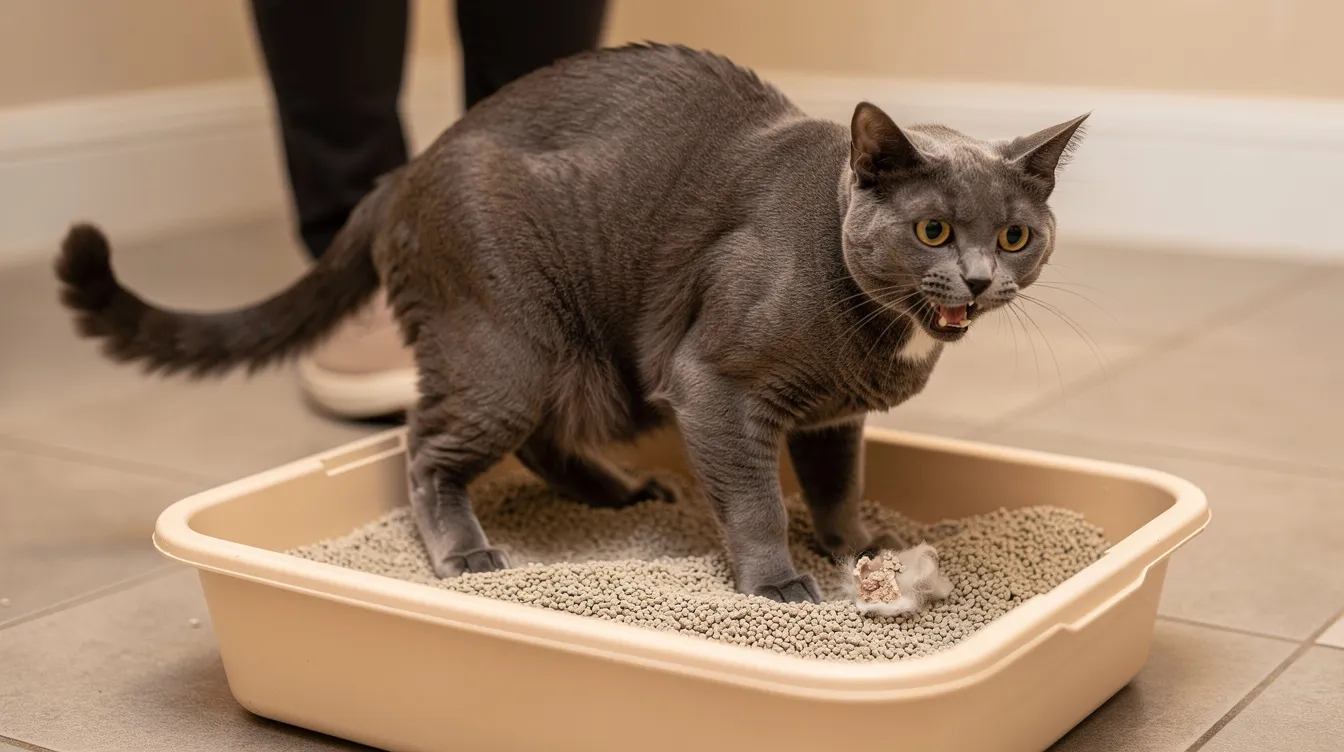
Caption: Male cat showing signs of straining in the litter box, a critical symptom of cystitis and urinary blockage.
In emergency cases such as complete urinary blockage or bladder rupture, immediate veterinary treatment is essential to save your cat’s life. The clinic’s emergency protocols include rapid physical examination, abdominal ultrasound, and placement of a urinary catheter to relieve obstruction.
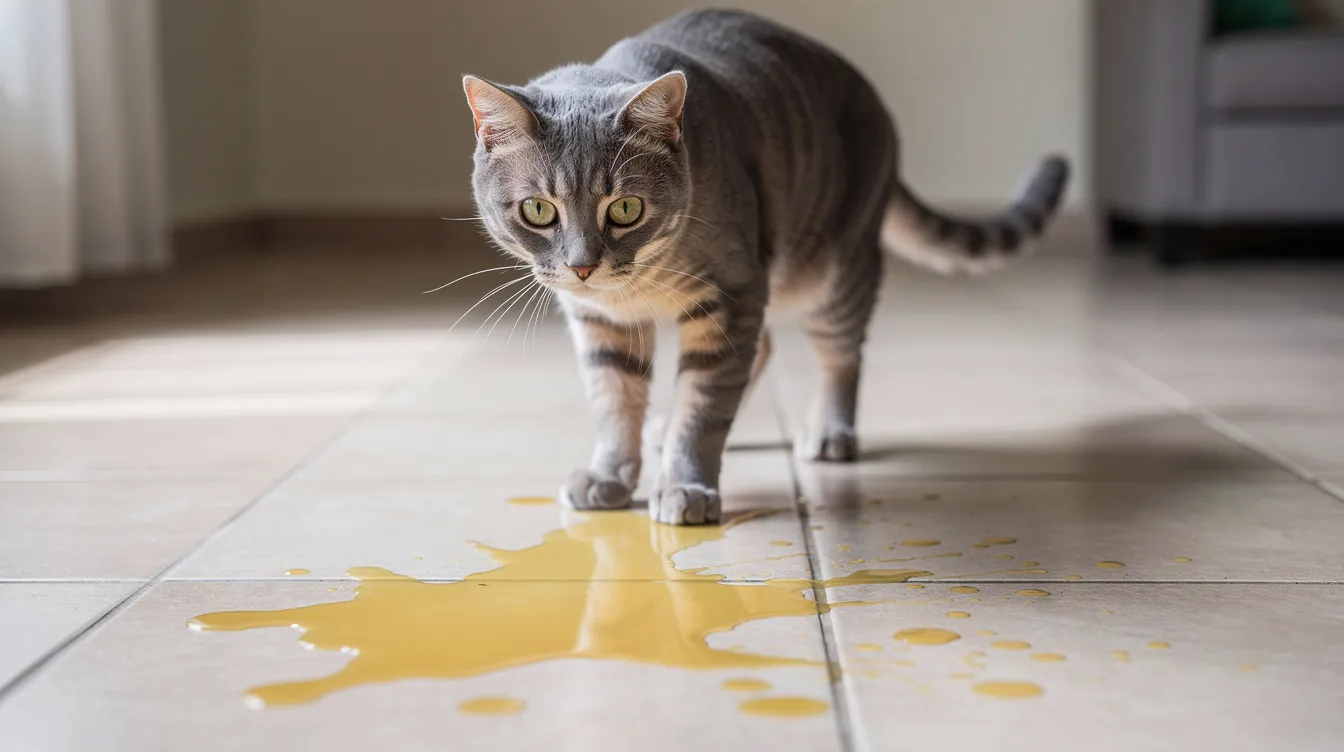
Your vigilance is key when your cat is peeing blood, as it can mean something serious.
Caption: Abdominal ultrasound helps diagnose urinary obstruction and bladder stones in male cats.
After stabilization, the veterinary team provides hospitalization, pain management, and medical management including prescription diets and hydration support to prevent future episodes. Pet owners are encouraged to maintain clean litter boxes and reduce stress to support recovery.
If your male cat is peeing blood, immediate attention is crucial.
Caption: Encouraging hydration with pet fountains is vital for preventing urinary problems in male cats.