Introduction
Recognizing when your dog is in pain requires careful observation of behavioral and physical changes, because dogs instinctively hide pain to survive—a deeply rooted evolutionary trait inherited from their wild ancestors. As a pet parent, understanding the subtle and overt warning signs that your dog is in pain can mean the difference between early intervention and prolonged suffering. Pay attention to how your dog is in pain, as this can help you respond more effectively.
This guide covers how to identify signs of pain in dogs, the differences between acute or chronic pain, systematic assessment and documentation methods, and when to seek veterinary care. It does not cover specific treatment protocols, which require professional diagnosis and a thorough physical exam by your veterinarian. Whether you’re a first-time dog parent or have shared your life with many dogs, this resource is designed to sharpen your ability to detect your pet’s pain before it becomes a serious problem.
Dogs often hide pain, so subtle behavior changes — reduced appetite, reluctance to move, altered posture, or unusual vocalizing — are often the first clues something is wrong. Regularly observing and documenting these signs helps you catch discomfort early and respond effectively. Don’t hesitate to contact your veterinarian if you suspect your dog is uncomfortable; timely intervention can make all the difference.
The short answer: Common signs of pain in dogs include behavioral changes such as social withdrawal or unusual aggression, physical symptoms like limping, panting, and altered posture, and vocal expressions including whining, excessive barking, or yelping when touched. Observing changes in daily habits can help recognize pain in dogs early, when intervention is most effective.
By the end of this article, you will be able to:
- Identify subtle and overt physical signs and behavioral changes indicating your dog is experiencing pain
- Distinguish between acute pain and chronic pain and understand why this distinction matters
- Document your observations systematically to support an accurate diagnosis at the veterinary clinic
- Know precisely when your dog’s condition requires immediate care versus a scheduled appointment
- Use validated assessment approaches to monitor your pet’s condition over time
Understanding Pain in Dogs
Pain in dogs functions as both a protective mechanism-alerting the body to injury, infection, or environmental danger-and a potential quality-of-life issue when it goes unresolved. In veterinary medicine, untreated pain is increasingly recognized not merely as a symptom but as a condition that can worsen overall health, exhaust dogs physically and mentally, and lead them to suffer subsequent disease complications.
Dogs evolved to hide pain as a survival strategy. In the wild, showing signs of vulnerability invited predation and social displacement. Domestic dogs retain this instinct, which means many dog parents live alongside a dog suffering in silence without realizing it. A 2026 study from Utrecht University found that in a survey of 530 dog owners, only about half correctly recognized more subtle pain behaviors in chronic pain scenarios-though recognition of overt pain was nearly universal. This gap between what dogs experience and what owners detect is the central challenge this guide addresses.
Acute vs Chronic Pain
Acute pain has a sudden onset and typically results from a specific, identifiable cause. Dogs can experience acute or chronic pain, and understanding which type your dog faces shapes the urgency of your response. Acute pain can result from injuries or accidents, post-surgical recovery, fractures, sprains, or dental emergencies like abscesses. The duration is usually hours to days, occasionally extending to weeks depending on the severity of the injury and the dog’s healing response. Untreated acute pain activates nociceptors and can trigger central sensitization-a process where the nervous system amplifies pain signals, potentially making the condition harder to manage over time.
Chronic Pain Patterns
Chronic pain persists beyond normal healing, typically lasting more than one to three months. Chronic pain may arise from conditions like arthritis, cancer, degenerative joint or bone disorders, and progressive dental disease. Roughly 20% of all adult dogs are affected by osteoarthritis, and that number climbs to approximately 80% of dogs over age eight-making chronic pain extraordinarily common in senior dogs.
What makes chronic pain particularly dangerous is its gradual onset. A dog that was previously physically active may slowly reduce its activity over weeks or months. Many dog parents attribute this to normal aging rather than recognizing it as a treatable underlying health issue. Without detection and management, the nervous system can undergo changes including hyperalgesia (increased sensitivity to painful stimuli) and allodynia (pain from stimuli that shouldn’t normally cause discomfort), further degrading your dog’s quality of life.
Recognizing these patterns early is essential-and that starts with knowing exactly what to look for.
Recognizing Physical and Behavioral Signs
Building on this understanding of how pain works, the next step is developing a systematic eye for the specific signs your dog may display. Pain rarely announces itself with a single dramatic symptom. More often, it reveals itself through a constellation of small shifts that together paint a clear picture.

Behavioral Changes
Behavioral changes are often the earliest indicators that something is wrong, yet they’re also the easiest to dismiss. Watch for:
- Social withdrawal or hiding. Social withdrawal or hiding can indicate that a dog is in pain. A previously friendly pup may retreat to quiet corners, avoid family gatherings, or stop greeting visitors at the door. Behavior changes like clinginess or increased neediness can also suggest pain in dogs-some alternate between seeking comfort and wanting isolation.
- Unusual aggression or irritability. Common signs of pain in dogs include increased aggression or irritability. A dog in pain may avoid being touched or handled, snapping or growling when you reach toward a painful area. This isn’t a temperament problem-it’s communication.
- Changes in appetite and elimination. Changes in appetite can indicate a dog is in pain. Watch for decreased appetite, reluctance to chew hard food (which may signal dental problems), or a significant decrease in water intake. House-trained dogs having accidents indoors may indicate they are in pain, as moving to their usual elimination spot may hurt too much.
- Loss of interest in activities. A dog that no longer wants to play, refuses to jump, shows reduced play drive, or is walking slower on walks may be experiencing pain. Dogs that once eagerly climbed stairs or leaped into the car but now hesitate are showing clear symptoms worth investigating.
- Restlessness and sleep disruption. Restlessness or pacing may occur in dogs experiencing pain. You may notice your dog sleeping more overall yet sleeping poorly-shifting positions constantly, unable to get comfortable. Changes in time sleeping, yelping during sleep, or difficulty settling at night are meaningful signals.
Physical Symptoms
Physical signs provide more concrete evidence that something is causing your dog discomfort:
- Mobility changes. Limping or reluctance to walk can signal pain in dogs. Watch for favoring one leg, stiffness after rest, “bunny hopping” with the rear legs, or general reluctance to move. These may point to joint or bone disorders, soft tissue injuries, or internal pain from visceral conditions.
- Respiratory changes. Excessive panting or rapid breathing can be a sign of pain, particularly when it occurs at rest or after minimal exertion. This is distinct from normal panting after exercise or in warm weather.
- Trembling and muscle tension. Trembling or shaking can indicate intense pain in dogs. Muscle rigidity, an arched or stiff stance, and visible tension through the body are physical symptoms that warrant attention.
- Postural abnormalities. A hunched posture or lowered head may be signs of discomfort in dogs. A tucked tail, rigid stance, or the “prayer position”-elbows on the ground with rear elevated-can indicate abdominal or spinal pain. Changes in how your dog sits or lies down matter; appetite tail tucked and reluctance to settle into normal resting positions are telling combinations.
- Localized signs. Excessive licking at a specific area may indicate pain-this is a form of excessive grooming that targets the source of discomfort. Look also for swelling, heat, redness, or drooling that isn’t associated with mealtime, which may suggest oral pain from dental problems or a foreign object.

Vocal Indicators
Dogs may show pain through excessive vocalization, and understanding these vocal patterns helps distinguish distress from normal communication:
- Vocal changes like whimpering or whining can signal pain in dogs, particularly when they occur during movement or when a specific body area is contacted
- Excessive barking or howling, especially when moving between positions or during activities that were previously painless
- Groaning when lying down or getting up-common in dogs experiencing chronic pain from arthritis or spinal conditions
- Yelping when touched in specific areas, which helps localize the pain source
- Dogs experiencing pain may vocalize more persistently or at unusual times; even subtle, occasional whines in an otherwise quiet dog can indicate chronic discomfort
These vocal cues differ from normal communication in their timing, intensity, and association with movement or touch. A dog that vocalizes when rising but not during play may be showing signs of joint-related pain, while sudden sharp cries suggest acute pain from a specific trigger.
Systematic Assessment and Documentation
Sometimes, dogs that are in pain may not show it outwardly, making it essential for owners to be observant.
Knowing what to look for is only half the equation. Documenting your observations systematically transforms subjective impressions into actionable data your veterinarian can use. Schedule a vet appointment if your dog shows pain signs, and arrive prepared with organized records. Dogs may suppress pain expression at the clinic due to stress or adrenaline, making your home observations invaluable.
Daily Observation Protocol
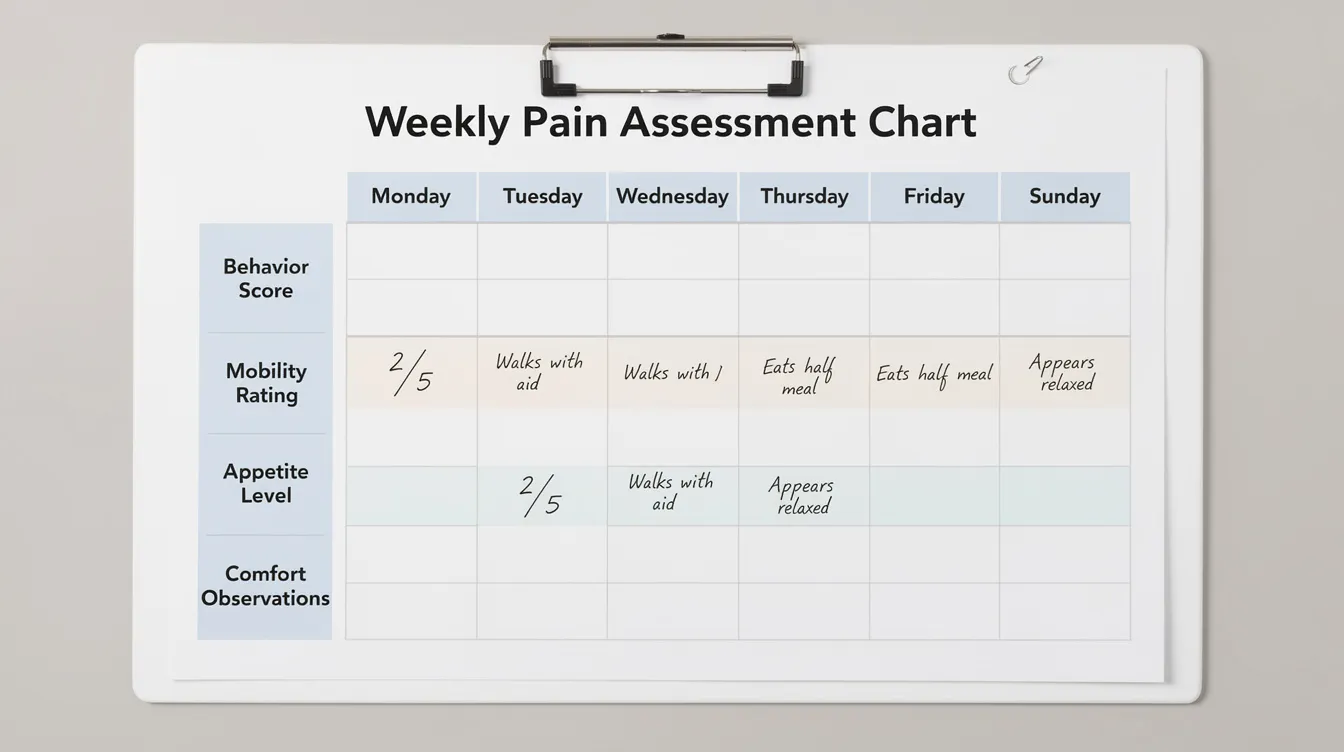
Implement systematic monitoring whenever you notice even minor abnormal behaviors or when managing a known condition. Veterinarians use guidelines to assess chronic or acute discomfort in dogs, and your home observations complement their clinical evaluation:
- Morning assessment: Note how your dog rises from sleep-stiffness, reluctance, vocalization. Observe initial movement patterns and appetite for the first meal. Dogs with joint pain often show their worst mobility in the first 15 minutes after rest.
- Activity monitoring: Document energy levels throughout the day, willingness to walk normal routes, interaction with family members and other dogs, and whether your dog can climb stairs or navigate surfaces it previously managed easily.
- Evening evaluation: Observe settling behaviors-how long it takes to get comfortable, whether your dog circles excessively before lying down, comfort level during rest, and any changes compared to morning observations.
- Weekly trend analysis: Track whether patterns are improving, stable, or deteriorating over time. Single-day observations can mislead; trends across days and weeks provide the data veterinarians need to guide treatment decisions.
Documentation Methods
Several practical approaches help capture your dog’s behaviour accurately:
- Photo and video evidence: Capture limping episodes, unusual postures, facial changes such as glazed eyes or flattened ears, and behavioral changes on camera. Video is especially valuable because it shows movement patterns that are difficult to describe verbally. Dogs may exhibit facial changes such as glazed eyes or flattened ears when in pain-capturing these moments gives your vet concrete visual evidence.
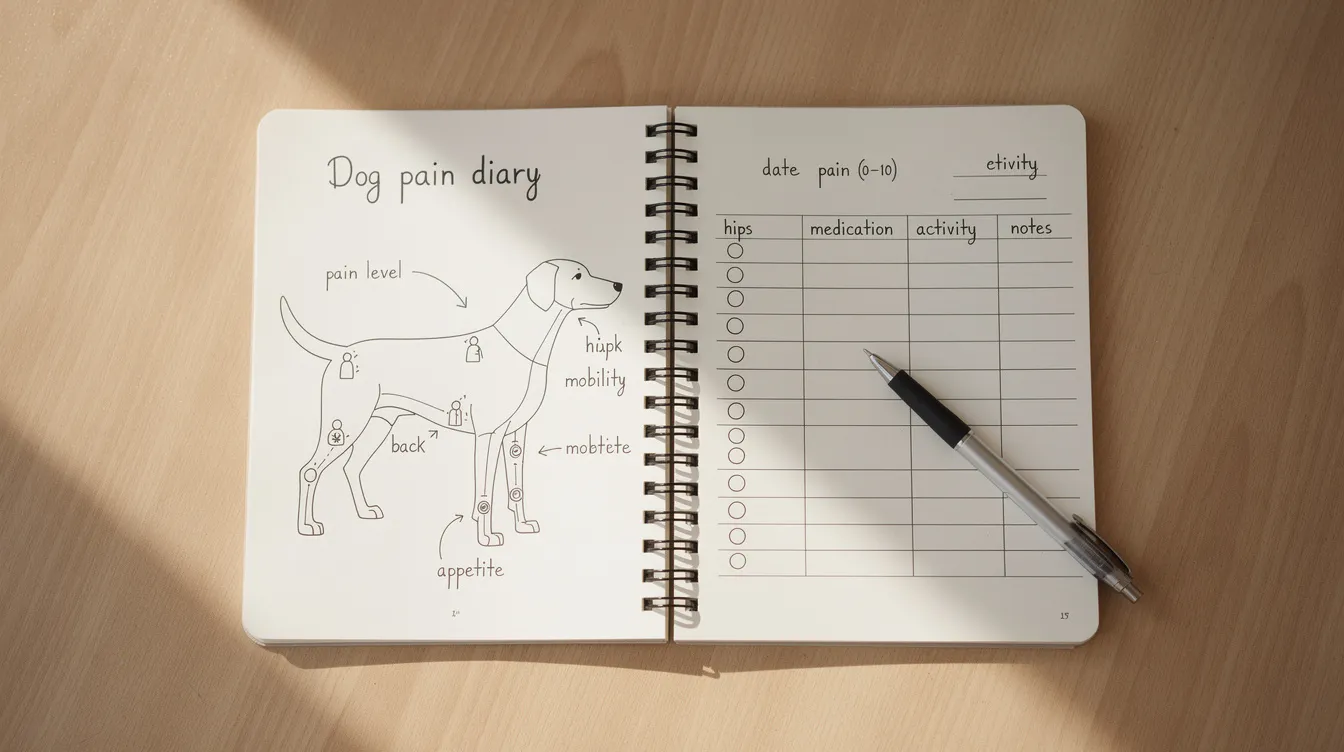
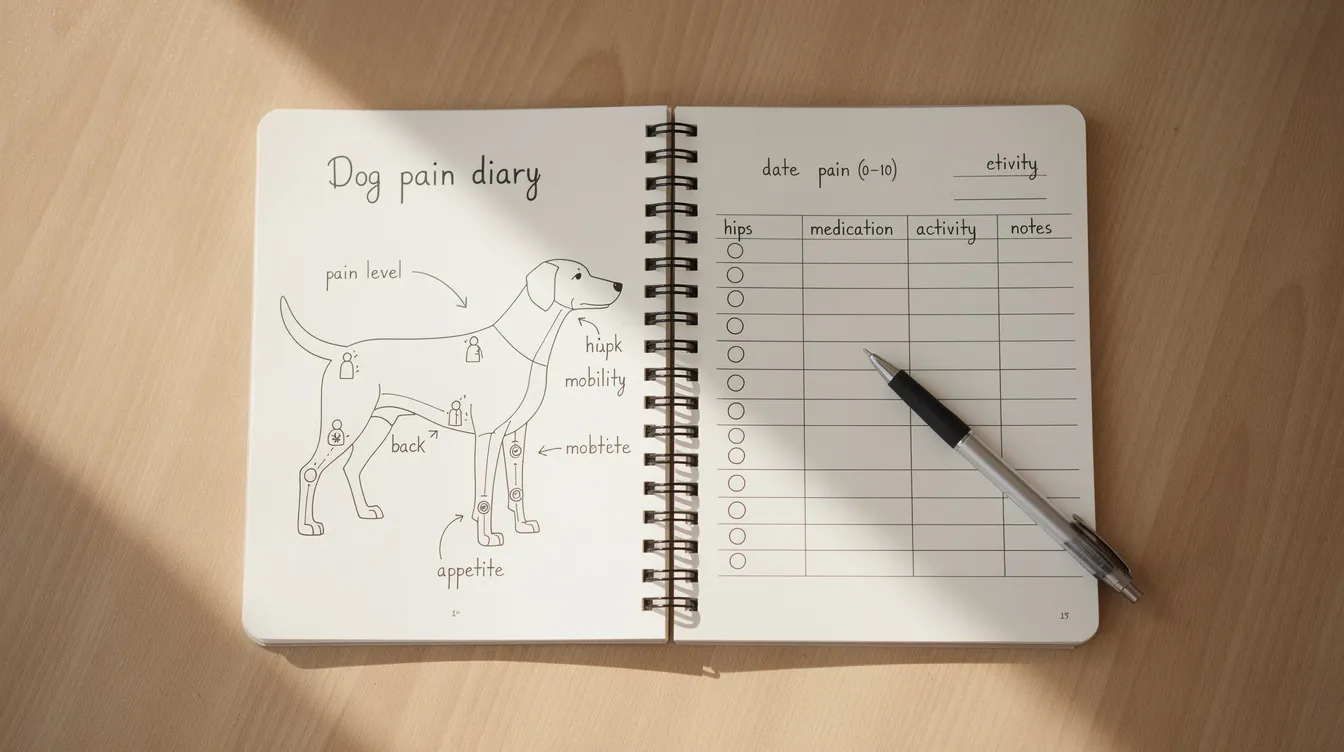
- Pain diary: Record daily scores using a consistent scale (such as 1–5 for mobility, appetite, mood), note specific triggers, time of day symptoms worsen, and medication responses. Validated tools like the Canine Brief Pain Index or the Helsinki Chronic Pain Index provide structured frameworks for scoring.
- Activity log: Document exercise tolerance, stair climbing ability, play behavior, and any activities your dog now avoids. Note whether your dog has stopped jumping on furniture, shows reluctance to enter the car, or has had a significant decrease in interaction with family.
This documentation helps veterinarians interpret patterns, adjust treatment plans, and determine whether interventions are providing adequate pain relief. Avoid activities that cause pain until consulting your vet, and use your records to identify which specific movements or situations provoke discomfort.
Common Challenges and Solutions
Even attentive dog owners face real difficulties when trying to assess their pet’s pain. Understanding these common obstacles helps you avoid the pitfalls that lead to delayed care.
Subtle or Intermittent Signs
Many of the earliest indicators of pain are easy to overlook. Stress signals like yawning, nose licking, or air sniffing are among the least recognized pain-related behaviors, according to recent research. Dogs tend to show these subtle cues inconsistently, making them harder to catch.
Solution: Establish baseline behavior patterns during healthy periods so you have a clear reference point. Even minor deviations-a slight hesitance before jumping, a brief pause at the top of stairs, or lowered spending of energy during play-deserve attention. Use video recording during suspected pain episodes for veterinary review, since these moments may not occur during clinic visits.
Senior Dog Pain vs Normal Aging
One of the most common mistakes among dog parents is attributing pain-related decline to “just getting old.” While senior dogs do naturally slow down, showing symptoms like reduced stamina or longer naps does not automatically rule out treatable conditions. Osteoarthritis, dental disease, and tumors and cancer can lead to severe pain in dogs that is entirely manageable with proper veterinary care.
Solution: Differentiate between expected senior changes and pain-related decline through regular mobility assessments. A dog that gradually stops climbing stairs isn’t necessarily aging normally-it may be experiencing chronic pain that can be addressed. Schedule regular senior wellness exams specifically targeting early detection of arthritis, dental problems, immune system disorders, gastrointestinal issues, and other health conditions common in aging dogs.
Emergency vs Routine Pain
Knowing when to call the vet immediately versus scheduling an appointment within days can prevent both unnecessary panic and dangerous delays.
Solution: Seek immediate veterinary attention for severe pain indicators: inability to move, severe breathing difficulty, collapse, uncontrollable vocalizing, high fever, or signs of acute trauma. Contact your vet within 24–48 hours for persistent limping, refusal to eat, visible swelling or wounds, or sustained vocalization. For emerging patterns of chronic discomfort-gradual activity decline, increasing stiffness, or subtle behavioral shifts-schedule a visit within a week. Never give human pain medications to dogs without vet approval, as common over-the-counter drugs like ibuprofen and acetaminophen are toxic to dogs. Create an emergency contact plan including after-hours veterinary services before you need it.
Conclusion and Next Steps
Early pain recognition directly improves treatment outcomes, your dog’s quality of life, and the range of treatment options available. Dogs that receive timely intervention for both acute and chronic pain conditions maintain better mobility, stronger appetites, healthier sleep patterns, and more engaged relationships with their families. The key is bridging the gap between what your dog instinctively hides and what you can learn to see.
Take these steps now:
- Observe your dog’s baseline. Spend the next week documenting your dog’s normal behavior patterns-how they move, eat, sleep, and interact-so you have a reference point for detecting future changes
- Create a documentation system. Set up a simple pain diary or use a validated scoring tool to track observations consistently
- Establish your veterinary relationship. Discuss pain assessment with your veterinarian during your next visit; ask which monitoring tools they recommend for your dog’s breed, age, and health conditions
- Modify physical activities as needed if you notice any warning signs, and document your dog’s behavior before the vet visit to support an accurate diagnosis
Explore various treatment options with your veterinarian if pain is identified-modern veterinary medicine offers numerous approaches to reduce pain and reduce inflammation, from targeted pain medications to physical rehabilitation and environmental modifications. Related topics worth exploring include senior dog care protocols, preventive health measures for your pup’s quality of life, and understanding how to treat health conditions that commonly cause pain in aging dogs.
Frequently Asked Questions
Can dogs fake being in pain? Dogs do not genuinely fake pain. While some dogs learn that certain behaviors-like limping or whimpering-attract attention and comfort, genuine pain produces consistent physical, physiological, and behavioral signs that are distinct from attention-seeking. If your dog is showing symptoms that appear intermittent or context-dependent, a veterinary evaluation can help determine whether an underlying cause exists. The safest approach is to take all pain-like behaviors seriously until a professional assessment rules out a medical problem recently developing.
How quickly should I contact my vet if I suspect pain? The timeline depends on severity. For acute severe pain-trauma, inability to move, severe breathing difficulty, or collapse-contact your vet immediately. For moderate signs like persistent limping, refusal to eat, or sustained vocalization, seek care within 24–48 hours. For gradually emerging signs such as stiffness, decreased activity, or subtle behavioral changes, schedule an appointment with your veterinarian within a week. The information in this guide does not constitute medical advice and should not replace professional veterinary evaluation.
Are some dog breeds better at hiding pain than others? Yes. Stoic breeds and those bred for working roles-such as herding, guarding, or hunting breeds-often display fewer vocal signs of pain. Flat-faced breeds may have baseline respiratory panting that masks pain-related breathing changes, and heavy-furred dogs can obscure facial expressions and postural cues. Breeds predisposed to osteoarthritis may lose mobility so gradually that the change goes unnoticed. Establishing your individual dog’s behavioral baseline is more reliable than relying on breed generalizations alone.
What human pain medications are safe for dogs? Very few, and none without veterinary supervision. Common human medications including ibuprofen, acetaminophen, and naproxen are toxic to dogs and can cause organ failure or death. Only veterinary-prescribed NSAIDs or other pain medications formulated specifically for dogs should be used. Always consult your veterinarian before administering any medication. The advice provided here reinforces that self-medicating your dog is one of the most dangerous mistakes a pet parent can make.
How do I know if my dog’s pain medication is working? Look for measurable improvements: less stiffness after rest, greater willingness to move and engage in physical activities, improved appetite, more restful dog sleeping patterns, and decreased vocalization. A dog that begins climbing stairs again, returns to greeting family members, or shows renewed interest in play is likely responding well. Use the same assessment tool daily to track trends-improvement should be gradual but identifiable within the first one to two weeks of treatment. Document your dog’s condition consistently and share these records with your veterinarian to help them optimize the treatment plan and explore other treatments if initial approaches prove insufficient.
Additional Resources
- Cornell University Riney Canine Health Center, “Recognizing Pain in Dogs” – comprehensive overview of pain recognition strategies for pet owners and veterinary professionals
- WSAVA Global Pain Council, “Guidelines for the Recognition, Assessment, and Treatment of Pain” (2022) – international veterinary guidelines establishing standardized pain assessment protocols
- Frontiers in Animal Science (2026), narrative review on health-related quality-of-life instruments for chronic pain assessment in companion animals
- Utrecht University / PLOS One (2026), study on owner recognition of subtle pain behaviors in dogs, demonstrating the gap between observed and actual pain states
- Journal of Veterinary Internal Medicine, systematic review of acute and chronic pain assessment tools – analysis of validated pain scales including limitations of physiological biomarkers
This article has been reviewed by Dr. Roger Hart, DVM, for medical accuracy and practical applicability for dog owners.