Introduction
Dogs dying from Cushing’s disease typically show severe muscle weakness, uncontrollable urination, extreme lethargy, recurring infections that no longer respond to treatment, and complete loss of appetite. These end-stage symptoms represent a critical turning point where the body can no longer compensate for the devastating effects of too much cortisol. Understanding the signs of a dog dying of cushing’s disease is essential for pet owners during this difficult time. When a dog dying of cushing’s disease shows a rapid decline, it can be very distressing for pet parents.
This comprehensive guide focuses specifically on the final stages of Cushing’s disease in dogs – not the early stages marked by increased thirst, hair loss, or a pot bellied appearance. If your beloved dog has already received a Cushing’s diagnosis and you’re noticing rapid decline, this resource is written for you. Recognizing these terminal symptoms matters because it empowers pet owners to make informed decisions about emergency care, comfort measures, and compassionate end-of-life planning.
Recognizing the signs that a dog with Cushing’s disease is entering its final stage — rapid decline, severe weakness, recurring infections, and loss of appetite — helps pet owners prepare for this difficult time and make informed end-of-life decisions with compassionate support. Familiar comforts, patience, and close contact with your veterinary team matter most in these weeks.
Direct answer: When a dog with Cushing’s disease is dying, you will typically observe an inability to stand or walk, refusal to eat or drink for more than 24 hours, labored breathing at rest, seizures or disorientation, and signs of organ failure such as jaundice – these symptoms indicate irreversible decline requiring immediate veterinary consultation.
By reading this article, you will gain:
- The ability to identify specific dying symptoms versus treatable complications
- Knowledge of when to seek emergency veterinary care
- A practical daily monitoring checklist and quality of life assessment tools
- Guidance on end-of-life decision-making, including when euthanasia may be the most humane option
- Understanding of what happens physically as the disease progresses to its terminal phase
Reviewed by Dr. Roger Hart, DVM – Dade City, FL
Understanding Cushing’s Disease Progression
Cushing’s disease, also known as hyperadrenocorticism or Cushing’s syndrome, occurs when a dog’s body produces dangerously excessive amounts of the stress hormone cortisol. Approximately 80–85% of cases are pituitary-dependent, caused by a pituitary tumor signaling the adrenal glands to overproduce cortisol. The remaining 10–15% are adrenal dependent Cushing, driven by an adrenal tumor on the adrenal cortex itself.
When left untreated or when treatment fails to control cortisol levels, the disease becomes fatal. Sustained excess cortisol systematically breaks down muscle tissue, suppresses the immune system, damages the liver and kidneys, raises blood pressure, and creates metabolic chaos including potential diabetes mellitus. Dr. Roger Hart, DVM, practicing in Dade City, FL, emphasizes that understanding this progression helps pet parents recognize when their dog’s condition has shifted from manageable to critical.
How Excess Cortisol Damages the Body
Cortisol is essential in small amounts, but chronically elevated cortisol levels attack nearly every organ system. The immune system becomes deeply suppressed, leaving dogs vulnerable to urinary tract infections, skin infections, and systemic bacterial invasion that become increasingly resistant to antibiotics as the disease progresses.
Simultaneously, excess cortisol triggers aggressive protein catabolism – the body literally breaks down its own muscle tissue for energy. This leads to progressive muscle loss, particularly in the limbs and head (temporal muscle wasting), until the dog can no longer support its own weight. Organ damage compounds over time: the liver enlarges (glucocorticoid hepatopathy), kidneys develop proteinuria and glomerular damage, blood pressure climbs dangerously, and the risk of life-threatening blood clots (thromboembolism) increases substantially.
These cascading failures explain why many dogs with Cushing’s disease ultimately succumb not to the tumor itself but to the cumulative organ damage caused by unrelenting cortisol exposure.
Typical Disease Timeline
Cushing’s disease in dogs typically begins insidiously. The early stages show common symptoms like excessive drinking, frequent urination, increased appetite, hair loss, and a characteristic pot bellied appearance. Many dogs live with these manageable signs for months before receiving a proper diagnosis, often confirmed through an ACTH stimulation test or low-dose dexamethasone suppression test.
After diagnosing Cushing’s disease, treated dogs may survive anywhere from approximately 1 to 5 years depending on the type, treatment response, and comorbidities. A study of dogs with pituitary-dependent disease treated with trilostane showed a mean survival of approximately 998 days (roughly 2.7 years), with a range spanning from just 26 days to over 1,832 days, according to the Merck Veterinary Manual.
Several factors accelerate decline: the presence of a malignant adrenal tumor, concurrent diseases such as kidney disease or heart failure, large pituitary tumor size (macroadenoma versus a small tumor), advanced age, delays in treatment, and adverse effects from therapy such as overtreatment causing dangerously low cortisol. When multiple organ systems begin failing simultaneously, the transition from chronic disease to terminal decline can happen within weeks.
Recognizing Symptoms in the Final Stages
The symptoms described below represent critical warning signs that a dog with Cushing’s disease is entering the final stages of life. These are not the common signs of moderate disease – they indicate that the body’s compensatory mechanisms have failed and suffering is likely significant. If your dog is showing several of these signs simultaneously, contact your veterinary team immediately.
Severe Physical Deterioration
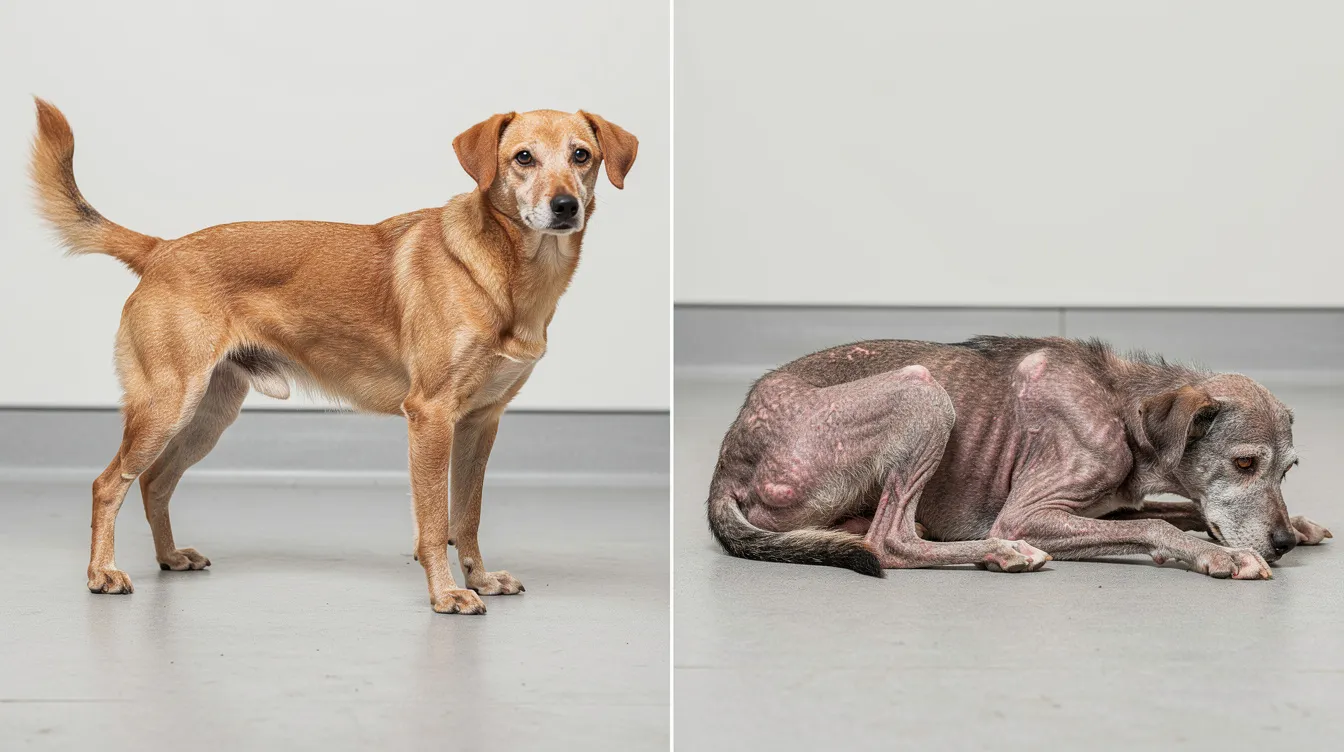
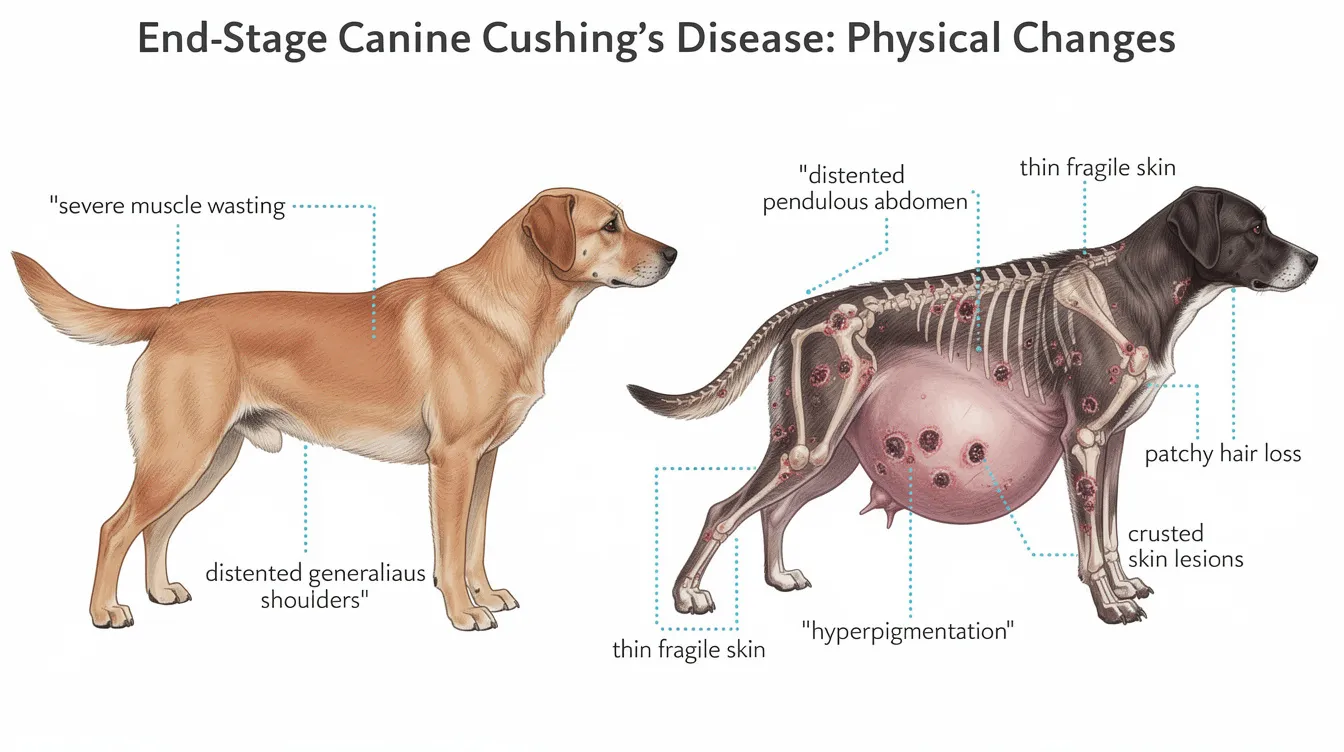
Extreme muscle wasting and inability to support body weight is one of the most visible dying symptoms. Chronic cortisol exposure causes such severe muscle weakness that dogs lose the ability to rise from lying down, stumble frequently, and may collapse when attempting to walk. In a documented case, a 13-year-old Labrador Retriever experienced six months of progressive weakness before dying of cardiorespiratory collapse, with severe muscle atrophy noted throughout the body.
Uncontrollable urination and defecation moves beyond the frequent urination seen in earlier stages of Cushing’s. In end-stage disease, dogs lose sphincter tone entirely. Bedding becomes soaked, and the dog may urinate while lying down without any awareness. This represents a significant decline in the dog’s quality of life and dignity.
Open skin sores that won’t heal develop because cortisol impairs wound healing and thins the skin dramatically. Calcinosis cutis – hard mineral deposits under the skin – is a severe dermatologic complication of advanced disease. Ulcerations may weep, become infected, and produce odor, reflecting the body’s complete inability to repair tissue.
Neurological and Behavioral Changes
Confusion, disorientation, and loss of recognition are particularly distressing neurological symptoms for pet parents. Dogs may fail to recognize family members, appear lost in familiar rooms, or walk in circles. These neurological signs often indicate that a pituitary tumor has grown large enough to compress surrounding brain tissue, a condition seen with macroadenomas. Some dogs develop blindness or show signs of cognitive changes that go beyond normal aging.
Excessive panting or difficulty breathing at rest is a red flag. While panting is a common symptom throughout Cushing’s disease, end-stage respiratory distress manifests as labored breathing, rapid shallow respirations, and an inability to rest comfortably. Pulmonary edema (fluid in the lungs) and cardiovascular strain can cause severe breathing difficulty that worsens when the dog lies down.
Complete loss of appetite and refusal to drink signals that the body is shutting down. A dog that previously had increased appetite and now refuses all food – including favorite treats and wet food – for more than 24 hours is showing poor appetite consistent with organ failure. Refusal to drink accelerates dehydration and kidney collapse, creating a rapid downward spiral.
System Failures
Recurring infections that don’t respond to treatment are a hallmark of end-stage immune collapse. The deeply suppressed immune system cannot fight off bacteria, leading to persistent urinary tract infections, pneumonia, or sepsis despite antibiotic therapy. When infections become truly refractory, it indicates that the body has lost its ability to mount any meaningful defense.
Collapse and inability to stand combines severe muscle weakness with cardiovascular and neurological failure. Dogs may lie in one position for hours, unable or unwilling to move. Cold extremities, pale or bluish mucous membranes, and a rapid then slowing heart rate are signs of circulatory shock.
Signs of organ failure include jaundice (yellowing of the gums, eyes, and skin) indicating liver failure, dramatically reduced or absent urine output signaling kidney failure, vomiting that cannot be controlled, seizures from hepatic encephalopathy or brain compression, and cardiac arrhythmias. In the documented Labrador case, death occurred from combined pulmonary edema, hypertension, and cardiac arrhythmias – multiple organ systems failing simultaneously.
Advanced Warning Signs and Physical Assessment
Monitoring your dog’s condition systematically can help you detect the transition from chronic illness to terminal decline before a crisis occurs. The following tools provide a framework for daily assessment that you can share with your veterinarian to guide treatment decisions and senior pet care planning.
Daily Monitoring Checklist
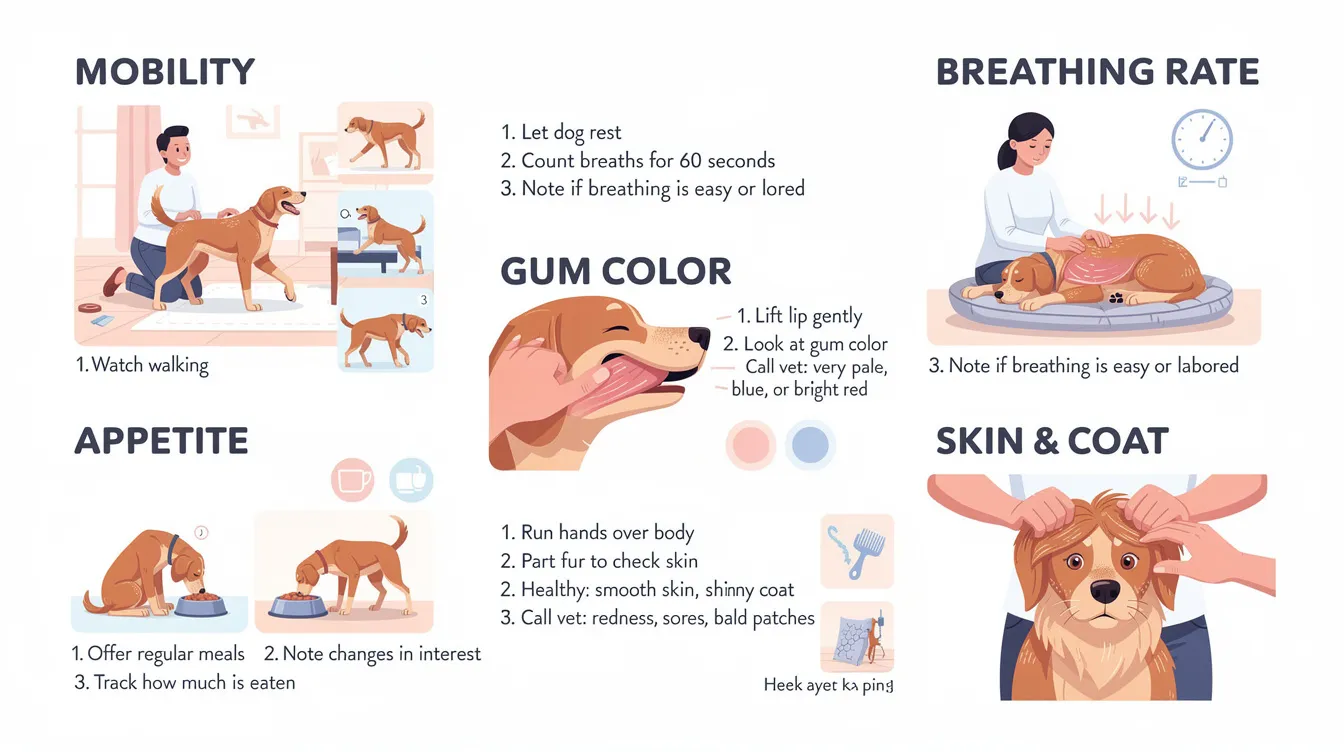
Use these steps each day to track your dog’s condition and identify concerning changes:
- Assess mobility – Note whether your dog can rise unassisted, walk to food/water, and navigate familiar spaces. Inability to rise for more than 24–48 hours is a critical red flag.
- Track food intake – Record what your dog eats and how much. A shift from eating voluntarily to refusing all food (including hand-fed treats) for over 24 hours requires veterinary contact.
- Measure water consumption – Note whether your dog is drinking. If water intake stops entirely, dehydration and kidney failure can develop rapidly.
- Count resting respiratory rate – While your dog rests quietly, count breaths for 60 seconds. Rates consistently above 30–40 breaths per minute at rest, or visible effort to breathe, indicate respiratory distress.
- Check skin and wounds – Look for new ulcerations, worsening sores, signs of infection (pus, redness, odor), or calcinosis cutis lesions. Wounds that worsen despite treatment suggest immune failure.
- Evaluate mental status – Does your dog recognize you? Respond to their name? Show interest in surroundings? Progressive withdrawal, confusion, or unresponsiveness indicates neurological decline.
- Inspect mucous membranes – Lift the lip and check gum color. Pale, blue, or yellow gums require emergency veterinary evaluation.
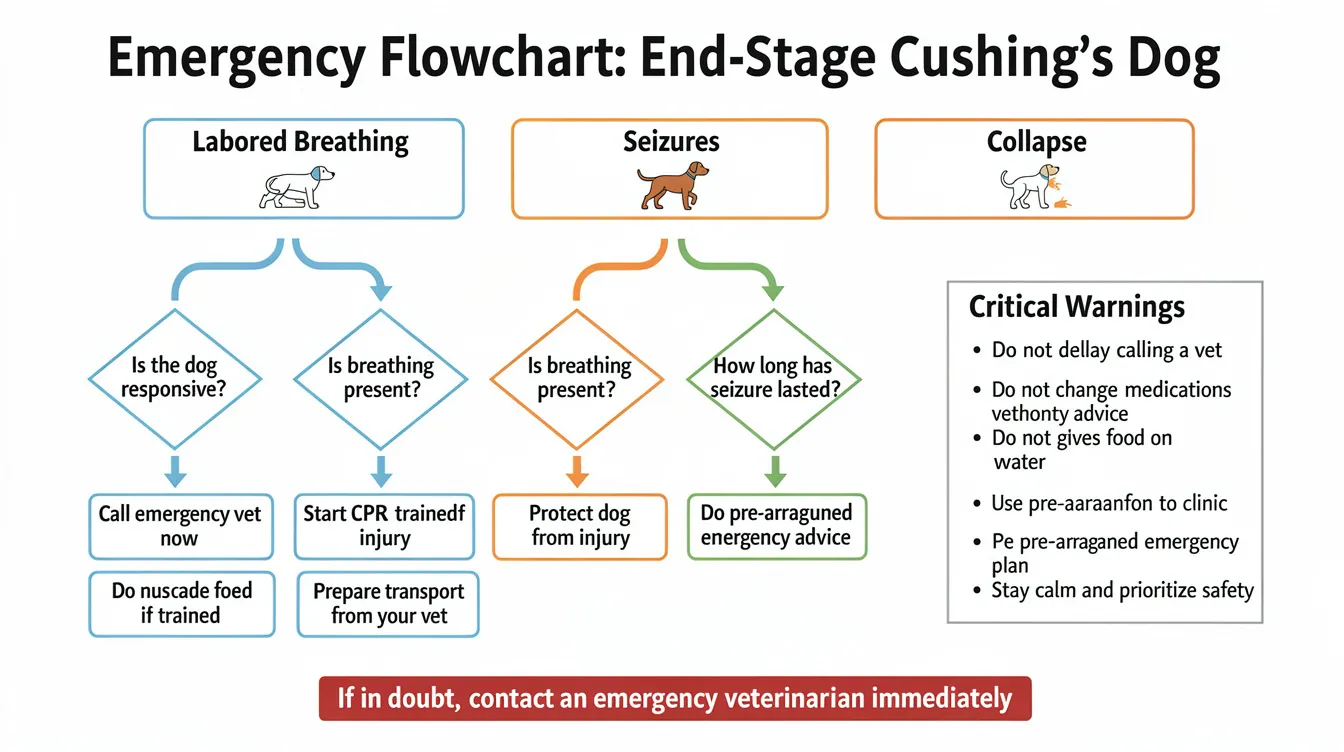
Key timeframes: Seek veterinary care immediately if your dog cannot stand for 24 hours, refuses food and water for more than one day, shows labored breathing at rest, or has a seizure.
Quality of Life Comparison Table
Use this table to assess where your dog falls on the spectrum between manageable disease and terminal decline:
|
Criterion |
Manageable Disease |
End-Stage / Dying |
|---|---|---|
|
Eating |
Eats voluntarily, takes treats with enthusiasm |
Refuses all food including favorites for 24+ hours |
|
Drinking |
Drinks excessively but consistently |
Stops drinking entirely or cannot keep water down |
|
Sleeping |
Rests normally between activity periods |
Sleeps excessively or is too restless to sleep |
|
Interaction |
Welcomes affection, recognizes family |
Withdrawn, unresponsive, does not recognize owners |
|
Mobility |
Walks with some difficulty, can stand |
Cannot stand unassisted, collapses when attempting movement |
|
Comfort |
Tolerates touch, manages pain with medication |
Vocalizes in pain, difficulty breathing, visible distress |
|
Hygiene |
Maintains basic cleanliness with help |
Soils bedding continuously, matted fur, open wounds |
|
Organ signs |
Stable blood work, manageable energy levels |
Jaundice, seizures, extreme weight loss, foul breath |
If your dog consistently falls in the “End-Stage / Dying” column across multiple criteria, their quality of life has likely declined beyond what medical intervention can restore. Cornell University’s veterinary resources note that dogs post-diagnosis can survive 1 to 5 years with treatment, but when multiple organ systems fail, the prognosis becomes grave regardless of intervention.
Common Challenges and Emergency Situations
Certain emergencies arise in end-stage Cushing’s disease that require immediate action. Knowing what to look for – and what to do – can reduce suffering and help you respond decisively during a crisis.
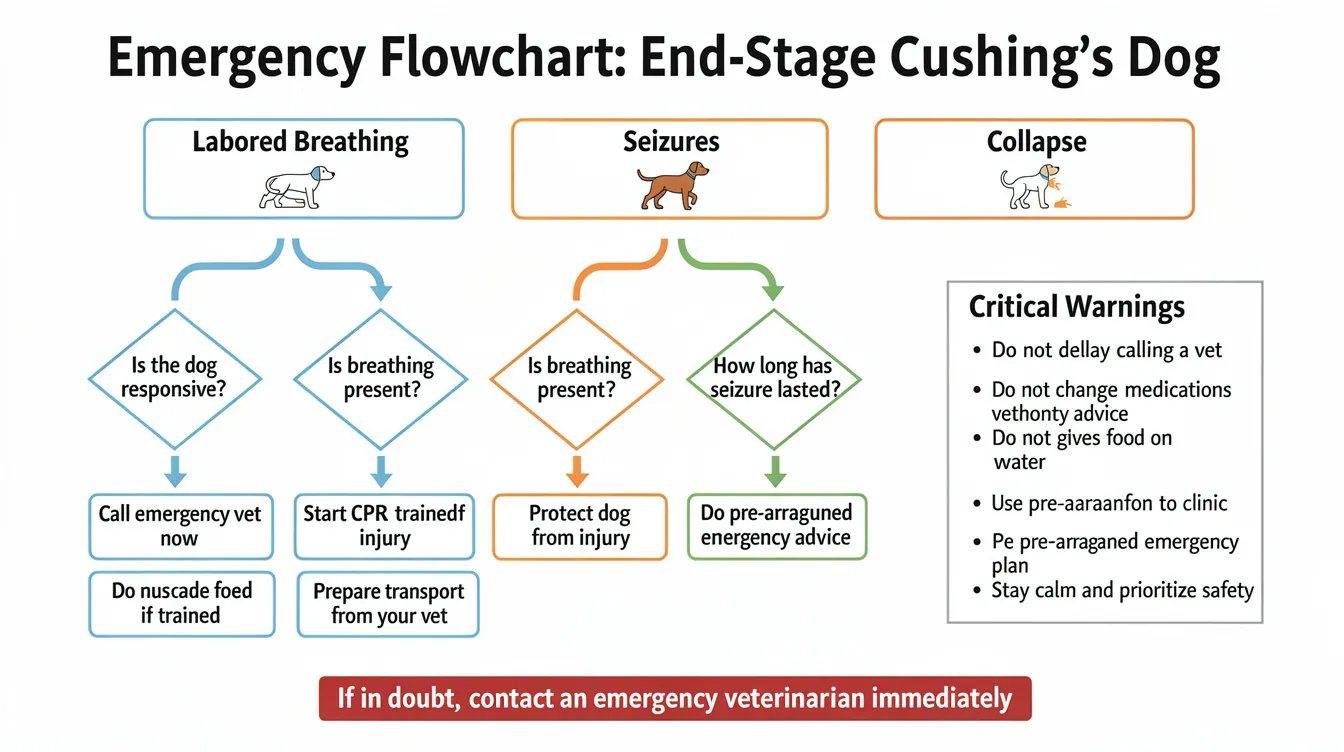
Respiratory Distress
Labored breathing at rest is one of the most urgent emergencies in dogs dying from Cushing’s. Signs include open-mouth breathing, exaggerated chest and abdominal movement with each breath, nostril flaring, and an inability to lie down comfortably (orthopnea). In the documented case of a 13-year-old Labrador with an adrenal tumor, tachypnea and pulmonary edema developed rapidly before cardiorespiratory collapse.
Immediate action: This is a veterinary emergency. Transport your dog to the nearest veterinary clinic. Keep the dog cool, minimize handling, and allow the dog to find the most comfortable breathing position during transport. Do not attempt to force the dog to lie flat.
Seizure Activity
Seizures in end-stage Cushing’s often result from a growing pituitary tumor compressing brain tissue or from metabolic derangements caused by liver failure or severe electrolyte imbalances. You may see trembling, involuntary paddling of legs, jaw clenching, loss of consciousness, drooling, or loss of bladder and bowel control during the episode.
Safety measures: Clear the area around your dog to prevent injury. Do not put your hand near the dog’s mouth. Time the seizure – if it lasts more than three minutes or if multiple seizures occur in rapid succession, this constitutes a medical emergency. Contact your vet immediately for anticonvulsant treatment and to evaluate whether the underlying cause is treatable.
Complete Collapse
When a dog with advanced Cushing’s collapses and cannot recover – remaining down for hours with cold limbs, pale mucous membranes, and weak or irregular pulse – this typically signals cardiovascular collapse or multi-organ failure. Unlike temporary weakness from which some dogs recover with supportive care, true collapse in end-stage disease often indicates death is imminent within hours to days.
A documented case of a Beagle with pituitary-dependent Cushing’s developed thrombosis in the caudal vena cava and abdominal aorta, dying acutely from pulmonary artery thrombi – demonstrating that even previously treated dogs with Cushing’s remain at higher risk for sudden catastrophic vascular events. If your dog collapses and does not improve within minutes, seek emergency veterinary evaluation.
Conclusion and Next Steps
Recognizing the symptoms of a dog dying from Cushing’s disease – extreme muscle weakness, uncontrollable urination, refusal to eat or drink, respiratory distress, neurological signs, and organ failure – allows you to act with both urgency and compassion. These end-stage signs differ fundamentally from the manageable common symptoms of earlier disease; they represent irreversible decline where the dog’s comfort and well being must guide every decision.
If your dog is showing these symptoms, take these steps now:
- Contact your veterinarian or emergency clinic immediately to discuss your dog’s condition and whether intervention can improve comfort.
- Use the daily monitoring checklist and quality of life table above to document changes and share them with your veterinary team.
- Have an honest conversation with your vet about whether continued treatment serves your dog’s quality of life or prolongs suffering.
- If end-of-life care is appropriate, discuss supportive care options, hospice approaches, and compassionate euthanasia with your veterinarian.
Contact your veterinarian or a nearby emergency veterinary hospital to discuss end-stage Cushing’s disease assessment, quality-of-life evaluation, and end-of-life guidance for your dog. For related reading, see our dog health section, including end-stage kidney failure and signs that a dog is slowing down from illness.
Frequently Asked Questions
How quickly do dogs deteriorate in end-stage Cushing’s disease?
The timeline varies, but once multiple organ systems begin failing, deterioration can happen within days to weeks. In one documented case, a Labrador Retriever died within two weeks of diagnosis when organs were already severely compromised. Many dogs experience a period of gradual decline followed by sudden crisis – a respiratory emergency, seizure, or cardiovascular collapse – that occurs with little warning.
Can dogs recover from severe Cushing’s symptoms?
Dogs diagnosed with early or moderate Cushing’s disease often show significant improvement with medications like trilostane or mitotane, and in some cases surgery may be required to remove adrenal tumors. Dietary changes can help manage symptoms and support hormonal balance during medical management. However, once a dog reaches the final stages with multi-organ failure, severe neurological symptoms, or malignant tumor spread, recovery is unlikely. Even with treatment, skin and hair healing can take months, and dogs in advanced decline rarely regain meaningful function.
What’s the difference between treatable complications and dying symptoms?
Treatable complications include individual, manageable problems: a urinary tract infection responsive to antibiotics, hypertension controlled with medication, or diabetes managed with insulin. Dying symptoms involve multiple simultaneous system failures – uncontrollable incontinence combined with inability to stand, refusal to eat, seizures, and respiratory distress. The key distinction is whether problems are isolated and responsive to treatment or represent a cascade of irreversible organ collapse.
Should I pursue aggressive treatment if my dog shows these symptoms?
This depends on the type of Cushing’s (pituitary tumor versus adrenal tumor, benign versus malignant), comorbidities, and your dog’s current suffering level. Surgery carries a 10–25% mortality risk according to Cornell University. If your dog still eats, interacts, and has a reasonable prognosis, aggressive treatment may be worthwhile. If advanced dying symptoms are present with significant suffering and a poor prognosis, palliative care or euthanasia may be more humane. Discuss this openly with your veterinarian to develop a treatment plan that prioritizes your dog’s comfort.
How do I know if it’s time to consider euthanasia?
Consider euthanasia when your dog’s suffering consistently outweighs their moments of comfort or joy. Specific indicators include: inability to stand for more than brief periods, refusal of all food and water, severe pain not relieved by medication, persistent respiratory distress, mental withdrawal and loss of recognition, and when your veterinary team confirms that aggressive treatment is unlikely to reverse the decline. The quality of life comparison table in this article can help you track these changes. Many older dogs with advanced Cushing’s reach a point where the kindest decision is to prevent further suffering – your vet can help guide this deeply personal choice.
This article is based on clinical data from the Merck Veterinary Manual and peer-reviewed veterinary case studies. Reviewed by Dr. Roger Hart, DVM – Dade City, FL.