Reviewed by Dr. Roger Hart, DVM
Introduction
Brown dog vomit is one of the most common – and most confusing – things pet parents encounter. It can mean something as simple as your dog throwing up partially digested food, or it can signal a medical emergency like internal bleeding in the digestive tract. The shade, texture, odor, and your dog’s overall behavior are the keys to determining whether you’re dealing with a minor upset stomach or something that demands you contact your vet immediately. If you’ve noticed that my dog has brown vomit, it’s essential to assess the situation carefully.
If my dog has brown vomit, it is crucial to monitor not only the frequency of vomiting but also the color and consistency. Understanding why my dog has brown vomit can help identify potential health issues early. Regular observation will provide essential information for your veterinarian.
It is important to note that if my dog has brown vomit, it might also indicate dietary indiscretion or more serious gastrointestinal problems. Always keep an eye on any additional symptoms such as lethargy or changes in appetite.
When assessing brown vomit, remember that it is a significant sign if my dog has brown vomit accompanied by blood or a coffee ground appearance. This can indicate internal issues that need immediate attention.
This guide covers everything you need to know about brown vomit in dogs: what causes it, how to distinguish harmless episodes from dangerous ones, when to seek emergency veterinary care, and how to document symptoms for the most productive vet visit. It’s written for any pet owner who has looked down at a puddle of dark brown liquid on the floor and felt that spike of worry.
The short answer: Brown vomit may be partially digested food matching your dog’s kibble color, bile mixed with stomach contents, or digested blood from bleeding in the gastrointestinal tract. The coffee ground appearance, fecal odor, and accompanying symptoms like pale gums or lethargy are what separate a benign episode from an emergency.
After reading this guide, you will be able to:
- Identify the difference between normal and dangerous brown vomit based on appearance, texture, and smell
- Recognize emergency warning signs that require you to contact your veterinarian immediately
- Understand the most common causes – from dietary indiscretion to stomach ulcers and liver disease
- Document vomiting episodes effectively for faster, more accurate veterinary diagnosis
- Apply safe home monitoring strategies when the situation doesn’t require urgent care
Understanding Brown Vomit in Dogs
Brown vomit in dogs spans a wide spectrum, from light tan material that’s clearly just regurgitated kibble to dark brown or near-black liquid that could indicate serious bleeding within the digestive system. Before you can assess severity, you need to understand what you’re actually looking at – and what the dog’s stomach and digestive tract do to food, blood, and bile that changes their color and texture on the way back up.
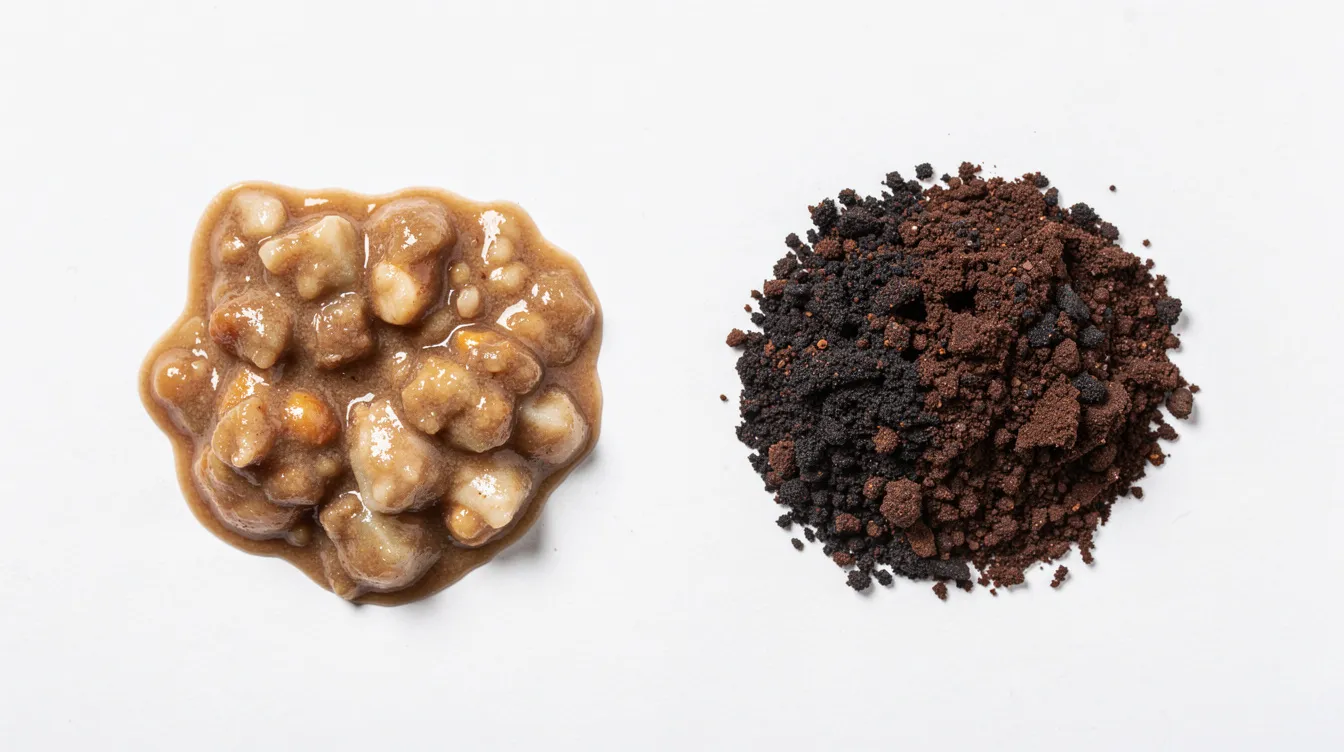
When food enters a dog’s stomach, stomach acid and digestive enzymes begin breaking it down. This process naturally darkens and liquefies most foods. If there’s blood present – from irritation to the stomach lining, intestinal ulcers, or deeper injuries to the stomach wall – that blood gets denatured by acid and turns from red to dark brown, producing the distinctive coffee grounds texture that veterinary medicine treats as a serious red flag.
Each instance where my dog has brown vomit should be evaluated carefully. It could range from harmless to life-threatening conditions, highlighting the importance of vigilance.
Knowing how to respond when my dog has brown vomit is essential for maintaining your dog’s health and well-being.
What Brown Vomit Looks Like
Brown vomit presents in several distinct forms, and each tells a different story:
Understanding why my dog has brown vomit can help you take the right steps for your pet’s health.
- Light brown liquid or chunks: Often partially digested food, especially if your dog eats brown kibble, treats, or table scraps. The texture is typically soft, mushy, or watery, and the odor is bland or mildly sour – similar to what your dog ate, just partially broken down.
- Dark brown liquid: Thicker, more uniform brown liquid can indicate prolonged contact with stomach acid, delayed gastric emptying, or the presence of digested blood. Dog vomiting brown liquid in this shade warrants closer inspection.
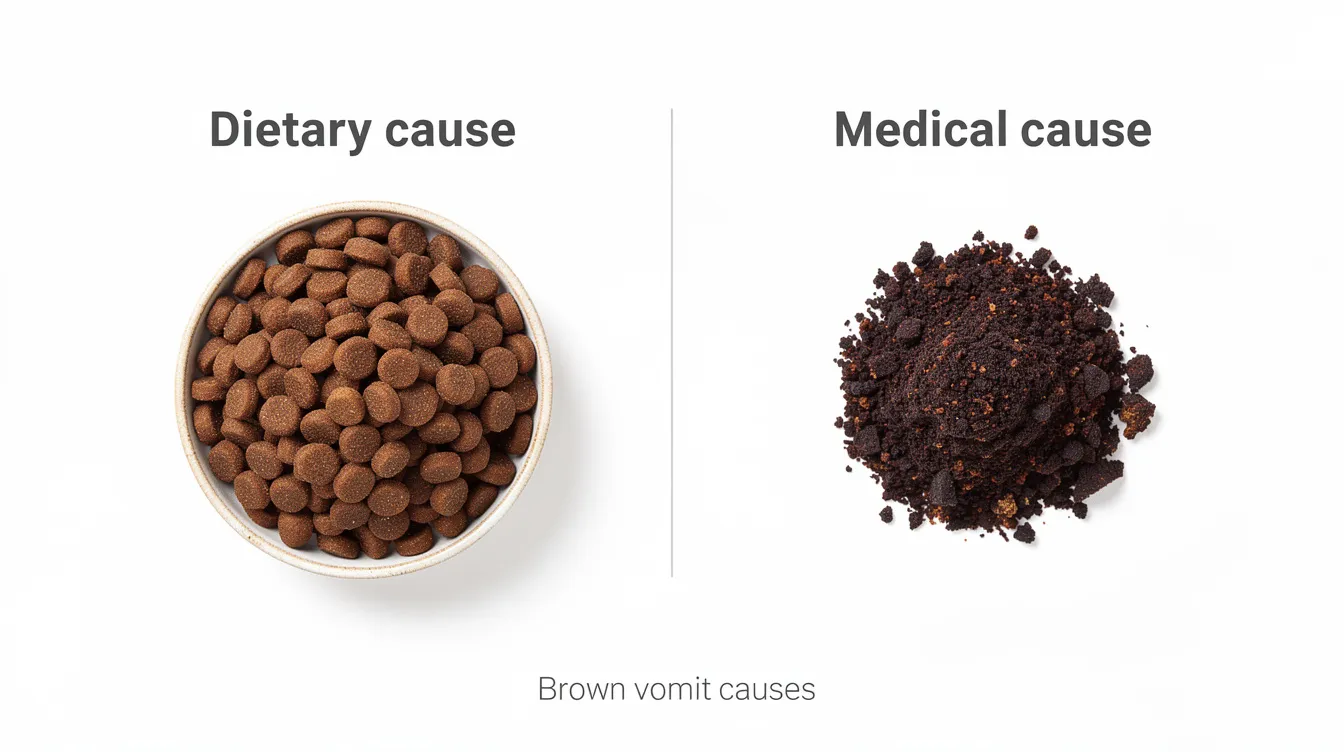
- Coffee ground appearance: Fine, dark granular material resembling wet coffee grounds is the hallmark of digested blood. This texture forms when blood from the upper digestive tract – the stomach or upper small intestine – is partially broken down by stomach acid before being vomited.
- Foamy vomit with brown tinge: Brown-tinged foam or frothy material may indicate acid reflux or bile mixing with stomach contents, especially on an empty stomach.
Associated odors provide critical diagnostic clues. A metallic or acidic smell often accompanies digested blood. If brown vomit has a fecal smell, seek veterinary care immediately – this can indicate an intestinal blockage or severe lower-GI involvement. A bland, food-like odor generally suggests a dietary cause.
It’s important to reiterate that my dog has brown vomit can be a clear indicator of dietary issues or possible underlying health problems.
Normal vs. Concerning Brown Vomit
Not all brown vomit is a cause for alarm. Occasional vomiting – a single episode of light brown, chunky vomit after a meal, with a dog that otherwise plays, drinks water, and has normal stool – is usually benign. Brown vomit may result from eating dark-colored food or chocolate, dirt, or brown treats that simply match the color of what comes back up.
Concerning brown vomit looks and behaves differently. The coffee ground appearance, dark brown or black coloring, persistent or repeated vomiting, and systemic symptoms transform the situation. Veterinary care is needed if brown vomit is accompanied by lethargy or abdominal pain. Dogs that vomit brown liquid should be watched for changes in behavior or appetite, as these shifts often indicate something beyond a simple stomach upset.
The critical distinction comes down to three factors: how dark and granular the vomit appears, how often the dog is vomiting, and whether other symptoms are present. Understanding the specific causes behind each presentation helps you make faster, better decisions.
Common Causes of Brown Vomit in Dogs
The causes of brown vomit range from completely harmless to life-threatening. What your dog ate, what’s happening inside the digestive system, and whether organs like the liver are functioning properly all influence both the color and the clinical significance of what you’re seeing.
When you notice that my dog has brown vomit, document any other behaviors or symptoms, as this information is vital for proper evaluation by a veterinarian.
Dietary Causes and Food-Related Issues
The most common – and least dangerous – reason for brown vomit is simply that your dog ate something brown. When a dog eats brown kibble, dark treats, or human food with brown coloring, the vomit will naturally reflect that. This is especially true if the food was only partially digested before being expelled.
Remember, if my dog has brown vomit alongside signs of distress, seeking immediate veterinary care is crucial to ensure your pet’s health.
If my dog has brown vomit, your first step should be to observe the situation closely for any additional concerns that might arise.
Dietary indiscretion can lead to brown vomit from consuming inappropriate items. Eating feces, dirt, or foreign materials can cause brown vomit in dogs. Coprophagia (eating feces) is a particularly common culprit – the vomit may have a foul odor and brownish color that reflects the material consumed. Garbage ingestion, spoiled food, and scavenging soil or decomposing plant matter fall into this category as well.
Each time my dog has brown vomit, it could potentially relate to a wide range of conditions, from harmless to severe.
Food intolerance and sudden dietary changes can trigger mild vomiting as the digestive system reacts to unfamiliar proteins or ingredients. These episodes typically involve mild vomiting – one or two occurrences – and resolve once the offending food is removed and a bland diet is introduced. If your dog only vomits once after a diet switch and remains active and hydrated, home monitoring is usually appropriate.
Dietary changes can also result in instances where my dog has brown vomit, as the digestive system adjusts to new foods.
Dietary brown vomit generally resolves on its own. However, if a non food item was ingested – a toy, fabric, or bone fragment – what started as dietary indiscretion can escalate to a foreign body obstruction, which is a medical emergency.
Ultimately, understanding why my dog has brown vomit involves connecting various symptoms and dietary habits. This can lead to a more accurate assessment.
Digestive System Bleeding
When symptoms escalate, and my dog has brown vomit, it is essential to consider all potential causes with your veterinarian.
Brown vomit may indicate digested blood or internal bleeding – and this is where the situation becomes serious. When bleeding occurs in the stomach or upper portions of the digestive tract, the blood is exposed to stomach acid before being vomited. This acid denatures hemoglobin and transforms bright red blood into the dark brown, granular material known as coffee grounds.
Gastrointestinal diseases can cause brown or bloody vomit in dogs. Common sources of upper GI bleeding include:
- Stomach ulcers and gastritis: Often caused by prolonged use of NSAIDs or other human medications that erode the stomach lining over time
- Foreign objects: Sharp items that damage the stomach wall or intestinal lining as they pass through
- Trauma: Blunt abdominal trauma or post-surgical complications
- Tumors: Growths in the stomach or small intestine that ulcerate and bleed
Dr. Hart emphasizes that any vomit with a coffee ground appearance should be treated as urgent. Seek immediate veterinary care for bloody vomit or coffee-ground appearance. Hematemesis – vomiting blood – is considered uncommon in dogs overall, but when it occurs, the clinical significance is high. Associated signs frequently include weakness, weight loss, anorexia, and melena (black, tarry stools indicating blood passing through the digestive tract).¹
Black vomit suggests digested blood from internal bleeding, while red vomit indicates fresh blood, possibly from ulcers or injuries closer to the esophagus or mouth. Bright red vomit or bloody vomit signals active bleeding that has not yet been exposed to stomach acid.
Liver and Gallbladder Issues
Liver disease can cause brown vomit due to blood mixing with stomach acid, and it can also impair the normal processing of bile, leading to maldigested food with an unusual muddy brown or brown-green appearance. The liver plays a central role in digestive health, and when hepatic function declines, the downstream effects ripple through the entire gastrointestinal tract.
Gallbladder dysfunction – including cholecystitis (inflammation) and gallstones – can cause bile backup and secondary digestive complications. When bile isn’t properly secreted or is obstructed, it can mix abnormally with stomach contents, producing brown liquid vomit with greenish or yellowish undertones. In severe hepatic failure, brown vomit may accompany jaundice (yellowing of the gums and eyes), dark urine, and significant weight loss.
While liver and gallbladder causes are less common than dietary indiscretion or simple gastritis, they represent serious underlying disease. Persistent vomiting combined with changes in appetite, energy level, or stool color in the context of known risk factors – especially in older dogs – warrants comprehensive blood work including liver enzyme panels.²
If my dog has brown vomit, a prompt assessment can possibly prevent more severe health issues from arising.
If my dog has brown vomit, it may also be necessary to evaluate the entirety of your dog’s health, including recent changes in diet or behavior.
Emergency Recognition and Veterinary Response
The immediate observation when my dog has brown vomit can assist in identifying the necessary actions and treatments.
Understanding when brown vomit requires emergency care versus home monitoring can be the difference between a routine vet visit and a life-threatening delay. The following section builds on the causes above to help you assess urgency accurately and prepare for the most effective veterinary consultation.
When Brown Vomit Requires Immediate Care
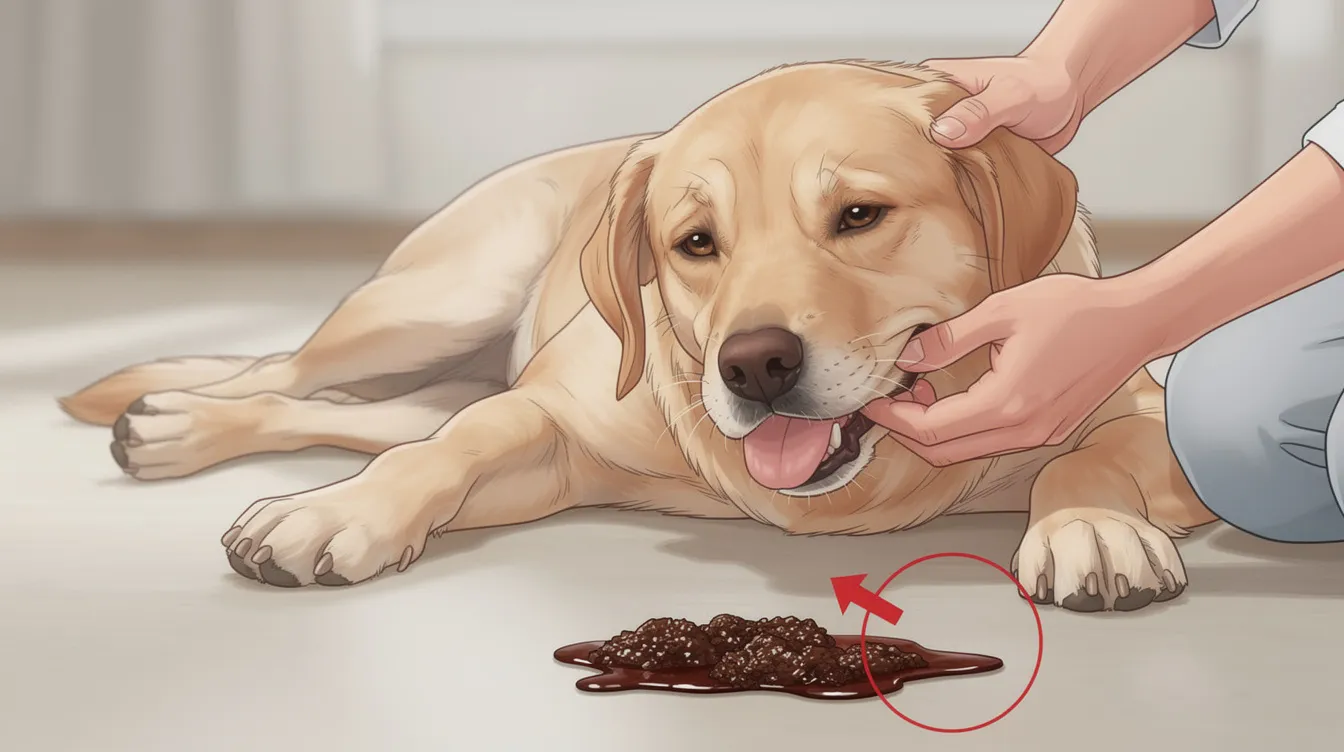
Several presentations of brown vomit constitute a medical emergency:
- Coffee-ground texture or dark brown granular material – indicates digested blood from the upper GI tract
- Strong fecal odor – suggests possible intestinal blockage or severe lower GI involvement
- Repeated vomiting – more than 2-3 episodes within a few hours, or inability to keep drinking water down
- Systemic signs – pale gums, collapse, rapid heart rate, distended abdomen, or signs of shock
Repeated vomiting in dogs requires immediate veterinary attention. Contact your vet if vomiting occurs more than twice in 24 hours. Persistent vomiting lasting more than 24 hours needs veterinary attention regardless of the vomit’s color.
Vomiting accompanied by diarrhea or abdominal pain is an emergency. Lethargy or loss of appetite with vomiting requires a vet visit – these are signs that the problem extends beyond a simple stomach upset and may involve systemic illness, toxin ingestion, or significant blood loss.
Older and younger dogs are at higher risk for complications from vomiting. Puppies and young dogs dehydrate faster and have less physiological reserve, making even moderate vomiting more dangerous. Senior dogs are more likely to have underlying conditions – kidney disease, liver disease, or tumors – that complicate recovery.
Dr. Hart recommends the following framework for assessing urgency:
|
Feature |
Monitor at Home |
Contact Vet Same Day |
Emergency – Go Now |
|---|---|---|---|
|
Frequency |
Single episode |
2-3 episodes in 24 hours |
Continuous or severe vomiting |
|
Appearance |
Light brown, food-like |
Dark brown liquid |
Coffee grounds, blood streaks |
|
Odor |
Bland, food-like |
Sour or unusual |
Fecal or strongly metallic |
|
Dog’s behavior |
Normal, active, drinking |
Subdued, reduced appetite |
Lethargic, collapsed, pale gums |
|
Other symptoms |
None |
Mild diarrhea |
Abdominal pain, bloody stool, dehydration |
Known or suspected ingestion of toxic substances – including household cleaners, human medications, or poisonous plants – elevates any vomiting episode to emergency status regardless of color.³
Proper Documentation for Veterinary Visits
Good documentation dramatically improves the speed and accuracy of veterinary diagnosis. Before you call or visit Dr. Hart or your veterinarian, gather the following:
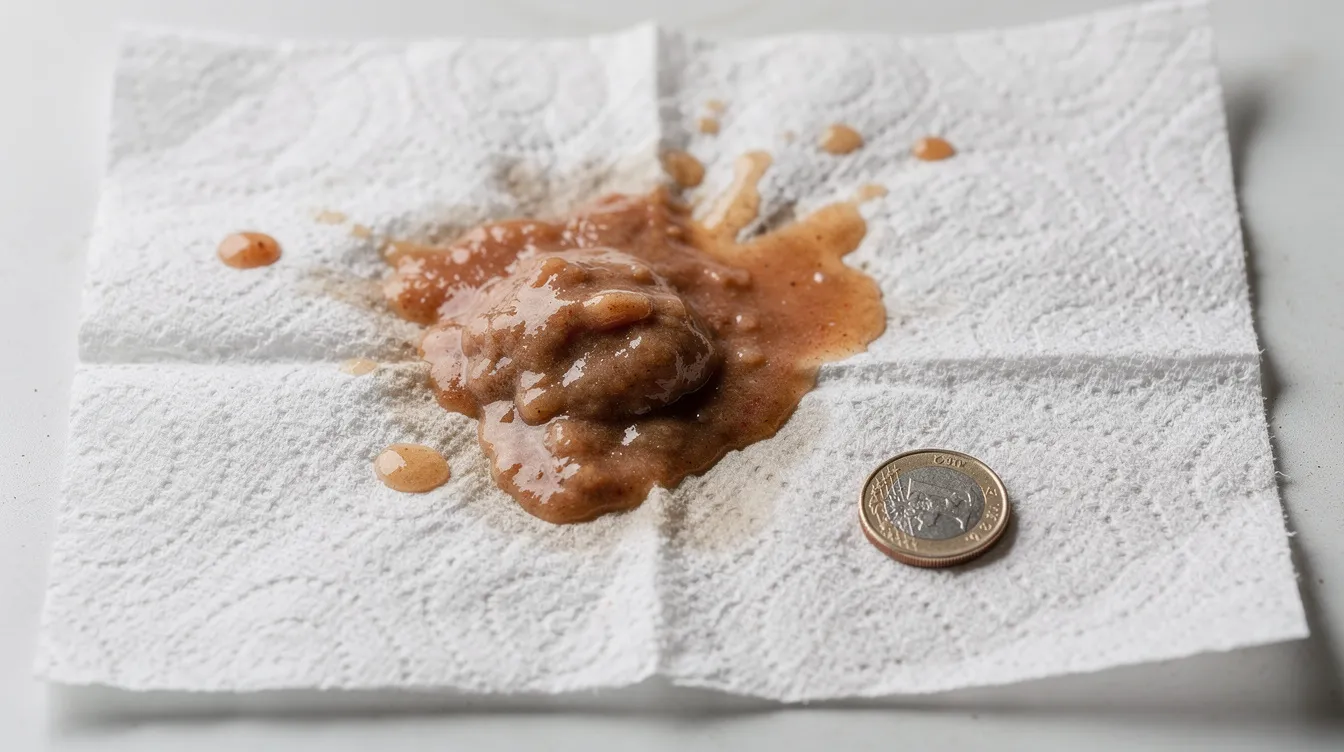
- Photograph the vomit on a white background (paper towel or white plate) in natural lighting. Include a coin or ruler for scale. Capture the color, texture, and any visible particles or streaks.
- Record timing and frequency: Note when the first episode occurred, how many times the dog has vomited, and the interval between episodes.
- Document diet history: List everything your dog ate in the last 24-48 hours, including treats, table scraps, and anything the dog may have scavenged – spoiled food, garbage, foreign objects.
- Assess and note other symptoms: Stool color and consistency, hydration status (are the gums moist or tacky?), energy level, appetite, and whether the dog shows abdominal pain when touched.
- Video the vomiting episode if possible: This helps veterinarians distinguish between true vomiting (with retching and abdominal contractions) and regurgitation (passive, no retching), which have very different diagnostic pathways.
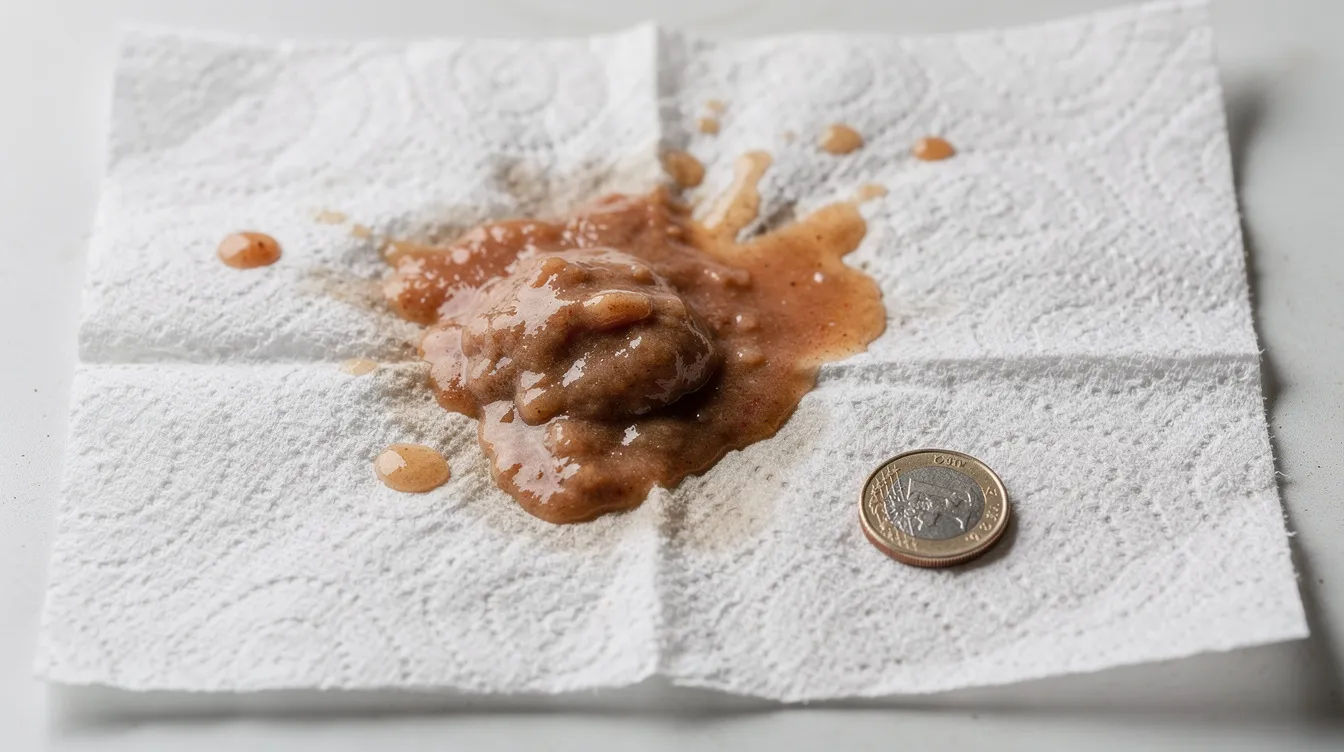
Your veterinarian will likely perform a physical examination including mucous membrane color assessment, abdominal palpation, and hydration evaluation. Depending on findings, diagnostics may include blood work (CBC for anemia, chemistry panel for liver and kidney function), fecal examination, abdominal radiographs or ultrasound to detect foreign objects or masses, and potentially endoscopy if stomach ulcers or intestinal ulcers are suspected.⁴
Common Challenges and Solutions
Assessing brown vomit at home involves several practical difficulties. Here are the most common challenges pet parents face and how to address them.
Distinguishing Brown Vomit from Other Colors
Differentiating between dark brown, dark yellow bile, reddish-brown, and green vomit can be surprisingly difficult – especially under artificial lighting. Yellow vomit usually indicates bile irritation from an empty stomach, while green vomit often contains bile and may indicate an empty stomach or grass consumption. Clear vomit may suggest an empty stomach or mild nausea. Brown vomit may indicate digested blood or food, depending on other characteristics.
Solution: Always assess vomit color in natural daylight. Place a sample on white paper or a white plate. Compare against known references – is it truly brown, or is it dark orange-yellow (bile)? Metallic odor strongly suggests blood; sour or mild odor suggests bile or food. When in doubt, photograph and send to your veterinarian.
Home Monitoring Difficulties
Without veterinary training, it’s challenging to assess your dog’s symptoms accurately. Determining hydration status, recognizing subtle abdominal pain, and distinguishing between mild vomiting that will self-resolve and the early stages of a serious condition require systematic observation.
Solution: Use a simple checklist approach. Every 2-4 hours, assess: Is the dog drinking water? Are the gums pink and moist (or pale and tacky)? Is the dog willing to walk and engage? Is the abdomen tense or painful when gently touched? Is there diarrhea or changes in stool color? Monitor for signs of dehydration if vomiting persists. Any deterioration – especially pale gums, increasing lethargy, or continued vomiting – means it’s time to call your veterinarian.
Multi-Pet Household Complications
In households with multiple dogs, identifying which dog vomited can be genuinely difficult. Cross-contamination of food bowls, shared access to garbage or outdoor areas, and similar-colored pets complicate the picture.
Solution: Temporarily separate dogs during feeding and for several hours afterward. Monitor each dog individually for signs of nausea (drooling, lip-licking, restlessness). Check the vomit site for fur color clues. Feed dogs in separate areas and track each dog’s food intake and stool output independently until the source is identified.
Conclusion and Next Steps
Brown vomit in dogs ranges from a harmless consequence of eating brown kibble to a serious indicator of internal bleeding or organ disease. The severity depends on four key factors: appearance (especially the coffee ground appearance), odor, frequency, and whether other symptoms like pale gums, lethargy, or abdominal pain are present.
Your immediate action steps:
- Assess the vomit’s color, texture, and smell using natural lighting and a white background
- Evaluate your dog’s overall condition – energy, gum color, hydration, appetite, and pain level
- If the episode is mild (single occurrence, light brown, normal behavior): withhold food for 6–12 hours after vomiting, offer small amounts of drinking water, then feed a bland diet like boiled chicken and rice
- Introduce regular meals to prevent empty stomach vomiting, and consider probiotics to help restore gut balance after vomiting
- If any emergency criteria are met – coffee-ground texture, repeated vomiting, systemic signs, toxin ingestion – contact Dr. Hart or your veterinarian immediately
- A slow feeder bowl and frequent meals can help prevent future episodes related to eating too fast or acid reflux on an empty stomach
Understanding what different vomit colors mean – including the significance of green vomit, yellow bile, and bright red vomit – provides broader context for monitoring your dog’s health. Preventive strategies including consistent diet, avoiding sudden dietary changes, restricting access to garbage and toxic substances, and regular veterinary checkups form the foundation of long-term digestive health and overall pet’s health management.⁵
Frequently Asked Questions
Is brown dog vomit always an emergency requiring immediate veterinary care?
No. A single episode of light brown vomit – especially if it matches what your dog recently ate – is usually not an emergency. However, dark brown vomit with a coffee ground appearance, repeated vomiting, or episodes accompanied by lethargy, abdominal pain, or pale gums require prompt veterinary attention. Occasional episodes of mild vomiting in otherwise healthy dogs are commonplace, but any persistent or worsening pattern should be evaluated.
What does coffee-ground appearance in brown vomit indicate about internal bleeding?
The coffee ground appearance indicates that blood from the upper digestive tract – typically the stomach or upper small intestine – has been partially digested by stomach acid. The acid denatures hemoglobin in the blood, transforming it from red to dark brown granules. Brown vomit can resemble coffee grounds, signaling serious issues including stomach ulcers, gastritis, tumors, or injury from foreign objects. This presentation always warrants immediate veterinary evaluation.
How can I tell if brown vomit is from food versus a serious medical condition?
Consider the timing (did it happen shortly after eating?), your dog’s recent diet (brown kibble or treats?), and your dog’s behavior. If the color matches the food and the dog remains active, playful, and hydrated with normal stools, dietary causes are most likely. If the vomit is unusually dark, has a metallic or fecal odor, or the dog shows other symptoms like lethargy, loss of appetite, or changes in stool color, a medical condition is more likely.
Should I induce vomiting if my dog ate something causing brown vomit?
Generally, no. You should not induce vomiting unless specifically instructed by your veterinarian. If the dog has already vomited, further induction risks aspiration (inhaling vomit into the lungs), esophageal damage, or worsening of any existing injury. If your dog ingested a toxic substance, call your vet or an animal poison control hotline for guidance before taking any action.
What information should I gather before calling Dr. Hart about brown vomit?
Prepare photographs of the vomit (on a white background in natural light), the time and date of each vomiting episode, what your dog ate in the last 24-48 hours, any potential exposure to foreign objects or toxic substances, stool color and consistency, your dog’s hydration status and energy level, and your dog’s breed, age, weight, and any pre-existing conditions or medications.
Can brown vomit in puppies be more serious than in adult dogs?
Yes. Older and younger dogs are at higher risk for complications from vomiting. Puppies dehydrate much more rapidly than adult dogs, have less physiological reserve, and are more susceptible to serious infections and congenital digestive issues. Young dogs who vomit brown liquid – especially repeatedly – should be evaluated by a veterinarian sooner rather than later. What might be a “watch and wait” situation in a healthy adult dog can become dangerous in a puppy within hours.
How long should I monitor before seeking veterinary care for brown vomit?
Every time my dog has brown vomit, it’s important to note how the dog behaves to provide vital information to the veterinarian.
If your dog vomits once, the material is light brown and food-like, and the dog is otherwise behaving normally, you can monitor for 12-24 hours. Withhold food for 6-12 hours, offer small amounts of water, then introduce a bland diet. However, if the dog’s symptoms worsen, if vomiting occurs more than twice in 24 hours, or if any concerning signs develop (dark vomit, blood, lethargy, refusal to drink), contact your veterinarian without further delay.
If my dog has brown vomit, keep track of any other unusual symptoms to ensure a thorough vet evaluation.
What home treatments are safe while waiting for veterinary guidance?
Feed a bland diet like boiled chicken and rice once the fasting period ends. Withhold food for 6–12 hours after vomiting but allow small, frequent sips of drinking water to maintain hydration. Keep the dog calm and rested. Do not administer human medications – including NSAIDs or antacids – without veterinary instruction, as these can worsen stomach lining damage or mask important dog’s symptoms. Probiotics can help restore gut balance after vomiting, but introduce them once the acute episode has passed.
This content has been reviewed by Dr. Roger Hart, DVM, ensuring clinical accuracy and practical applicability for pet owners.
References:
- Clinical Signs: Hematemesis in Dogs and Cats – Journal of Veterinary Internal Medicine, PMC review article on prevalence, presentation, and clinical significance of hematemesis in companion animals.
- Cornell University College of Veterinary Medicine – Canine Health Topics: Vomiting. Clinical guidance on vomit characteristics, emergency indicators, and diagnostic recommendations.
- WebVet Veterinary Resources – Dog Vomiting Blood: Emergency recognition criteria and triage guidelines for hematemesis in dogs.
- Great Pet Care – Dog Vomit Color Guide. Veterinary-reviewed reference on vomit color interpretation, texture analysis, and owner guidance.
- Canine Journal – Dog Vomit Color Guide. Comprehensive overview of vomiting versus regurgitation, color significance, and odor-based assessment in dogs.
Brown vomit can range from a harmless reaction to something a dog ate to a sign of internal bleeding or another serious condition – quick identification and, when needed, prompt veterinary evaluation give your dog the best outcome.