Feline hyperthyroidism, or cat hyperthyroidism, is the most common endocrine disease in older cats, occurring when the thyroid gland overproduces thyroid hormones that regulate metabolism, heart rate, and nearly every organ system. If your senior cat is losing weight despite eating more than ever, hyperthyroidism should be near the top of the list of possible causes.
This article covers early signs, diagnosis, the four treatment options, long-term monitoring, and emergencies. It is written for cat owners with senior cats aged 8 and older, particularly those noticing unexplained weight loss, increased appetite, or behavioral changes in their pets.
In short: Cat hyperthyroidism occurs when the thyroid gland overproduces hormones, causing rapid metabolism, weight loss, and increased appetite in cats over 8 years old. Left untreated, cat hyperthyroidism can lead to heart failure, kidney disease, high blood pressure, and even sudden blindness – but with proper treatment, most cats return to excellent quality of life.
Understanding Feline Hyperthyroidism
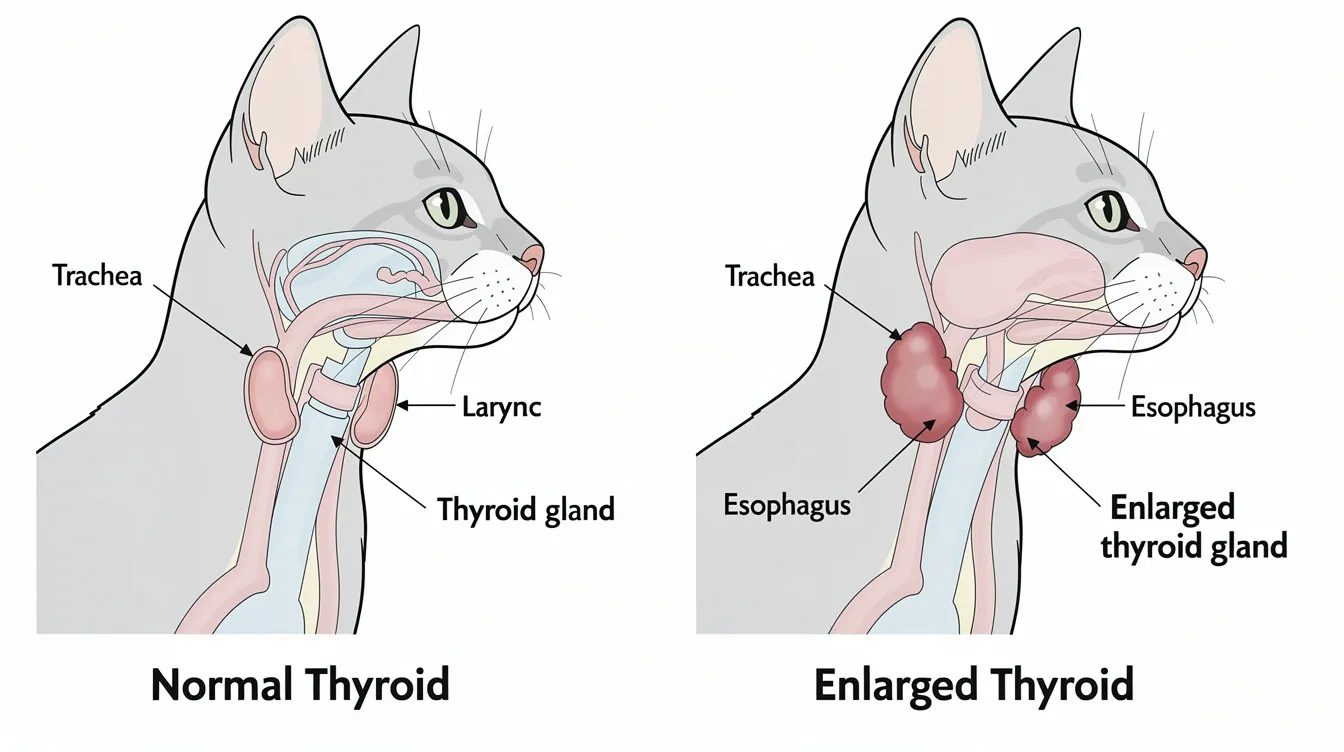
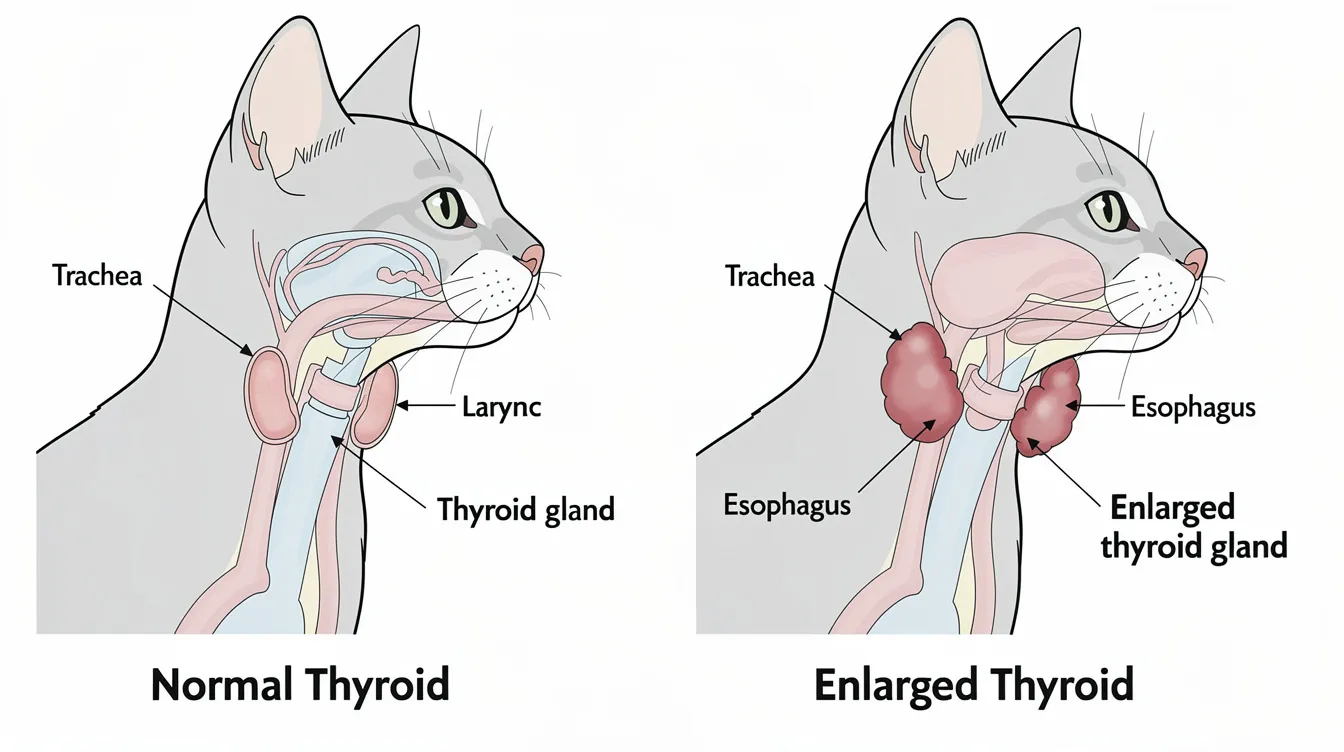
The thyroid gland is a small, butterfly-shaped structure located in your cat’s neck that plays a critical role in regulating metabolism, energy levels, body temperature, and organ function. When this gland malfunctions, the consequences ripple through every system in the body.
What is Hyperthyroidism in Cats
Feline hyperthyroidism is a condition in which the thyroid gland produces excessive amounts of thyroid hormones – primarily thyroxine (T₄) and triiodothyronine (T₃) – creating a hypermetabolic state that accelerates nearly every bodily process. It is the most common endocrine disorder in domestic cats and is overwhelmingly a disease of middle-aged to older cats.
Hyperthyroidism is most common in cats over 8 years old, with the median age at diagnosis being approximately 13 years. Most cases are caused by benign thyroid tumors – specifically, functional thyroid adenoma is the most common cause of hyperthyroidism, with thyroid carcinoma (malignant abnormal cells) accounting for only 1–3% of cases. In approximately 70% of affected cats, both thyroid lobes are involved.
The excess thyroid hormones affect every organ system by accelerating metabolic rate. The heart beats faster, the digestive system speeds up, and the body burns through calories and muscle at an unsustainable rate. This is why weight loss occurs despite an increased appetite in hyperthyroid cats – the body simply cannot keep up with the energy demands created by the overactive thyroid gland.
Normal Thyroid Function vs. Hyperthyroidism
In a healthy cat, the thyroid gland produces precisely calibrated amounts of T₃ and T₄ in response to thyroid stimulating hormone (TSH) from the pituitary gland. This feedback loop ensures stable thyroid hormone levels that maintain normal metabolism, healthy body weight, appropriate heart rate, and balanced organ function.
In hyperthyroid disease, a benign tumor (adenoma) within the thyroid gland escapes this regulatory control. The abnormal thyroid tissue produces hormones autonomously, ignoring the body’s signals to slow down. As the thyroid tumor grows, thyroid hormone production increases further, and the disease progresses through increasingly severe stages.
Some common symptoms of cat hyperthyroidism include increased thirst, frequent urination, and hyperactivity.
This disruption creates cascading effects: the heart works harder to keep up with metabolic demands, the kidneys filter blood at abnormally high rates, muscles break down for energy, and the nervous system becomes overstimulated. Understanding this cascade is essential because it explains why untreated hyperthyroidism damages so many organ systems simultaneously.
Risk Factors and Causes
Age is the primary risk factor for developing hyperthyroidism. The condition is rare in cats under 8 years and becomes increasingly prevalent with each passing year. While no definitive single cause has been identified, research points to several contributing factors.
Environmental factors may contribute to hyperthyroidism in cats. Studies have examined the role of endocrine-disrupting chemicals such as polybrominated diphenyl ethers (PBDEs, found in flame retardants), bisphenol A (BPA in plastic food containers), and various organic pollutants. Indoor cats may have greater exposure to these household chemicals, though direct causation has not been established.
High dietary iodine levels can trigger hyperthyroidism in susceptible cats. Research has found that 22% of commercial cat food products tested fell below minimum iodine levels, with significant batch-to-batch variation of 14–31% in iodine content. This chronic fluctuation – periods of deficiency followed by excess – may stimulate abnormal thyroid tissue growth over time. Fish-flavored commercial cat food and liver or giblet-based diets have been associated with increased risk in epidemiological studies.
Breed considerations offer an interesting pattern: Siamese, Burmese, and Persian cats appear to have a lower incidence of hyperthyroidism, though no breed is immune. There is no consistent sex predisposition for the disease.
Recognizing Signs and Symptoms
The most common clinical signs often develop gradually, and many cat owners initially attribute changes to normal aging – a delay that can allow the disease to progress and cause organ damage.
Early Warning Signs
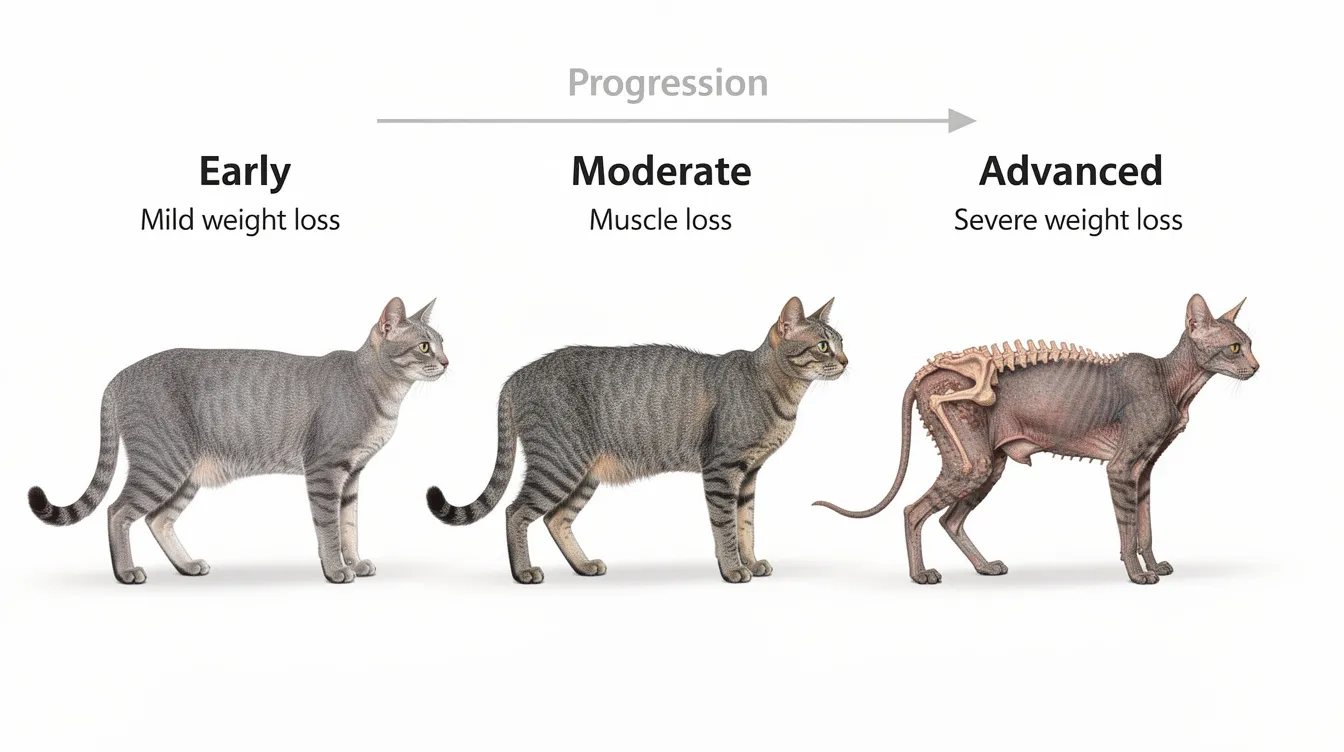
The hallmark presentation that should alert every cat owner: weight loss occurs despite an increased appetite in hyperthyroid cats. This combination – a cat that eats ravenously yet continues to lose weight – is present in the vast majority of diagnosed cases and is one of the most common clinical signs.
Hyperthyroid cats often drink and urinate more than normal, a pattern veterinarians call polyuria-polydipsia. You may notice the water bowl emptying faster, the litter box requiring more frequent changes, or accidents outside the box.
Hyperactivity and restlessness are typical in hyperthyroid cats, sometimes dramatically so. A previously calm senior cat may become agitated, pace at night, or vocalize excessively – especially at odd hours. Vomiting and diarrhea are common symptoms of hyperthyroidism, reflecting the gastrointestinal system’s response to accelerated metabolism. An unkempt or greasy coat may indicate hyperthyroidism in cats, as the hypermetabolic state diverts resources away from grooming and coat maintenance.
Advanced Symptoms
As the disease progresses without treatment, more serious clinical signs emerge. Rapid heart rate (tachycardia) is common, with resting rates frequently exceeding 240 beats per minute in severely affected cats. Heart murmurs become audible on examination in many hyperthyroid cats.
Difficulty breathing or panting – unusual behaviors for cats – may indicate cardiac involvement. Muscle weakness and tremors develop as the body catabolizes lean tissue for energy. Behavioral changes can intensify: previously friendly cats may become aggressive, anxious, or begin hiding – signs that reflect both the neurological effects of excess thyroid hormones and the general distress of feeling unwell.
Life-Threatening Complications
Severe complications from untreated hyperthyroidism include heart disease. Thyrotoxic cardiomyopathy – where chronic hormone excess causes the heart to thicken and enlarge – can lead to heart failure in untreated cats. Studies indicate that 10–15% of hyperthyroid cats develop congestive heart failure, with cardiac changes including concentric and eccentric hypertrophy and left atrial dilation.
About 20% of hyperthyroid cats develop hypertension (high blood pressure). Hypertension can cause sudden blindness due to retinal detachment, a devastating and sometimes irreversible complication. Blood pressure monitoring is therefore a critical component of managing hyperthyroid disease.
Kidney disease may worsen after treating hyperthyroidism – or more accurately, chronic kidney disease that was masked by the artificially elevated blood flow from hyperthyroidism becomes apparent once thyroid hormone levels normalize. An estimated 10–20% of hyperthyroid cats have detectable kidney disease at the time of diagnosis.
Untreated hyperthyroidism is nearly 100% fatal in cats. Progressive weight loss, muscle wasting, cardiac failure, hypertensive organ damage, and metabolic collapse create an irreversible decline. Scheduling a veterinary visit is crucial if symptoms of hyperthyroidism are noticed – early intervention changes outcomes dramatically.
Seek immediate emergency care if your cat shows: collapse, seizures, open-mouth breathing, severe dehydration, sudden blindness, or complete refusal to eat.
Diagnosis and Treatment Options
Diagnosis takes more than a single blood test. Kidney function and heart status help determine the safest treatment.
Diagnostic Procedures
The diagnostic process begins with a physical examination. Veterinarians check for an enlarged thyroid gland during exams by carefully palpating the cat’s neck, where bilateral enlargement can often be felt. However, the absence of a palpable nodule does not rule out the disease.
High serum total T4 concentration confirms hyperthyroidism diagnosis in most cases. This blood test is the primary screening tool and is elevated in the majority of hyperthyroid cats. Blood tests measure thyroid hormone levels for diagnosis, making this a straightforward first step.
Free T4 tests confirm hyperthyroidism if T4 levels are normal but clinical suspicion remains high. Some cats with early or mild disease – so-called “occult” hyperthyroidism – may have total T₄ values within the normal range. In these borderline cases, free T₄ measurement or T₃ suppression testing can help confirm the diagnosis. Thyroid scintigraphy detects abnormal thyroid tissue for diagnosis and is particularly useful for identifying ectopic thyroid tissue or distinguishing between adenoma and carcinoma. A thyroid scan can reveal whether one or both thyroid lobes are affected and guide surgical planning if thyroidectomy is considered.
The pre-treatment workup should include a complete blood count (evaluating red and white blood cells), blood chemistry panel (assessing liver disease markers and kidney function through creatinine and SDMA values), urinalysis, blood pressure measurement, and cardiac evaluation. Chest X-rays and an ECG or echocardiogram are warranted when heart disease signs are present. This comprehensive thyroid testing approach ensures that concurrent conditions are identified before treatment begins.
Treatment Comparison
Four established approaches exist to treat feline hyperthyroidism, each with distinct advantages and limitations. The choice depends on your cat’s overall health, the severity of hyperthyroid disease, and practical considerations including cost and your ability to administer lifelong treatment.
Treatment Option | Success Rate | Pros | Cons |
|---|---|---|---|
Radioactive Iodine (I-131) | 95%+ cure | One-time treatment, no anesthesia, permanent cure | Requires hospitalization, not suitable for advanced kidney disease |
Oral Methimazole | Controls (not cures) | Readily available, reversible | Lifelong daily medication, regular monitoring, potential side effects |
Surgical Thyroidectomy | 90%+ cure | Permanent cure possible | Anesthesia risks, potential complications, less commonly recommended |
Prescription Iodine-Limited Diet | Controls symptoms | Non-invasive, no medication | Requires exclusive feeding, stops working if other food consumed |
Radioactive iodine therapy is often considered the treatment of choice. Radioactive iodine therapy cures hyperthyroidism in 95% of cases with a single injection. It requires no anesthesia, selectively destroys abnormal thyroid tissue while sparing healthy tissue, and provides a permanent cure. Cats must be hospitalized in a licensed facility until radiation levels drop to safe limits. I-131 therapy typically costs about $2,500 for standard dosing and $3,000 for high-dose protocols, all-inclusive, although prices vary by facility.
Anti-thyroid medications are commonly used to manage hyperthyroidism. Methimazole (available as oral medication or transdermal gel) works by inhibiting thyroid hormone production. Methimazole requires lifelong administration to control hyperthyroidism – it manages but does not cure the disease. Side effects occur in a small percentage of cats and may include gastrointestinal upset, hepatopathy, blood dyscrasias affecting blood clotting, and facial itching. Annual costs for medical management – including medication, blood tests, and follow-up visits – typically range from $600 to $1,500.
Surgery to remove the affected thyroid is an option but less common now. Surgical thyroidectomy can provide a permanent cure for hyperthyroidism through removal of affected thyroid tissue, either unilaterally or bilaterally. Risks include anesthesia complications in older cats, potential damage to the parathyroid glands (causing dangerous calcium drops), and the possibility of missing ectopic thyroid tissue. This surgical treatment is generally reserved for cases where I-131 is unavailable or contraindicated.
Dietary therapy limits iodine to manage hyperthyroidism effectively. Prescription diet options like Hill’s Y/D restrict iodine intake to levels that prevent excess thyroid hormone production. This approach requires strict exclusive feeding – any other cat food, treats, or prey completely undermines effectiveness. It takes 8–12 weeks of exclusive feeding to bring thyroid hormone levels into normal range, and it works best for moderate cases.
Treatment Selection Process
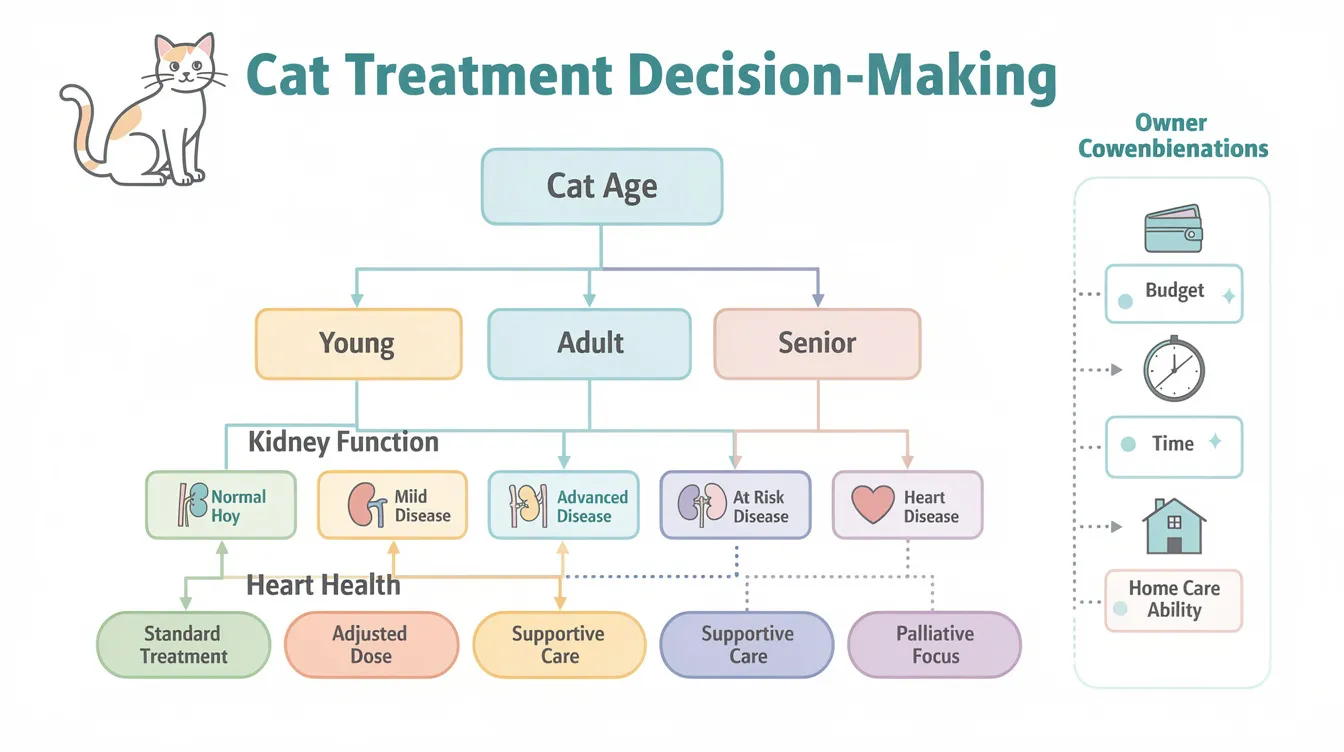
Treatment choice depends on the cat’s age, baseline kidney function (creatinine, SDMA, urine specific gravity), heart health, and whether the owner can realistically give daily medication or maintain a strict diet.
Radioactive iodine therapy is frequently recommended as the gold standard because it cures hyperthyroidism in a single treatment with minimal risk. However, it may not be appropriate for cats with advanced chronic kidney disease, since the treatment’s success in normalizing thyroid function can unmask or worsen renal insufficiency.
When medication is used as primary treatment, it often serves a dual purpose: controlling thyroid hormone levels while simultaneously revealing how the cat’s kidneys will respond to normalized thyroid function. This “methimazole trial” period – typically 3–4 weeks – helps predict whether curative treatment (I-131 or surgery) is safe for the kidneys. If kidney values remain stable on methimazole, proceeding to definitive treatment is generally safe.
Cats with concurrent kidney disease need individualized treatment and close monitoring of thyroid levels, kidney function, blood pressure, and urine protein. The goal is normal thyroid function while avoiding hypothyroidism; deliberately leaving a cat mildly hyperthyroid can worsen kidney damage. Your veterinarian will adjust treatment based on repeat testing. See the AAFP feline hyperthyroidism guideline.
Common Challenges and Solutions
Managing feline hyperthyroidism presents practical obstacles that cat owners commonly face.
Medication Compliance Difficulties
Many cats resist oral medication, turning twice-daily pill administration into a stressful ordeal for both cat and owner. Solution: Transdermal methimazole gel, applied to the inner ear flap, eliminates the need to pill your cat entirely. Compounded flavored medications (chicken, fish, or tuna flavoring) can also improve acceptance. Pill pockets and treat-based delivery systems work for some cats. Discuss these alternatives with your veterinarian – the best medication is the one your cat will actually receive consistently.
Monitoring and Follow-up Requirements
Regular follow-up blood tests are important to monitor treatment response. Solution: Schedule blood work at 3 weeks after starting treatment, again at 6 weeks, then every 3–6 months once stable. Each visit should include thyroid hormone levels, kidney function values (creatinine, BUN, SDMA), complete blood count, and blood pressure measurement. Kidney disease may worsen after treating hyperthyroidism, making renal monitoring just as important as thyroid testing during follow-up care.
Managing Treatment Side Effects
Anti-thyroid medications cause side effects in a small but meaningful percentage of cats treated with methimazole. Solution: Watch for vomiting, loss of appetite, lethargy, facial scratching, or signs of more serious reactions including fever, enlarged lymph nodes, or unexplained bruising (which may indicate blood dyscrasias or liver disease). Mild gastrointestinal upset often resolves within the first few weeks. Serious signs – jaundice, persistent vomiting, or evidence of anemia – require immediate discontinuation of medication and urgent veterinary evaluation. Never adjust medication doses without guidance from your veterinarian.
Cost and Treatment Access Concerns
The upfront cost of radioactive iodine therapy can feel prohibitive, while the cumulative cost of lifelong treatment with methimazole often exceeds it within 2–3 years. Solution: Have an honest conversation about long-term cost projections. I-131 therapy typically runs $2,500 to $3,000 all-inclusive, while medical management costs about $600 to $1,500 per year, which can total $3,000 to $7,500 or more over a cat’s remaining years. Many veterinary practices offer payment plans, and pet insurance may cover part of treatment. Cats diagnosed early, when the disease is less severe, generally have simpler and less expensive treatment courses regardless of the modality chosen.
Key Points and Next Steps
Feline hyperthyroidism is a highly treatable condition when caught early. With appropriate treatment – whether radioactive iodine therapy for a permanent cure, methimazole for ongoing management, surgical thyroidectomy, or dietary therapy – most cats return to normal weight, energy levels, and quality of life. Many cats treated effectively live 3–5 years or more after diagnosis, particularly when health complications like kidney disease and heart disease are mild or absent.
Take these steps now:
- Schedule a senior wellness exam for any cat over 8 years old – request thyroid screening as part of routine blood work
- Monitor your cat at home for the earliest signs of hyperthyroidism: unexplained weight loss paired with increased appetite, excessive thirst, restlessness, or coat changes
- Discuss thyroid function testing with your veterinarian if you notice any concerning changes, even subtle ones
- Act promptly – earlier diagnosis means simpler treatment, fewer complications, and better long-term outcomes for your cat’s health
If your cat has already been diagnosed, work closely with your veterinarian to determine the best treatment option based on your cat’s complete health profile, including kidney and cardiac status.
Related topics to explore: senior cat wellness screening protocols, chronic kidney disease management in older cats, cardiac monitoring for cats with endocrine disease, and nutritional guidelines for hyperthyroid cats.
Frequently Asked Questions
How long do cats with hyperthyroidism live with treatment? With effective treatment, many cats with hyperthyroidism live 3–5 years or more after diagnosis. Median survival times following radioactive iodine therapy range from 2 to 4 years, but numerous cats diagnosed early with minimal comorbidities exceed these averages. Key prognostic factors include severity and duration of disease before treatment, presence of kidney disease, cardiac involvement, and overall age.
Can hyperthyroidism in cats be prevented? There is no proven prevention strategy, but risk reduction is possible. Feed high-quality cat food with consistent, appropriate iodine levels. Avoid overreliance on fish-flavored or liver/giblet-based canned foods. Minimize your cat’s exposure to known environmental endocrine disruptors such as flame retardants and BPA-containing plastics. Regular veterinary screening after age 8 catches the disease early even if prevention fails.
Is hyperthyroidism painful for cats? Hyperthyroidism is not typically described as a painful condition. However, the symptoms it causes – chronic vomiting, muscle wasting, rapid heart rate, and anxiety – can significantly reduce quality of life. Cats with severe complications such as heart failure or hypertensive crisis experience considerable distress, which is why prompt treatment matters.
What happens if hyperthyroidism goes untreated? Untreated hyperthyroidism is nearly 100% fatal in cats. As the disease progresses, cats experience worsening weight loss, muscle wasting, and cardiac deterioration. Thyrotoxic cardiomyopathy can lead to congestive heart failure. High blood pressure damages the eyes (potentially causing sudden blindness from retinal detachment), kidneys, and brain. The hypermetabolic state eventually leads to complete systemic failure.
How much does hyperthyroid treatment cost? Radioactive iodine therapy typically costs $2,500 for standard dosing and $3,000 for high-dose protocols, all-inclusive. Medical management with methimazole, including medication, blood tests, and follow-up visits, generally costs $600–$1,500 per year. Over several years, cumulative medication costs may exceed the one-time cost of curative I-131 treatment.
Can indoor cats develop hyperthyroidism? Yes. Indoor cats may actually face slightly elevated risk due to greater exposure to household endocrine disruptors such as flame retardants in furniture and carpeting, BPA in plastic food and water bowls, and certain flea control products. Indoor living does not protect against developing hyperthyroidism.
Should I change my cat’s diet if they have hyperthyroidism? If your veterinarian recommends dietary therapy as the primary treatment, your cat would be placed on a prescription diet specifically formulated with restricted iodine levels. This requires strict exclusive feeding – any other food, treats, or hunted prey undermines the approach entirely. For cats on other treatments, your veterinarian may recommend specific nutritional adjustments to support recovery and maintain healthy weight.
How often should hyperthyroid cats see the veterinarian? During initial treatment stabilization, visits every 2–4 weeks are standard. Once thyroid hormone levels are stable, follow-up every 3–6 months is typically recommended, including blood tests for thyroid function, kidney values, complete blood count, and blood pressure. These regular visits catch treatment complications early and allow dose adjustments.
Additional Resources
Citations:
- “Hyperthyroidism in Animals,” Merck Veterinary Manual, 2024 update. Reviewed by Johanna Heseltine, DVM, MS, DACVIM.
- “Diagnosis and management of feline hyperthyroidism: current perspectives,” Veterinary Medicine: Research and Reports, 2019.
- “Hyperthyroid cats and their kidneys: a literature review,” Australian Veterinary Journal, 2022.
- “Cardiac Abnormalities in Feline Hyperthyroidism,” peer-reviewed veterinary cardiology review, 2025.
- “Estimating short and longer-term exposure of domestic cats to dietary iodine fluctuation,” longitudinal study, Journal of Veterinary Internal Medicine, 2022.
Senior Cat Health Screening Recommendations: All cats aged 8 years and older should receive comprehensive wellness examinations at least annually, including thyroid testing, kidney panels, and blood pressure measurement. Cats over 12 benefit from twice-yearly screening to catch age-related conditions early.
Signs Requiring Emergency Veterinary Care: Seek immediate veterinary attention if your cat experiences collapse, seizures, open-mouth breathing, sudden blindness, severe uncontrolled vomiting or diarrhea, complete refusal to eat for more than 24 hours, or signs of acute dehydration. These may indicate severe complications of untreated hyperthyroidism or adverse treatment reactions requiring emergency intervention.
Referral centers: Radioactive iodine therapy is offered only at licensed facilities, usually specialty or university hospitals. Your veterinarian can refer you and may recommend a cardiology consultation if your cat has a murmur or heart changes.
Reviewed by Roger Hart, DVM, a Florida-licensed veterinarian with more than two decades of companion-animal clinical experience. This article is general education and does not replace an examination by your own veterinarian.