
When your dog is crying in pain, it almost always means something is wrong-and pain is one of the most common reasons. Dogs can express pain through crying, yelping, or whimpering, and these vocalizations are rarely random. They are evolutionary signals designed to communicate distress, and as a pet owner, learning to decode them can mean the difference between early treatment and prolonged suffering.
This article explains the common causes of pain-related crying, how to tell pain from anxiety or attention-seeking, and when crying means your dog needs emergency care. It does not cover excitement whining or normal puppy vocalization.
The direct answer: Dogs crying from pain typically exhibit vocalizations combined with physical symptoms like limping, panting, reluctance to move, guarding a body part, or changes in posture. Crying alone is not always pain-but crying paired with behavioral changes almost always warrants investigation.
Get Emergency Care Now If Your Dog Is Crying and
- Screams or yelps when touched, or will not let you near a body part
- Has a swollen, hard, or tight belly, or retches without bringing anything up
- Cannot stand, cannot use the back legs, or drags a limb
- Has pale, gray, or blue gums, labored breathing, or collapses
- Was hit by a car, fell, or may have eaten a toxin or human medication
- Cries while straining to urinate or defecate with little or nothing passing
If any of these apply, call your regular veterinarian or the nearest 24-hour emergency hospital now.
Understanding Dog Pain and Vocalization
Pain in dogs is defined as an unpleasant sensory and emotional experience associated with actual or potential tissue damage. Unlike humans, dogs cannot verbally tell us where it hurts or how badly. Instead, they rely on behavior, body language, facial expressions, and vocalization to communicate distress. Vocalization can be a sign of acute pain, although many dogs with chronic pain stay quiet.
Dogs vocalize more when they are in pain. This is not a conscious choice but a survival instinct. In the wild, vocalizations served to alert pack members to danger or solicit help. However, many dogs also instinctively try to hide pain-a remnant of evolutionary pressure to avoid appearing vulnerable to predators. This means that by the time a dog is constantly crying or vocalizing, the pain may already be moderate to severe.
Types of Pain-Related Vocalizations
Not all dog crying sounds the same, and the type of vocalization often reveals the nature and intensity of the pain.
Whimpering and whining are low, continuous sounds that typically indicate mild to moderate discomfort. Dogs may whimper when resting, when attempting to move, or when seeking contact from their owner. Whimpering can indicate anxiety or fear in dogs as well, so context matters-whimpering paired with limping or guarding a body part points toward pain, while whining may signal frustration over unreachable toys or a desire for attention.
Yelping is a sudden, sharp, high-pitched burst that signals acute pain. It happens in the moment of injury or when a painful area is touched unexpectedly. A dog that yelps when you touch its legs, paws, or back is showing signs of a specific, localized pain source.
Howling and yowling are sustained, longer vocalizations that can indicate severe pain, particularly internal or neurological distress. Abdominal discomfort, chest pain, or spinal issues may produce this type of cry.
Growling and snarling occur when a dog anticipates pain-for example, snapping or growling when you reach toward an injured limb. This is a fear-pain response, not aggression.
Groaning, grunting, and moaning are lower-frequency sounds that typically accompany movement. Dogs with joint pain, arthritis, or spinal discomfort often groan when standing up, lying down, or navigating stairs.

Acute vs Chronic Pain Crying
Understanding the difference between acute pain and chronic pain is critical for knowing how urgently to respond.
Acute pain has a sudden onset and is usually linked to a specific event-an injury, a fall, a burn, or an internal emergency. Dogs experiencing pain acutely tend to produce sharper, louder vocalizations: yelps, screams, or intense whining. Physical symptoms include panting, elevated heart rate, restlessness, and refusal to bear weight on a limb. Acute pain episodes typically last hours to days and demand prompt attention.
Chronic pain develops gradually and persists beyond the expected healing timeframe, often lasting months or longer. Dogs with persistent discomfort produce more intermittent, subtle vocalizations-soft whimpers when rising from rest, quiet groans when walking, or occasional moans during sleep. Behavioral changes are the hallmark of chronic pain: reduced activity, reluctance to jump or climb stairs, difficulty moving, changes in appetite, and withdrawal from family interaction. A decrease in appetite can indicate pain in dogs and is one of the most commonly overlooked chronic pain signals. Chronic pain can lead to central sensitization, where the nervous system amplifies pain signals even after the original injury has partly healed.
The boundary between acute and chronic pain is not always sharp. A condition may start as an acute injury and transition into chronic pain if left untreated, making early intervention essential.
Common Causes of Pain-Related Crying in Dogs
Now that you understand how dogs vocalize pain and the difference between acute and chronic presentations, let’s examine the specific conditions that cause painful dogs to cry.
Musculoskeletal Conditions
Musculoskeletal problems are among the most common causes of pain in dogs, particularly in older pets and large breeds.
Arthritis and osteoarthritis cause joint inflammation and degeneration that worsen over time. Dogs with arthritis often show intermittent pain-they may seem fine after resting but whimper or groan when first standing up or after extended walking. Joint pain is most obvious in the hips, knees, elbows, and shoulders. Galliprant is a medication specifically designed for osteoarthritis pain in dogs and represents one of the newer treatment options available through your veterinarian. Many owners mistake early arthritis stiffness for “just getting old,” which can delay treatment by months or years.
Hip dysplasia and elbow dysplasia are conformational conditions common in larger breeds like Labrador Retrievers, German Shepherds, and Bulldogs. Dogs with dysplasia may yelp when navigating stairs, cry when attempting to sit or lie down, and show obvious difficulty moving after rest.
Intervertebral Disc Disease (IVDD) causes spinal discomfort that can range from mild pain to complete paralysis. Dogs often cry out in pain due to acute injuries or internal distress when a disc herniates suddenly, producing sharp yelps and an arched back posture. IVDD can also present as chronic pain with intermittent whimpering and reluctance to jump.
Internal Medical Conditions
Internal conditions are particularly dangerous because dogs may hide discomfort, making it hard to identify pain until it’s severe.
Abdominal pain from pancreatitis, foreign body ingestion, or gastric dilatation-volvulus (GDV/bloat) can cause intense distress vocalizations. Dogs with abdominal discomfort may assume a “prayer position” (front legs down, rear elevated), guard their belly, pace with restlessness, and refuse food. GDV is a life-threatening emergency that requires immediate veterinary intervention.
Urinary conditions including bladder stones, urinary tract infections, and obstructions cause crying during urination, frequent urination attempts, and general distress vocalization. Dogs may whimper or cry while attempting to sit or change position due to bladder pressure.
Dental disease is a frequently underdiagnosed source of pain. Dogs may experience pain from dental issues, such as cracked teeth or abscesses. Common signs include pawing at the face, dropping food, reluctance to chew, and whining during meals. Ear infections can lead to vocalization in dogs when touched due to pain, often presenting as head shaking, ear scratching, and crying when the head is handled.
Cancer and tumors, particularly bone cancer (osteosarcoma), cause severe pain that may initially present as intermittent limping and progress to constant crying and inability to bear weight.
Injury-Related Pain
Traumatic injuries produce the most dramatic and recognizable pain responses. Injuries such as torn nails or sprained limbs can cause sudden pain in dogs, as can fractures, deep cuts, burns, and puncture wounds from foreign objects.
Common pain indicators include panting, restlessness, and changes in behavior immediately following an injury. Dogs in pain may exhibit restlessness and difficulty lying down, circling repeatedly while trying to find a comfortable position. The severity of the vocalization-from a single yelp to sustained howling-generally correlates with the severity of the injury, though individual pain tolerance varies between dogs.
Identifying and Responding to Pain-Related Crying
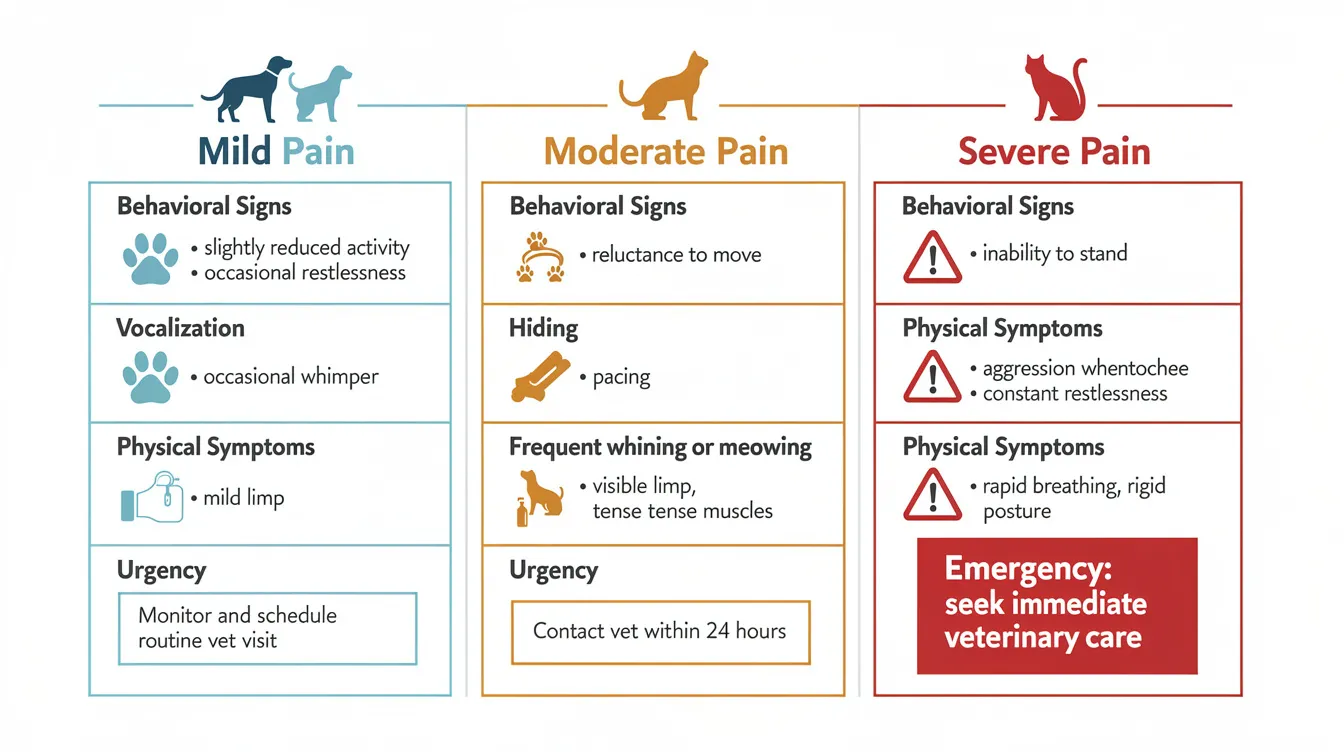
Understanding causes is only useful if you know how to evaluate what you’re seeing and take appropriate action. If your dog is in pain, a structured assessment can help you determine whether you need an emergency vet clinic visit or a scheduled vet appointment. Veterinary contact is advised for persistent crying or signs of distress, regardless of your initial assessment.
If your dog struggles to travel, ask your regular veterinarian whether a house-call or mobile veterinarian can examine your dog at home.
Emergency Assessment Protocol
When your dog begins crying and you suspect pain, follow these steps:
- Check for obvious injuries: Look for open wounds, swelling, abnormal limb positioning, bleeding, or burns. Examine the paws, legs, belly, mouth, and ears. Dogs may show pain through excessive vocalization when you approach or touch the affected area.
- Assess mobility: Can your dog stand? Is it limping? Does it refuse to walk, climb stairs, or jump? Non-weight-bearing lameness-where the dog completely avoids using a limb-suggests fracture, severe sprain, or joint dislocation.
- Monitor vital signs: Check breathing rate (normal: 15-30 breaths per minute at rest), gum color (should be pink, not white, blue, or brick red), and note whether the dog is panting excessively or has an elevated heart rate.
- Document symptoms: Record the time of onset, what triggered the crying, the type of sound, duration, frequency, and any associated behaviors. Note whether the dog is eating, drinking, and able to sleep.
- Contact emergency vet: If pain is severe, sudden onset without obvious cause, or accompanied by collapse, uncontrolled bleeding, abdominal distension, inability to breathe, or loss of consciousness, treat it as an emergency. For after-hours pain, contact the nearest 24-hour emergency veterinary hospital.
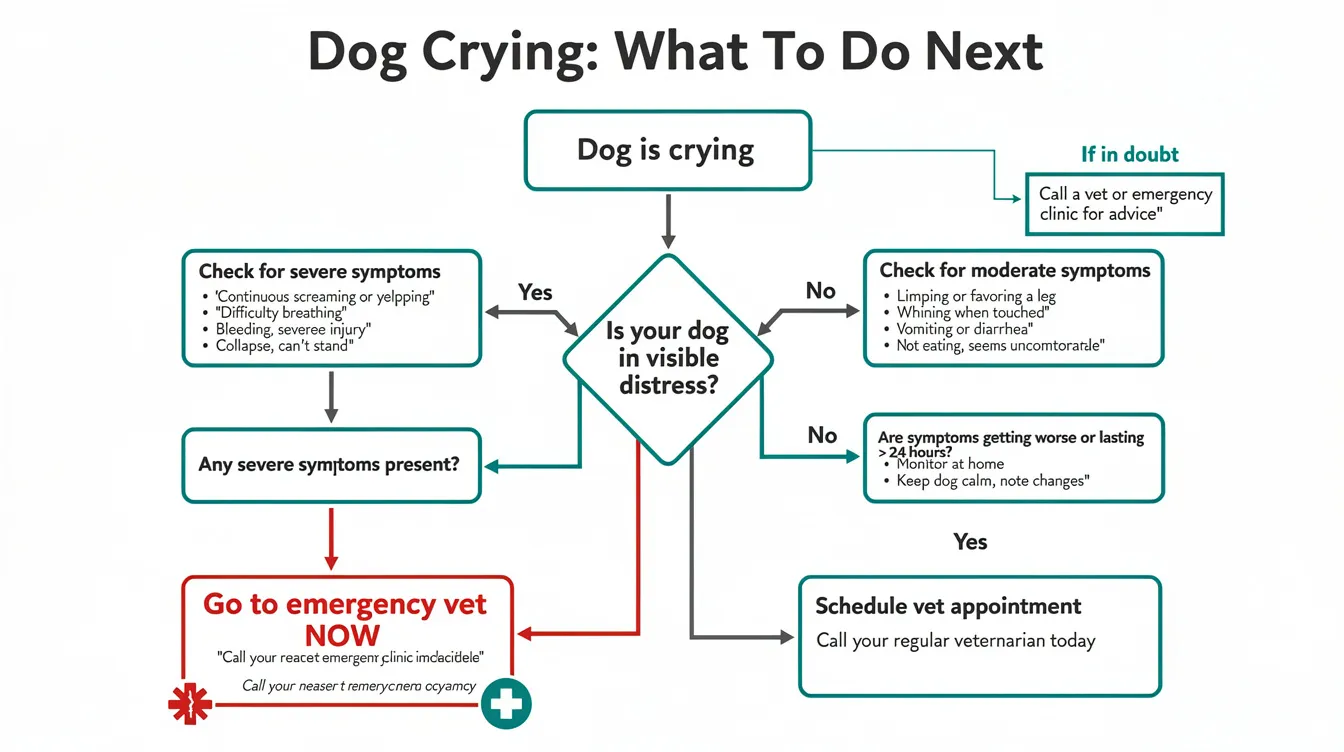
Pain Severity Evaluation
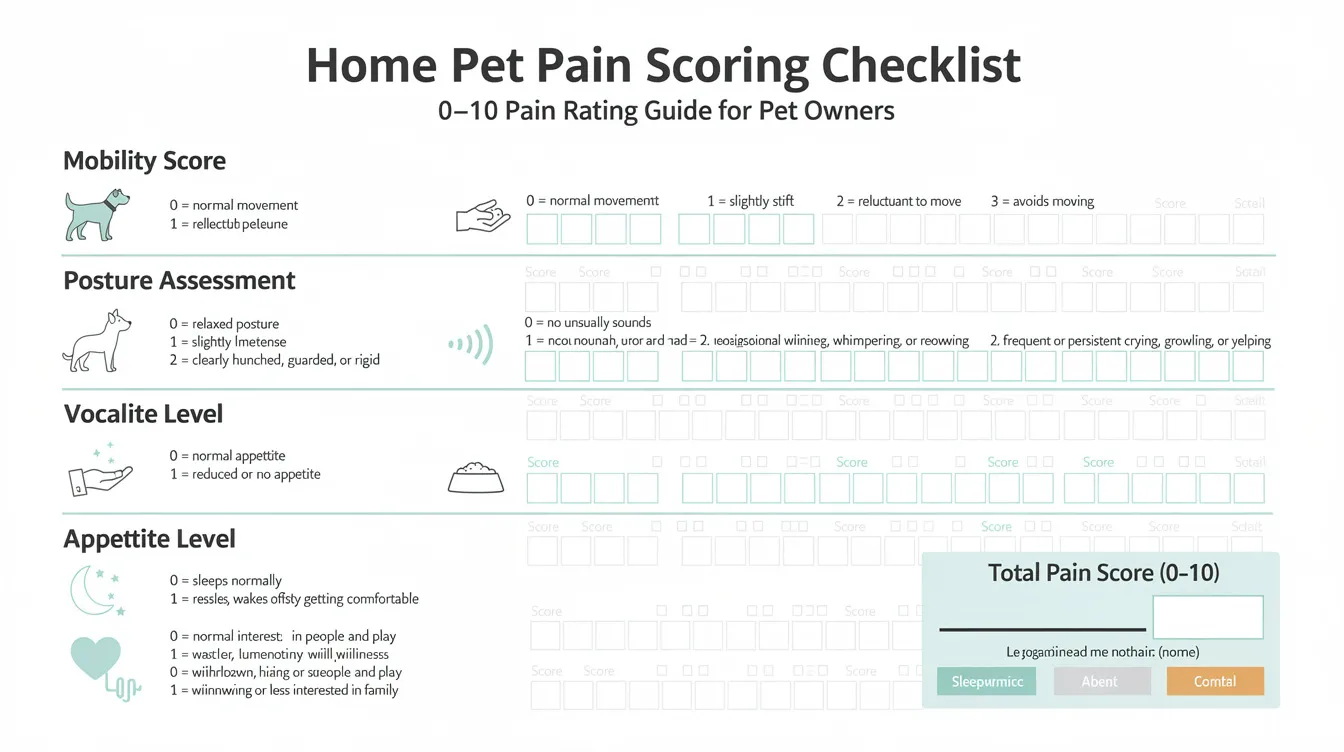
Validated veterinary tools such as the Glasgow Composite Measure Pain Scale give a framework for judging pain. Here is a simplified severity comparison:
Indicator | Mild Pain | Moderate Pain | Severe Pain |
|---|---|---|---|
Vocalization | Occasional whimpers when moving | Frequent whining, groans when touched | Constant crying, yelping, howling |
Mobility | Slight stiffness, minor limping | Obvious limping, reluctance to walk | Cannot stand, non-weight bearing |
Behavior | Slightly quieter than usual, subtle signs | Restlessness, hiding, licking affected area | Aggression when touched, trembling, collapse |
Appetite | Normal or slightly reduced | Noticeably reduced | Refuses food and water |
Posture | Minor changes in posture | Guarding body part, hunched | Rigid, prayer position, unable to change position |
Urgency | Monitor 24 hours, schedule vet appointment | Seek veterinary advice within same day | Emergency-seek immediate veterinary care |
Changes in posture may indicate a dog is in pain even when vocalizations are minimal. Limping is a common sign of pain in dogs and should never be dismissed as “just a limp.” Dogs in pain may also behave differently around other dogs, becoming withdrawn or unusually aggressive.
Common Challenges and Solutions
Even attentive owners find pain-related crying hard to judge. Dogs are experts at masking discomfort, and many signs are easy to misinterpret.
Distinguishing Pain from Anxiety
One of the most common struggles for pet owners is telling the difference between a dog that is hurt and one that is anxious. Both conditions produce whining, panting, and restlessness-but the accompanying signs differ significantly.
Physical pain tends to produce localized responses: limping, guarding a specific body part, crying when a specific area is touched, and difficulty with specific movements. Pain-related crying often gets worse with physical activity and improves with rest.
Anxiety produces more generalized behavioral changes: pacing without limping, panting without physical exertion, destructive behavior, excessive licking of paws (without injury), and vocalization tied to specific triggers like thunderstorms, separation, or unfamiliar environments. Vocalization can indicate a dog’s need for attention, and whimpering related to anxiety often stops when the owner provides comfort-whereas pain-related crying typically continues regardless.
Dogs may whimper when they feel sick or unwell, which can overlap with both pain and anxiety. When in doubt, get your dog checked by a veterinarian. A thorough examination can distinguish between physical and emotional sources of distress.
Managing Night-Time Pain Crying
Dogs with chronic pain, particularly arthritis or spinal issues, often cry more at night. This happens because joints stiffen during periods of inactivity, and the quiet environment makes even low-level pain more noticeable to both the dog and the owner.
Practical solutions include providing orthopedic bedding that supports the joints, keeping the sleeping area warm (cold worsens joint inflammation), placing food and water within easy reach so the dog doesn’t need to walk far, and using ramps to eliminate the need to jump onto beds or furniture. Prescription medications for pain management should be given on the schedule your veterinarian recommends-some are specifically timed for overnight relief.
For dogs with chronic or end-of-life pain, ask your veterinarian about in-home palliative or hospice care. When night-time crying comes from a surgical problem, such as a ruptured cruciate ligament or disc disease, your veterinarian may refer you to a surgeon.
Communicating with Veterinarians
When you bring a crying dog to the vet, clear communication dramatically improves diagnostic accuracy. Before your vet appointment, document:
- When the crying started and what triggered it
- The type of vocalization (whimpering, yelping, howling, groaning)
- Which movements or touches make it worse
- Whether the dog is eating, drinking, sleeping, and eliminating normally
- Any many signs you’ve noticed, including most common signs like limping, licking a specific area, or reluctance to climb stairs
- Any medications, supplements, or home remedies you’ve already administered
Ask your veterinarian specifically about pain scoring, diagnostic imaging options, and whether the condition is likely acute or chronic. Veterinarians can recommend various treatments for dog pain ranging from pharmaceutical to rehabilitative, and the more information you provide, the more targeted their recommendations will be.
Key Points and Next Steps
Recognizing and responding to pain-related crying in your dog requires understanding what different vocalizations mean, identifying the common signs that accompany them, and knowing when the situation demands emergency care versus a scheduled evaluation. Dogs showing signs of pain-whether through sharp yelps, persistent whimpering, or quiet groaning-deserve prompt attention. The most important takeaway is this: never dismiss crying combined with physical symptoms as normal behavior.
Your immediate action steps:
- Observe and document your dog’s crying patterns, noting triggers, timing, and accompanying physical symptoms
- Assess severity using the pain evaluation framework above to determine urgency
- Contact your veterinarian or an emergency vet clinic based on severity-same day for moderate pain, immediately for severe
- Avoid administering human pain medications as they can be toxic to dogs; never give human pain medications to dogs without veterinary advice
- Provide comfort with soft bedding, warmth, and minimal handling of painful areas while waiting for professional care
Common pain treatments include medications, surgery, and physical rehabilitation. Beyond traditional approaches, acupuncture and laser therapy can help manage dog pain as part of a multimodal treatment plan. Ongoing research into facial expression monitoring, wearable activity trackers, and telehealth video assessments promises even better tools for detecting and managing pain in dogs in the coming years. Whatever the treatment path, early detection and consistent follow-up remain the foundation of effective pain management for your pet.
Frequently Asked Questions
Why is my dog suddenly crying and seems to be in pain?
Sudden crying in a dog typically indicates an acute injury, internal organ emergency, or neurological event. Dogs often cry out in pain due to acute injuries or internal distress such as gastric dilatation-volvulus (bloat), foreign body ingestion, fractures, or disc herniation. Consider the context: did the crying start after physical activity, a fall, or eating something unusual? Injuries such as torn nails or sprained limbs can cause sudden pain in dogs. If the crying is intense, came on without warning, and your dog cannot move, breathe normally, or stops responding, seek veterinary advice immediately-this may be a medical emergency.
Can dogs cry from emotional pain or only physical pain?
Dogs experience both physical and emotional distress, but the manifestations differ. Physical pain typically presents with certain signs like limping, guarding a body part, difficulty moving, changes in posture, and vocalizations triggered by specific movements or touch. Emotional distress-from separation anxiety, grief after losing a companion, or environmental stress-tends to produce more generalized symptoms: pacing, destructive behavior, loss of appetite, and crying that responds to comfort and reassurance. Physical pain-related crying usually does not resolve with comfort alone and persists or worsens with movement.
How long should I wait before taking my crying dog to the vet?
For acute, loud, sudden vocalizations paired with additional signs-swelling, non-weight bearing on a limb, bleeding, abdominal distension, panting, or collapse-treat the situation as an emergency and seek care immediately. For milder, intermittent vocalizations without obvious physical symptoms, observe and document for up to 24 hours. If the crying continues, gets worse, or new symptoms appear, do not delay beyond that window. A general rule: if you are questioning whether your dog needs a vet, it probably does.
What should I never give my dog for pain relief?
Avoid administering human pain medications as they can be toxic to dogs. Specifically, never give ibuprofen, acetaminophen (Tylenol), naproxen, or aspirin without explicit veterinary direction. These medications can cause kidney failure, liver damage, gastrointestinal bleeding, and death in dogs at doses that are safe for humans. Only use prescription medications approved by your veterinarian, such as carprofen, meloxicam, Galliprant (for osteoarthritis pain), gabapentin, or tramadol-always at the correct weight-based dosage.
Are certain dog breeds more likely to cry when in pain?
Yes, certain breeds are predisposed to conditions that cause pain, which increases the likelihood of pain-related crying. Large breeds like Labrador Retrievers, German Shepherds, Golden Retrievers, and Rottweilers are more susceptible to hip dysplasia, elbow dysplasia, and arthritis. Dachshunds and other long-backed breeds face higher risk of IVDD and spinal issues. Bulldogs and other brachycephalic breeds often develop joint and skeletal problems. Additionally, some breeds are naturally more vocal than others, which can make their pain responses more audible-but vocalization intensity does not always correlate with pain severity. Stoic breeds may suffer silently while more vocal breeds cry with relatively minor discomfort.
How can I comfort my dog while waiting for veterinary care?
Provide a soft, warm resting area and minimize the need for your dog to move. Avoid touching or manipulating the area that seems painful. Speak in calm, soothing tones. Keep the environment quiet and free from stimulation from other dogs or pets. Offer water but do not force food. If there is any risk your dog may bite due to pain, use a muzzle for safety during handling. Do not attempt to splint suspected fractures yourself, and do not apply ice or heat unless directed by a veterinarian. Monitor breathing, gum color, and consciousness while you wait.
When is dog crying considered a medical emergency?
Dog crying is a medical emergency when it is accompanied by: inability to stand or walk, uncontrolled bleeding, abdominal distension or bloating, labored breathing, collapse or loss of consciousness, high body temperature, pale or blue gums, seizures, or trauma from a known incident such as being hit by a car. If your dog is showing signs of severe pain combined with any of these symptoms, contact an emergency vet clinic immediately. Know where your nearest 24-hour emergency hospital is before you need it.
What pain medications are safe for dogs?
Safe pain medications for dogs are those prescribed by a licensed veterinarian after examination. Common options include veterinary NSAIDs like carprofen (Rimadyl) and meloxicam (Metacam), Galliprant for osteoarthritis, gabapentin for neuropathic pain, and tramadol for moderate to severe pain. Common pain treatments include medications, surgery, and physical rehabilitation depending on the underlying cause. Acupuncture and laser therapy can help manage dog pain as complementary approaches. Never administer any medication-including “natural” supplements-without consulting your veterinarian first, as incorrect dosing can cause organ damage, worsen the condition, or mask symptoms that your vet needs to evaluate.
For questions about medication, see what to discuss with your veterinarian before giving a dog pain medicine. Do not give a human pain reliever, an extra dose, or another pet’s prescription without veterinary advice; review the FDA’s pet pain-reliever precautions.
Reviewed by Roger Hart, DVM, a Florida-licensed veterinarian with more than two decades of companion-animal clinical experience. This article is general education and does not replace an examination by your own veterinarian.
Comments
One response
[…] Degenerative myelopathy — a slow, progressive breakdown of the spinal cord seen mostly in older, medium-to-large dogs […]